Jason Victor Serinus

Sort By: Post DateTitle Publish Date

Music@Menlo 2018's Creative Capitals

Last summer, Music@Menlo devoted its season to a series of Creative Capitals programs. Through concerts, lectures, and more, the festival surveyed the diversity of Western chamber music that was birthed in Europe's "most flourishing" historic creative capitals—London, Paris, St. Petersburg, Leipzig, Berlin, Budapest, and Vienna.


You can hear the sum of Music@Menlo's accomplishments in the multi-CD sets of the their annual festivals, most of which are also available for streaming in Red-Book quality on Tidal...

Lutoslawski's Strange and Compelling World

There are many ways to talk about the remarkable Symphonies Nos.1 & 4 • Jeux vénitiens of Polish composer Witold Lutoslawski (1913–1994). You could, for example, approach them as does Kimmo Korhonen, whose extremely detailed and well-thought-out liner notes for the recent Ondine SACD of these works from Hannu Lintu and the Finnish Radio Symphony Orchestra examine the evolution of Lutoslawski's tonal language and explain that they basically represent the beginning (Symphony No.1, 1947), middle (Venetian Games, 1960–1961) and end (Symphony No.4, 1992) of his arc as a mature composer. Or you could simply close your eyes and discover how many fantastic places they take you to.

Groundbreaking Symphonies from Florence Beatrice Price

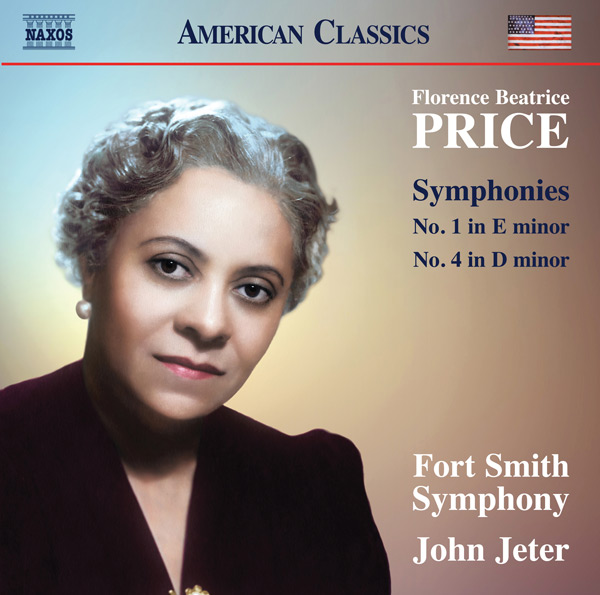
To celebrate Dr. Martin Luther King, Jr. Day and the recent Women's March, we turn the spotlight on Symphonies Nos.1 & 4 of Florence Beatrice Price (1887–1953), the first African American woman to have her music performed by a major American orchestra. In doing so, I extend a big thank you to Naxos, whose invaluable American Classics series continues to record works by American composers both famous and relatively unknown.

Did Music's Bad Boy Ever Really Reform?

That's the question raised by Antheil: Orchestral Works (Chandos 10982), the latest anthology of symphonic music by composer/pianist George Antheil (1900–1959). This second Antheil title from John Storgårds and the BBC Philharmonic Orchestra finds Storgårds exploring music written on both sides of Antheil's successful Symphony No.4, which can be found on Vol.1 of what looks to be an ongoing Antheil series.

Handel's Italian Cantatas Shine and Sigh

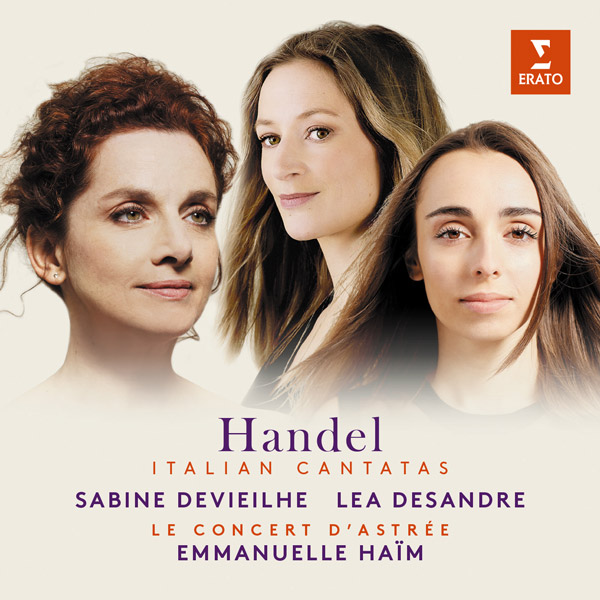
From last week's contemporary realities, as viewed through the lens of David Chesky, we move back in time to 1707–1710, when the emotionally overwrought women, mythological subjects, shepherds, shepherdesses, and nymphs of Handel Italian Cantatas were in vogue. If those subjects strike your fancy, and/or you love baroque artistry and great singing, this new Erato recording from Emmanuelle Haïm's Le Concert d'Astrée, French lyric coloratura soprano Sabine Devielhe, and Franco-Italian mezzo-soprano Lea Desandre belongs on your must-hear list.

Chesky Raps It Home for the New Year

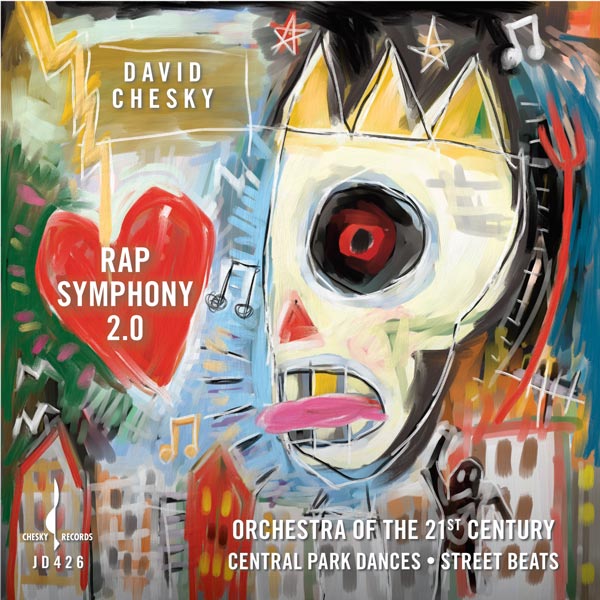
Many of us enter the New Year with a mixture of sorrow for our losses and hope for what lies ahead. While there's no right way to celebrate 2019's symbolic new start, one approach to creating space for the new is to pause long enough to acknowledge our lives and environment for exactly what they are at the present moment.


Cue David Chesky's Rap Symphony 2.0, a reworking of Chesky's original release currently available in download and video form.

A Christmas Greeting from Bach Collegium Japan

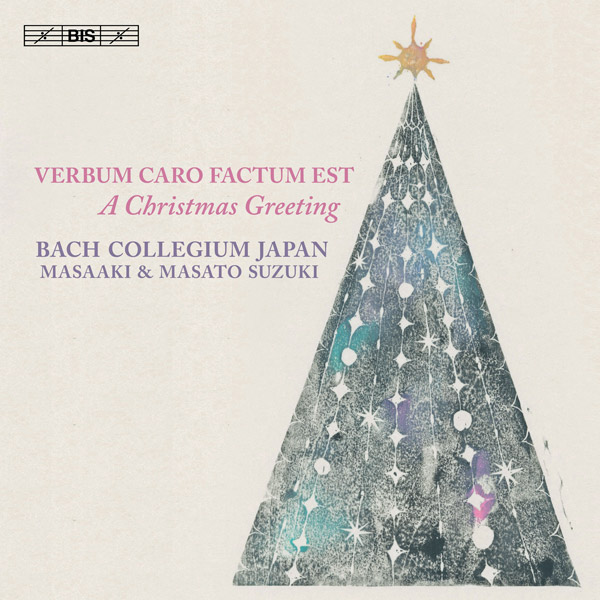
Although I'm far more of a "Happy Holidays" audiophile than anything else, the prospect of a high-resolution Christmas-themed recording from Masaaki Suzuki and his superb Bach Collegium Japan led me to their new hybrid SACD issue from BIS, Verbum caro factum est: A Christmas Greeting (BIS-2291). Auditioned as a 24/96 stereo download—downloading or streaming are the only ways to access the recording immediately, and in format choices that include surround—Masaaki Suzuki's recording managed to bring smiles, warmth, and good cheer to this admittedly down-on-religion Grinch.

Jordi Savall and Le Concert des Nations Dance, Dance, Dance

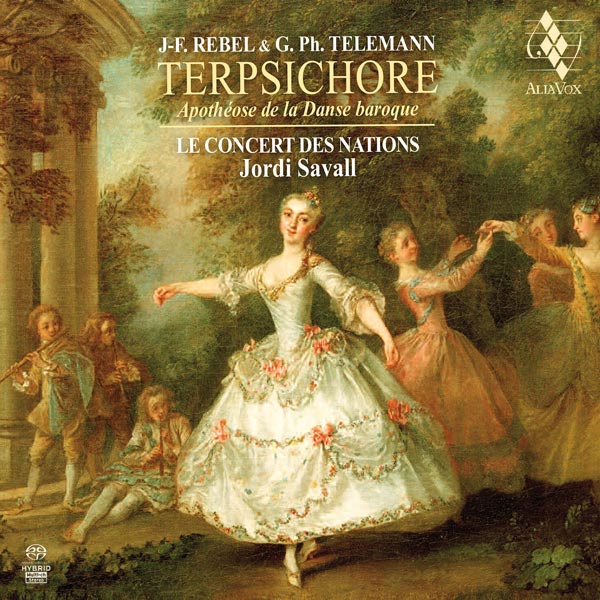
Terpsichore, the Greek goddess of dance and chorus. How appropriate that her delight in dancing should be honored in Terpsichore: Apotheóse de la Danse baroque (Alia Vox), the latest beautifully produced and packaged Alia Vox SACD from Jordi Savall and his baroque orchestra, Le Concert des Nations. Filled with high energy orchestral music by Jean-Ferry Rebel (1666–1747) and the even longer-lived Georg Philipp Telemann (1681–1767), the recording exalts the exuberant French style of instrumental dance music that became popular during the rise of the baroque orchestra in the courts of Kings Henry IV and Louis XIII in the early 17th century.

Aequa & H e (a) r

First came the press release, from San Francisco Symphony, announcing:


• Esa-Pekka Salonen is the Music Director Designate of SFS, to replace Michael Tilson Thomas when he voluntarily steps down after the summer of 2020.


• EPS will lead SFS in a program on January 18–20 that includes the SFS premiere of Icelandic composer Anna Thorvaldsdottir's Metacosmos, Richard Strauss's Also Sprach Zarathustra, and Sibelius's Four Legends from the Kalevala.


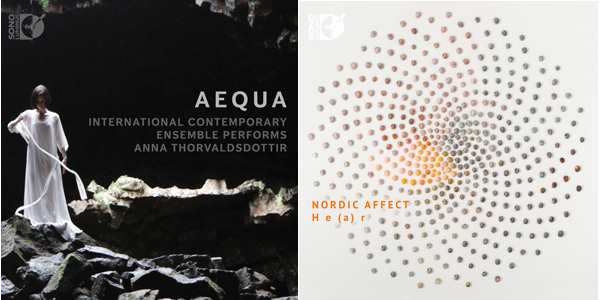
These led me to explore Thorvaldsdottir's music in two recent hi-rez releases from Sono Luminus: Aequa: International Contemporary Ensemble Performs Anna Thorvaldsdottir (DSL-92224), and Nordic Affect: H e (a) r (DSL-92227).

Sacred Polyphony from Antoine de Févin

There I was, driving through the streets of Port Townsend, dodging the dashing deer, when out of the blue, strains of Palestrina came floating by. Giving thanks to CBC Radio, which we can receive in the Pacific Northwest, I noticed immediately how my internal space had become far more peaceful after just a few bars of Palestrina's polyphonic writing for multiple voices. It was at that minute that I realized that I missed listening to sacred vocal music of the Renaissance, and that it was high time that more of it made its way on to the Stereophile.com.


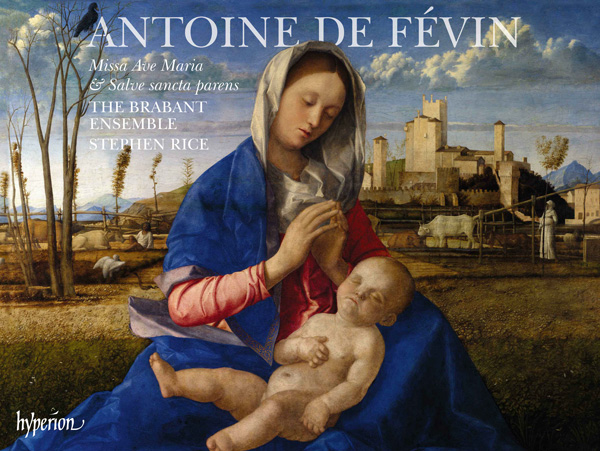
French composer Antoine de Févin (ca 1470–1511/12) was, according to conductor Stephen Rice, one of the most accomplished and widely circulated creators of sacred music in France and Europe around 1500. With very few entire recordings devoted to Févin's music, there is no better way to make his acquaintance than the latest offering from Rice and The Brabant Ensemble, Antoine de Févin: Missa Ave Maria & Salve sancta parens (Hyperion CDA68265).

Advertisement
Advertisement
Advertisement