

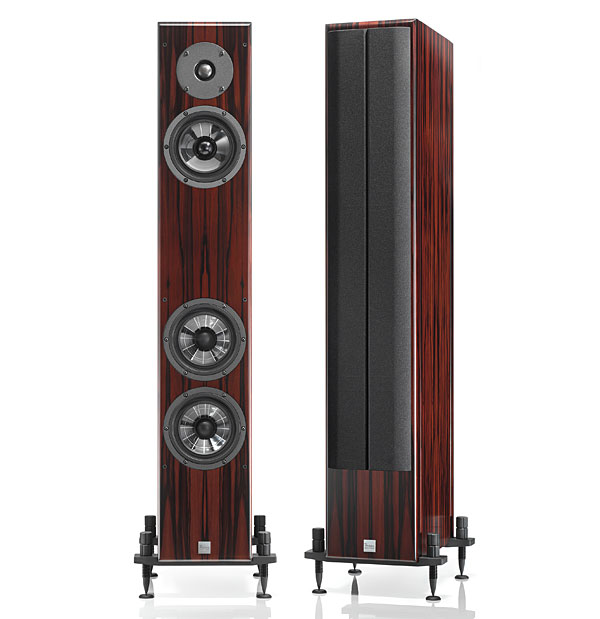
Vienna Acoustics Beethoven Baby Grand Symphony Edition loudspeaker
I went to Vienna. It was and is a beautiful city, with much of its late 19th- and early 20th-century character still intact. And while there will always be other claimants to the honor, it's arguably still the classical-music center of the planet. I managed to score standing room for a performance of Puccini's Turandot at the Vienna State Opera (as I recall, standing room at the time was the equivalent of about $1 US). Act 1 was so rough that it evoked catcalls from the unforgiving Viennese audience, but after that, things settled in nicely.
Continue Reading »


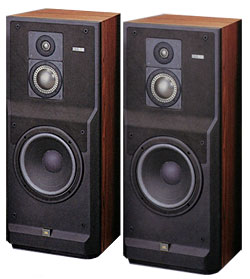 A visiting manufacturer recently told us here at Stereophile of an ongoing informal "survey" he was conducting. He would ask strangers to name three brands of loudspeakers. Their responses were not what I would have expected. They almost invariably named Japanese companiestwo of the most commonly mentioned were Hitachi and Panasonic. Other than my spell-checker insisting that I change "Hitachi" to "hibachi," I have nothing in particular against these two manufacturers; they are well-recognized in many product categories. But loudspeakers? I can only guess that the respondents were dredging up the only consumer electronics companies that came readily to mind.
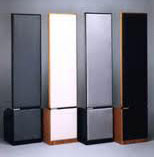 I wish I could be enthusiastic about the Acoustat Spectra 11an electrostatic/dynamic hybrid selling for $999/pair. At first glance, the Acoustat Spectra 11 looks like a good deal. They could almost be called knock-offs of the Martin-Logan Sequelsthey're about the same size. As with the Sequels, there are moving-coil bass cabinets below, electrostatic panels on top. The Spectra 11 cannot be bi-wired and does not come with spikes. Tiptoes are recommended, and I used them. I let the speakers run in for about 24 hours before doing any serious listening.
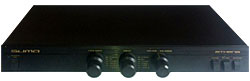 Sumo is one of a handful of American audio manufacturers dedicated to producing moderately priced products aiming for high-end sound; their most expensive product is the Nine Plus, at $1199 (although a more expensive
 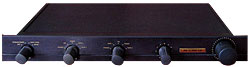 Choosing a moderately priced preamp has traditionally presented the audiophile with a host of serious problems. Most attempt to be all things to all listeners, expending resources on bells and whistles which would have been better expended on basic performance. Few have anything resembling a decent moving-coil stage. But there have always been a few designers (and companies) willing to expend much of their effort at the "low end of the high end." PS Audio has been such a company. Their new 4.6 preamp, an update and cosmetic clone of the earlier, well-received 4.5, is not at the top of their preamp rangethat honor belongs to the 5.5but it is clearly designed to be more than a price-point product.
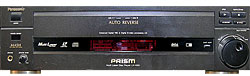 The letter we received was innocent enough. It asked for our recommendations on laserdisc combination players. You know, the ones that play all of your optical, laser-read entertainment, from CDs to videodiscs. Had the question been a verbal one, our answer would have begun with a long silence. As it was, we could only jot down a few generic references to features, followed by an admission that we had, collectively, no firsthand experience with these all-purpose devices. Only a few members of our staff have any interest in video stuffmonitors, surround-sound, and the likeamong them