Jim Austin
MQA Contextualized
Over one busy week in 1986, Karlheinz Brandenburg laid the foundation of a technology that a few years later would upend the record business. Brandenburg, a PhD student in electrical engineering at the Friedrich-Alexander University Erlangen-Nuremberg, was figuring out how to code digital music efficiently enough that it could be delivered over digital telephone lines. A patent examiner had concluded that what the application proposed was impossible, so over a week of late nights, Brandenburg produced the proof of concept and more. It was another decade before the technologyMPEG-2 level III, more commonly known as MP3would find its true home, the Internet.
MQA Tested Part 2: Into the Fold
Master Quality Authenticated (MQA), the audio codec from industry veterans Bob Stuart and Peter Craven, rests on two pillars: improved time-domain behavior, which is said to improve sound quality and what MQA Ltd. calls "audio origami," which yields reduced file size (for downloads) and data rate (for streaming). Last month I took a first peek at those time-domain issues, examining the impulse response of MQA's "upsampling renderer," the output side of this analog-to-analog system (footnote 1). This month I take a first look at the second pillar: MQA's approach to data-rate reduction. In particular, I'll consider critics' claims that MQA is a "lossy" codec.
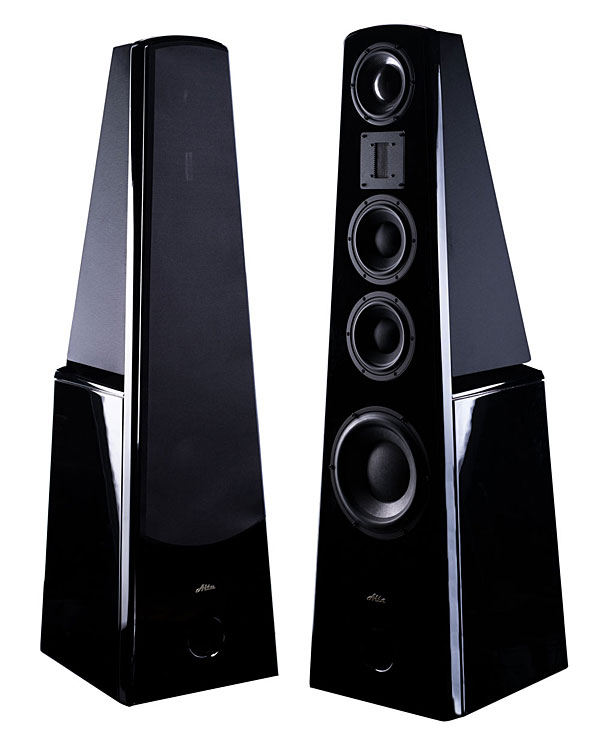
Alta Audio Hestia Titanium loudspeaker
Is High-Rez coming to Apple Music? Probably Not.
MQA Tested, Part 1
Pass Laboratories XA60.8 monoblock power amplifier
John Atkinson, too, is a hard man, at least when it comes to audio gear. When, in January 2014, he reviewed the Pass Laboratories XA60.5 monoblock amplifier, he concluded, "It is the best-sounding amplifier I have ever used." High praise.