Jim Austin

To Appeal to Young Audiophiles, Tell a Story
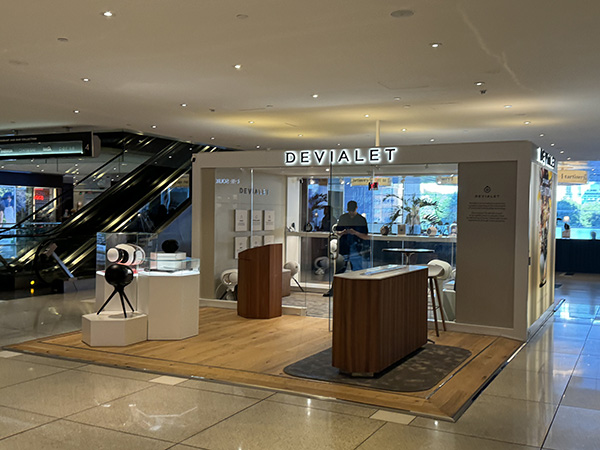
Yesterday, I had a brief conversation, by text message, with my 26-year-old son. He had just walked by the Devialet shop at the Shoppes at Columbus Circle here in Manhattan. Knowing my interest in such things, he sent me a photo. The Devialet boutique seems more a design exhibit than a shop, in a high-ceilinged open area.

The shops at the Shoppes at Columbus Circle include Hugo Boss, Eileen Fisher, and Floga, which sells furs, among less-exclusive brands, though even the less-exclusive stores look fancy. Upstairs from the Shoppes is the Mandarin Oriental New York Hotel, where rooms cost about $1k/night and up, and some notable restaurants, among them Thomas Keller's Per Se, and Masa, a three-star Michelin restaurant where dinner costs as much as a room at the Mandarin Oriental, per person.

Devialet is the only trace of the hi-fi industry not only in that mall but in that part of town. Innovative Audio, which carries Wilson, Focal, and D'Agostino, among other brands, is about a mile east, a 25-minute walk.

Continue Reading »

It Isn't Just the Music

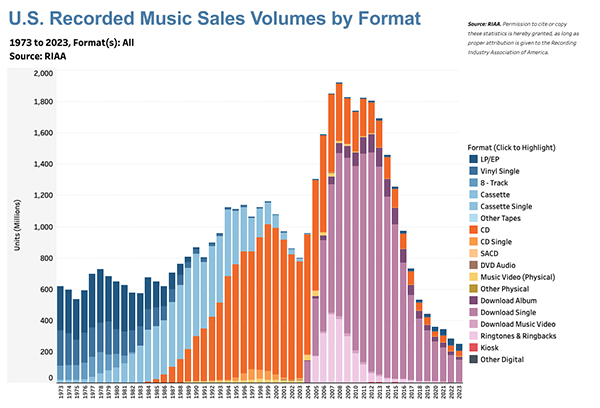
Physical media market shares, from 1973–2024. From riaa.com/u-s-sales-database.

When the CD is gone, and it will be soon, we'll miss it. New CD releases are winding down (footnote 1). In the classical world, the era of big, bargain-priced boxes of CDs—a somewhat recent development—is ending because, after a long, slow descent, retail sales have fallen off a cliff in the past year or so. In pop and rock, if you discover a new band you like, you may or may not be able to buy a CD. Perhaps they'll self-publish a few to sell at concerts; there's a better chance they'll have LPs, assuming they can get time at a vinyl-mastering studio and a pressing plant, both of which are booked to the max. CDs, though, are an afterthought if they're even that.

Vinyl records will likely stay around indefinitely as a collector's artifact, but new CDs are fading fast. This is momentous. CD will be remembered as the last mainstream physical music format. Its passing marks the death of physical music media.

Continue Reading »

AXPONA 2024 in the Rear View

Photo: John Atkinson

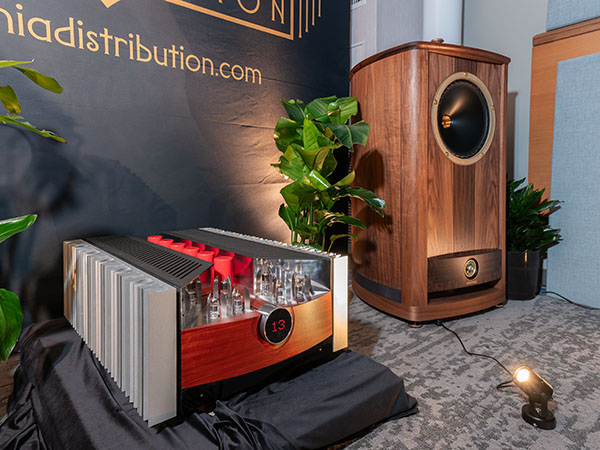
If buying a hi-fi product from an internet retailer is like an arranged marriage, a hi-fi show is like speed dating. Not everyone, I realize, approaches hi-fi shows (or speed dating, for that matter) the same way, and anyway, the analogy between hi-fi and dating is far from perfect. Speed dating is how this year's AXPONA, America's biggest hi-fi show, held at the Renaissance Schaumburg Hotel & Convention Center (above) near Chicago in April, often felt to me as I moved from room to room. Every new system I heard had the potential to become a long-term relationship. Could I live with this one forever?

Continue Reading »

Audiovector R 3 Arreté loudspeaker

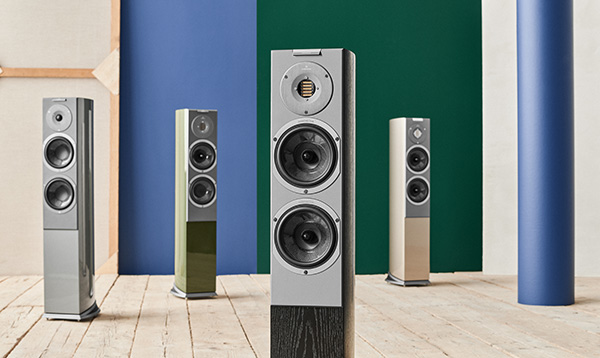
My first encounter with an Audiovector loudspeaker was at the 2019 Toronto Audiofest. Driven by colorful (both sonically and visually) Alluxity electronics, the R 3s sounded pure and very fine. As I sat listening to the R 3 Arretés, the R 8 Arreté, their big brother, sat quietly in the corner, seemingly pleased with the performance of its smaller sibling.

I ended up reviewing the R 8 instead of the R 3, which in retrospect hardly seems fair:It was the R3 I heard that day, the R 3 that attracted my attention and got me interested in the brand.

Continue Reading »

Beyoncé, Tracy Chapman, and Country Music

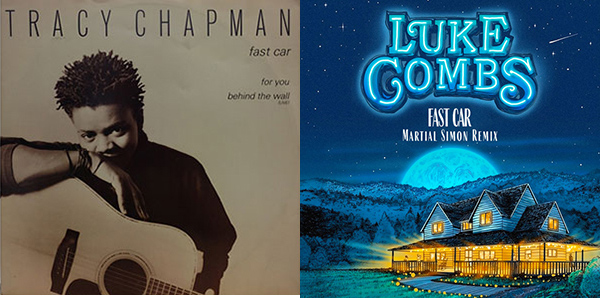
One of my coolest radio-related experiences happened just a few months ago, when, churning through FM stations in my car, I encountered a country-inflected male voice singing "Fast Car," the Tracy Chapman song. Rolling Stone dubbed "Fast Car" the 168th best song of all time. It has audiophile cred because its simple sonics (predominantly voice and acoustic guitar) and good engineering made it an important test track, used, eg, by Harman for listening tests and by others for assessing compression artifacts in MP3s.
Continue Reading »

Silent Angel Bonn NX network switch

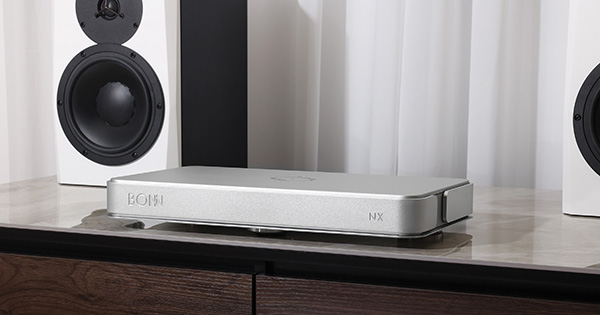
With every passing season, a new audiophile-grade network switch hits the market. These products, which can cost hundreds or thousands of dollars, do the same basic thing as network switches bought at Best Buy for $30 or so (except, in some cases, slower), but their manufacturers claim they are built to a higher standard to achieve better sound.

As with all signal-conditioning devices that operate completely in the digital realm—especially those that work at packet level (more correctly referred to as "frame-level" on the local side of the router, but that's a distinction that even few experts make)—the sonic efficacy of audiophile network switches is debated, the debate being, as usual, mainly between those who insist they hear a difference and those who insist, on theoretical grounds, that no difference is possible.

Continue Reading »
Advertisement
Advertisement
Advertisement