Herb Reichert
Gramophone Dreams #85: Let the Right Brain In; the Hagerman Audio Labs Piccolo Zero head amp
When I asked him what he thought his rebuilt Clydesdale deck, with its new bearing, Jelco tonearm, and Grado Prestige Gold cartridge, was doing that his well-regarded belt drive was not, he replied, in a low, serious voice, "I think it gets more of the first part of a note."
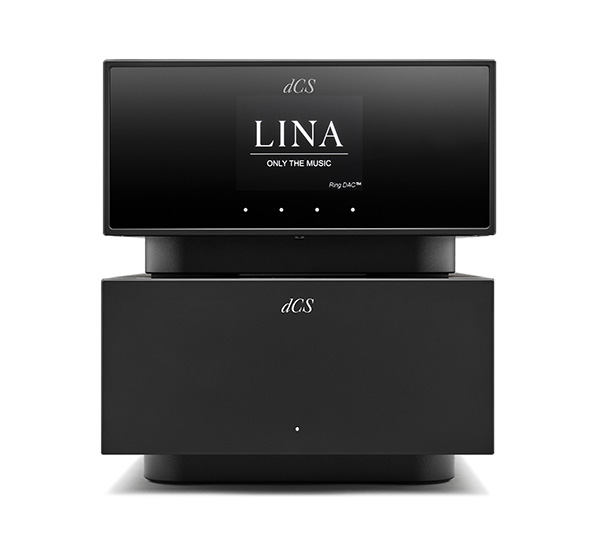
Gramophone Dreams #84: dCS Lina D/A processor and Lina Master Clock
We all know everything sounds like what it looks likeright? It also sounds like what it's made of, who made it, and how much it costs. Well, the $13,500 Lina D/A converter could hardly look more different or feel or cost more different than the $46,500 dCS Vivaldi. The Lina is dCS's lowest priced streaming DAC, so it has to sound less good than my long-term reference Bartók, or the Bartók Apex I reviewed in Gramophone Dreams #75. That's just logical, right?
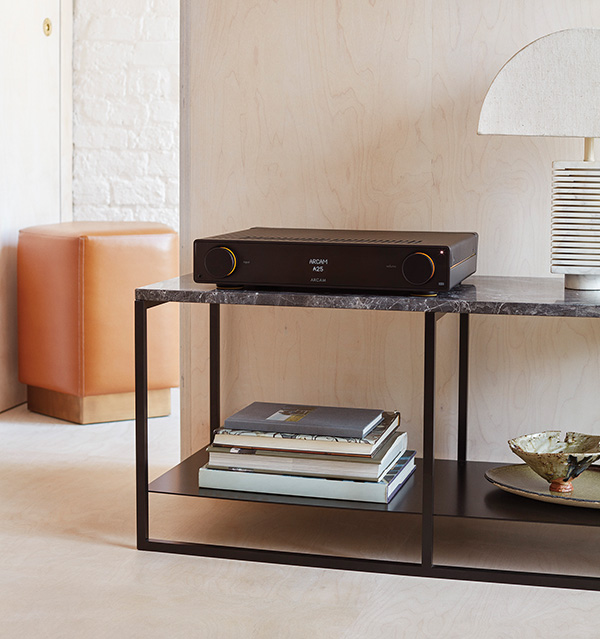
ARCAM Radia A25 integrated amplifier
I'm finding it interesting to notice how a device previously unseen and unheard declares itself one small step at a time as I open its box, feel its heft, observe its form, study its manual, and, finally, wire it into my system. Those start-up experiences, plus my gut feelings during my first moments of music listening, establish a tone of innocent discovery I wish would last the whole month. It never does.
I mention this because my first impressions for my first-ever review of an ARCAM product, the Radia A25 integrated amplifier, were in that "innocent and receptive" mode from the instant I saw the box sitting outside my door.
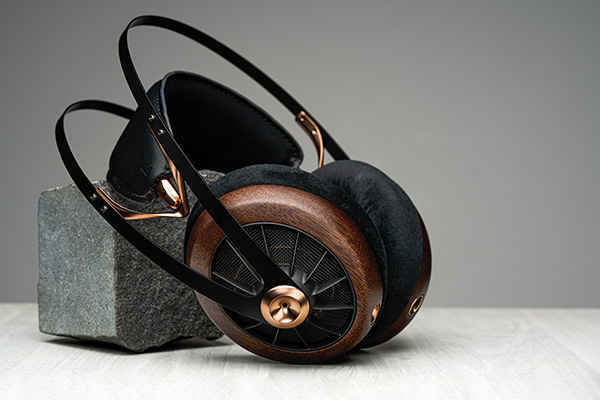
Gramophone Dreams #83: Benz Micro Gullwing SLR, Goldring Ethos phono cartridges, Meze 109 Pro headphones
Gramophone Dreams #82: IKIGAI Kangai-level cables, dCS Lina headphone amplifier
With a slightly worried look, he asked, "How much did you say those silver cables cost?"
Thirty years later
Changing audio cables always changes the sound of my system, sometimes a lot but usually just a little. Typically, the sonic effects of cable changes are modest shifts in focus, tone, or transparency. But sometimes during blue moons I've seen a new set of cables turn a blah, dull, fuzzy system into a macrodynamic, microdetailed one. Or turn a cool, mechanical-sounding system into something fierce and mammalian.
Gramophone Dreams #81: Feliks Envy headphone amplifier
Girard explains how this not knowing drives history and invention. His main premise is that we feel desire but, not knowing what we desire, mimic the desires of others. These "others" we mimic constitute a third element, interrupting the lines of force between a person and the objects desired. This, according to Girard, makes desire, and by extension human evolution, a nebulous but powerful anthropological force engaged in forming human cultures.
In other words, you might like big speakers and fat speaker cables, but maybe only because people around you appear to like them. Same with cars and clothes and lovers.
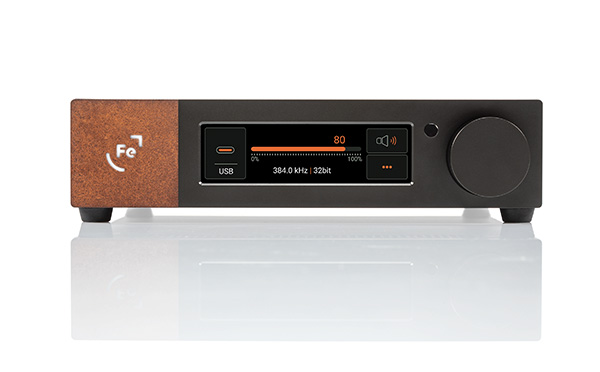
Ferrum Wandla D/A preamplifier
Connecting the power adapter caused a power-switch symbol to appear on the front panel touch screen. The moment I touched it, I smiled like the Cheshire Cat, because I saw a USB-C symbol, a loudspeaker symbol, three dots in a box, and a volume control bargraph. That told me the Wandla recognized my chosen input and was waiting for a signal. All that remained was for my Roon Nucleus+ server to recognize and enable the new DAC, which it did without prodding or reprimand. For me, that was a wow moment, a good start to what promised to be an interesting review.
The Truth Will Make You Odd
Gramophone Dreams #80: Mobile Fidelity Electronics MasterPhono
When I reviewed the Sentec, I owned three turntables and about 300 records. But phono stagewise, I was a beggar and a borrower, hoping a friend's phono pre or some review product would jump out of the deck and become my reference.