Martin Colloms

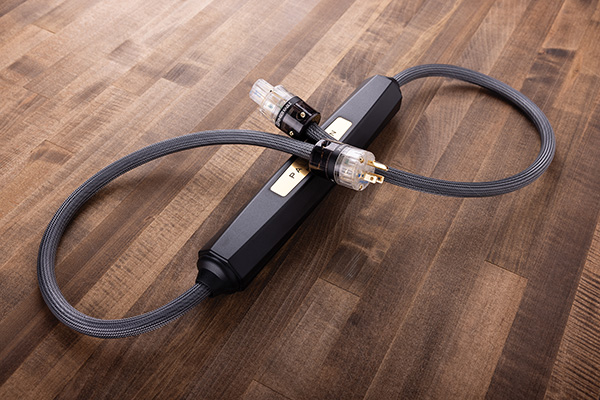
Kimber Kable Carbon Series speaker cable and interconnect, PK10 Palladian power cable

Ray Kimber founded his enterprise in the late 1970s, and for the last half-century has withstood the ravages of this difficult market. He first got involved in cable technology while addressing the problems of induced interference in audio connections where high-power installation lighting was involved, especially early thyristor-controlled systems.
Continue Reading »

Quad 33 preamplifier & Quad 303 power amplifier

Launched in 1967, Quad's highly original, elegantly styled 33 preamplifier and 303 power amplifier were Quad's first all–solid state designs and among the first solid state separates. The 303 may have been one of the first "vertical" amplifiers. Together with the 405 stereo amplifier, which came out in 1975, and the FM2 and FM3 tuners, these products proved to be enduring, widely feted successes from their launch until they were discontinued, the 33 in 1982, the 303 in 1985. Meanwhile, they enjoyed massive production runs, were marketed worldwide, and were much admired for their modern industrial design. It's said that Quad sold 120,000 33 preamps and 100,000 303 amplifiers. Across two versions, the 405 sold even more.

Quad introduced new versions of the 33 and 303 (each component $1599) in 2024, apparently moved to do so by the continuing hot market for originals.

Continue Reading »

An AudioQuest Cable Loom: Vodka network, Pegasus interconnects, Robin Hood speaker cables, Blizzard power cables

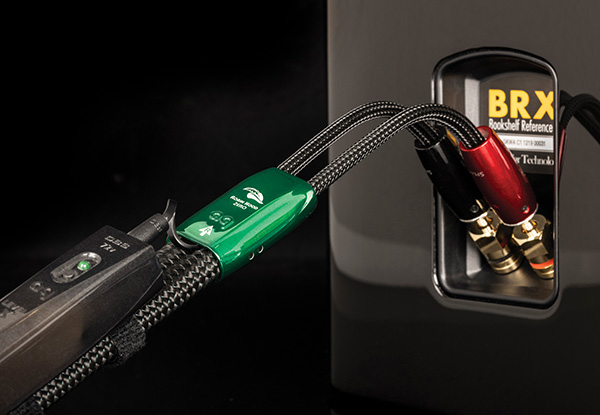
I began the test series I discussed in Colloms on Cables with the first company to respond to our request for review samples: AudioQuest. Their loom comprised a pair of Robin Hood Zero loudspeaker cables; Pegasus I/C interconnects, both unbalanced RCA and balanced XLR; Blizzard AC power cables; and Vodka Ethernet cables. AudioQuest has decades of experience with audio cables, supplying a huge range from high-quality "industrial" cables—some available in bulk for custom-install applications and manufacturing—to more familiar audiophile constructions. Their designs are highly finessed and exquisitely terminated, some executed in exotic materials, particularly solid silver. An established bedrock of engineering underlies AudioQuest's cables. They're based on high-quality, nontwisted conductors, low-loss insulation materials, well-known construction geometries, and a nuanced approach to subtler aspects including conductor purity and cable-draw finish.
Continue Reading »

Colloms on Cables

Underpinning a discussion about the merits of potentially costly specialist audio cables is an obvious question: Why do we need them? Doesn't almost all wire conduct audio signals with negligible distortion and very little loss of power? Specialist hi-fi cables seem expensive for what you get. Especially at the upper end, they seem like a worse value than electronics and loudspeakers. Depreciation is greater, too: Cables are almost a consumable.

But if you wish to finesse the quality endeavor of classic separates-based hi-fi systems, you cannot do without them. Fundamentally, it is not the efficient transfer of audio power that's the issue; that is the easy bit. Rather, it is a matter of optimizing the transmission of the more subtle information that describes recorded acoustic, instrumental detail, the performers, and, not least, dynamics and rhythm: Are your feet tapping unconsciously in time to the performance?

Continue Reading »

Wilson Audio Specialties The WATT/Puppy Loudspeaker

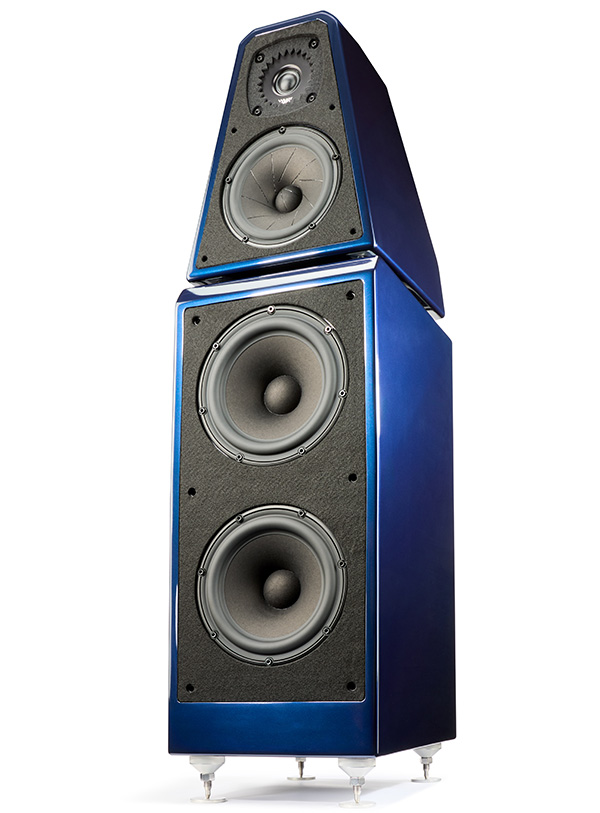
Since the original WATT/Puppy concept kicked off in the late 1980s, there has been a 40-year evolution leading to the latest version reviewed here. The loudspeaker's price in 2025 is around $40,000/pair compared to the original's $8000. While inflation alone would have lifted the price to $25,000/pair, the current price takes into account the many technological and design improvements. While remaining physically separable, the upper "WATT" (Wilson Audio Tiny Tot) component, namely the head unit of the latest design, can no longer be run as a small full-range loudspeaker in its own right. This is because the mid/treble crossover, which was originally in the WATT, is now relocated to the lower "Puppy" section. Certainly, that original two-box "full range," strongly sculpted WATT/Puppy stack radically broke the mold in deviating from those rather plain, coffin-shaped tower loudspeakers that were popular in this category.

The late David Wilson originally created the WATT as a shelf-mount studio monitor to help produce his recordings. At the time, this compact two-way promised near–state-of-the-art sound quality, especially transparency, indicative of very low self-noise. This quality also helped to maximize dynamic range and contrast. Later, David used the WATT as the foundation for a three-way floorstanding design by matching it to a low-frequency system (the Puppy), which also stood in as a physical platform for the WATT. This idea became reality in the successful W/P line of bass augmented systems.

Continue Reading »

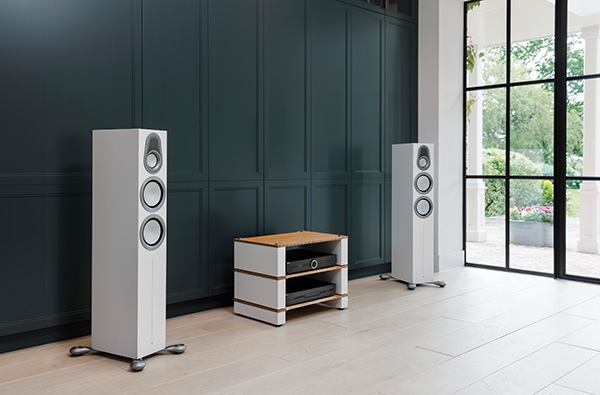
Monitor Audio Gold 300 6G loudspeaker

An ancient connection: Monitor Audio began in 1972 when John Bartlett, founder of the innovative retail chain Audio T, introduced me to Mike Beeny, manager of an Audio T branch near Cambridge, and Mo Iqbal, a local electronics wizard. Mike suggested that Mo and I join him to start a loudspeaker company. Monitor was a fashionable hi-fi term, and I suggested we name it Monitor Audio Ltd. Each director put £300 into the company account. It was registered as a PLC at an address in Teversham, Cambridgeshire. We rented an upper floor office in a warehouse close to Mo's home, since Mo worked all hours. There was additional workspace in his huge double garage. Mike directed sales, Mo was responsible for production management and accounts, and I took the position of technical director for research and development. I also helped supervise production. Lorna Parker was our office secretary.

After launching a handful of increasingly viable designs, we reached a then-astonishing turnover of £1 million in our first year and enjoyed a very successful showing at the Paris Festival du Son. But by this point, I was close to an overwork-related breakdown and reluctantly resigned.

Continue Reading »

Franco Serblin Accordo Goldberg loudspeaker

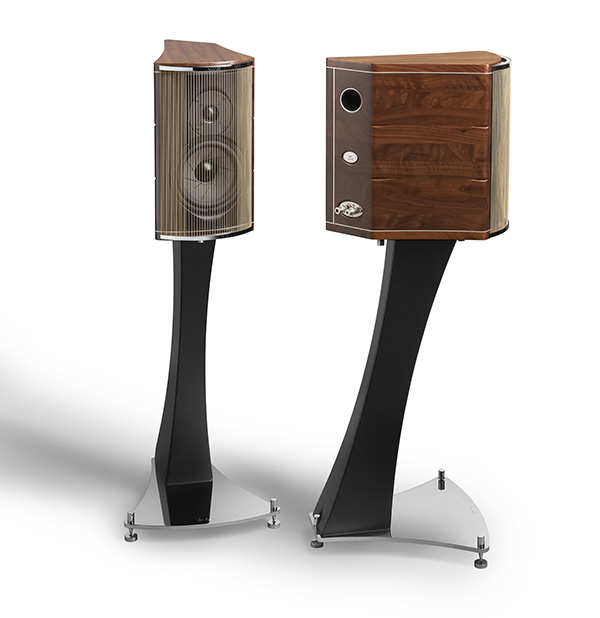
As founder and chief designer of Sonus Faber, Franco Serblin designed and manufactured many loudspeakers of acclaimed high quality, mainly in box form. Nevertheless, he remained painfully aware that such conventional rectangular parallelepiped constructions inevitably possessed an inherent and hard-to-suppress resonant signature characteristic of box-form cabinetry, significantly differing from that for a musical instrument. Franco had long obsessed over the sound and construction of classical string instruments, violins, violas, and cellos made by grand masters over centuries. He valued highly those richly resonant, expressive, complex sonic signatures.
Continue Reading »

Thrax Audio Siren loudspeaker

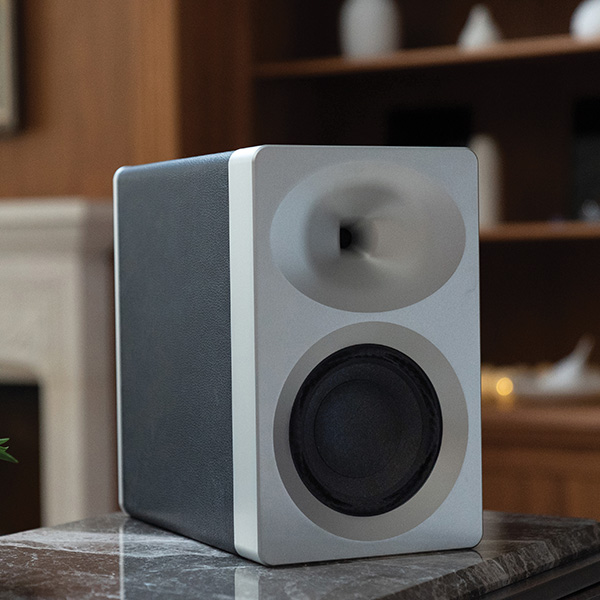
Based in Bulgaria, European audio company Thrax has been active since 2009. Their ingenious and varied design approaches seen over several product lines have continued to intrigue me with their conceptual originality, innate musicality, and imaginative use of a broad spectrum of technologies. Their products range from valve (tube) amplification to digital audio and, more recently, loudspeakers . . . The range of distinctive high-end electronics has continued to expand to include a loudspeaker, the standmount Lyra, now joined by the smaller Siren ($13,600/pair), also a standmount and the subject of this Stereophile review.
Continue Reading »

Naim NSC 222 streaming preamplifier & NPX 300 power supply

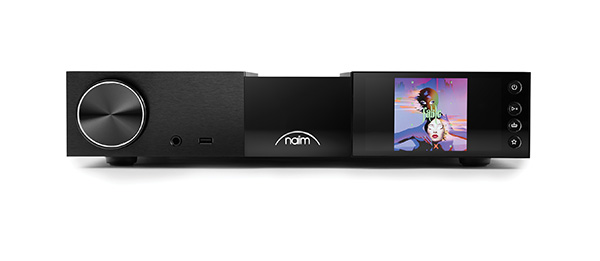
Naim has comprehensively reimagined its Classic Series, which has been around for some 20 years with improvements along the way. Included in the new range of products is the 200 series, comprised of two products: the NAP 250 power amplifier, which I reviewed in the November 2023 issue of Stereophile, and the NSC 222 streaming preamplifier ($8999), which is reviewed here. A third component in the New Classic series, the NPX 300 power supply (also $8999), which is intended to be paired with the NSC 222 and other Naim components, is also considered in this review.
Continue Reading »
Advertisement
Advertisement
Advertisement