Mike Mettler
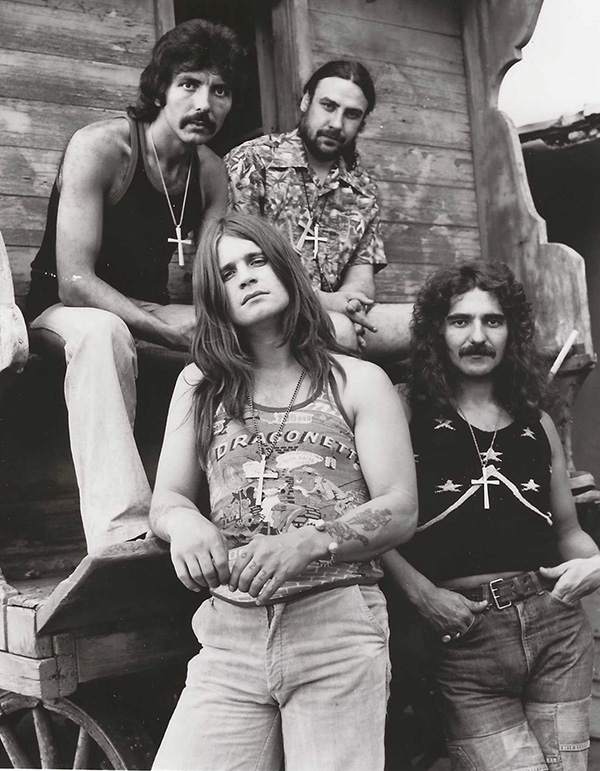
Sound Chaser #2: Ozzie Osbourne, the Prince of Dark Melody
Sound Chaser #1: Brian's Songs
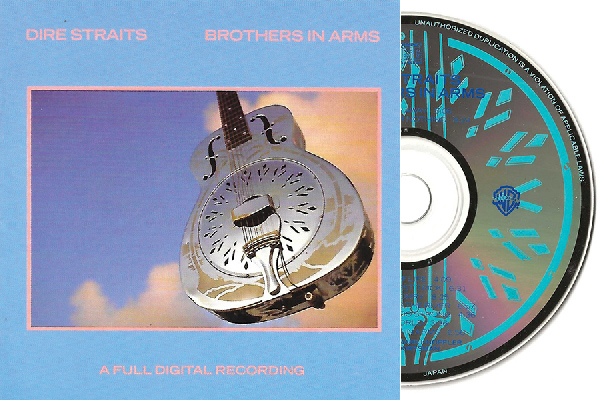
Rock of Life: The Brothers In Arms CD Turns 40
But then on May 17, 1985, the CD's savior arrived: Brothers in Arms, the fifth studio album release by British rock stalwarts Dire Straits. Trumpeted as one of the first "full digital recordings" in the pop/rock oeuvre, Brothers in Arms was an undeniable smash international hit from a band that had struck it big already. Exactly 40 years later, it remains a benchmark recording and a top seller.
Rabbit Holes #17: The Spirit of Rush Ever Lingers
That changes with the new, career-spanning box set, Rush 50 (Ume/Mercury/Anthem), the first time the band has pulled back the curtain to share previously unreleased and highly sought-after tracks, alternate takes, and live rarities alongside other notable studio and live classics that traverse the band's fertile 19732015 lifespan.
Planet of Sound: Harnessing that Magic Pixies Dust
If there's one word that best describes the sound of the Boston-bred alt-rock quartet known as Pixies, it has to be "dynamics." It's a musical milieu Pixies have deftly presented for 37 years and counting, right from the outset of the sinister janglefest known as "Caribou," the opening track on their inaugural September 1987 EP on 4AD, Come On Pilgrim.
From there, short, sanguine, sweet, succinctly titled songs like "Debaser," "Velouria," "Monkey Gone to Heaven," "Gigantic," "Here Comes Your Man," "Gouge Away," and "Where Is My Mind?" have all served to cement the bedrock of Pixies' planet of sound. Chief Pixies songwriter and vocalist/guitarist Black Francisborn Charles Thompsonrecently described it in an interview for Stereophile as this: "Let's be quiet. Now, let's be loud. Let's be whispering. Now, let's be explosive." That's a precise four-sentence descriptor not only of their entire prior CV but also of Pixies' latest, and ninth studio album, the forebodingly titled The Night the Zombies Came, which was released by BMG in October 2024.

Michael Des Barres and the Art of Aural Obsession
Listening to music inspires us to take action. Upon hearing an I.E.Instant Ear-wormwe must then determine the best way we can go about listening to it again (and again) at our convenience. Prior to the free-for-all streaming era, our I.E. follow-through measures typically meant seeking out a specific playback medium for our favorite music, initially based on budgetary constraints. In those formative, pre-employment preteen years, 45sand/or, depending on how far back we're talking here, possibly even 78sfit the literal dollar bill before we could afford to move up the media ladder and begin purchasing LPs en masse. Our then-limited playback options tended to start with those self-contained, close-and-play record players and/or our parents' living-room consoles before we could afford to acquire separate components for more personal, higher-fidelity listening sessions. We were, to be blunt, obsessed.
Across the pond, hungry young listeners were eager to do the exact same thing. Take garage/punk glam-pop vocalist Michael Des Barres (aka MDB), who had duly been shuffled off to Repton School in Derbyshire, England, as a lad in the 1950s and found his initial aural inspiration by listening to his mates' records, since he couldn't yet afford to buy any of his own.
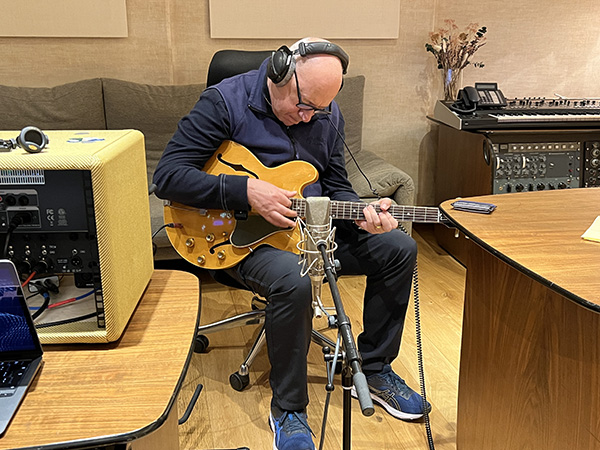
Mark Knopfler, Straits Shooter
For a guy born in postwar Glasgow who spent his formative years across the border in Northern England, Mark Knopfler has a knack for writing songs based in an American ethos.
Since disbanding Dire Straits, which he led from 1977 to 1992, Knopfler has evolved from headband-sporting guitar hero to acclaimed observational songwriter. Commencing with his 1996 solo debut Golden Heart (Warner Bros.) and continuing through One Deep River, his just-released 10th solo studio album, on the jazz-centric Blue Note label, Knopfler tells character-focused stories in arrangements that might cause listeners to think he's from Nashville, not Northumberland.
Steven Wilson: A Master of Immersive Music
Steven Wilson loves changing the minds of spatial audio skeptics. He's the go-to Dolby Atmos and 5.1 mixmaster for many heritage artists, new-wave bands, and alternative acts. Best known for leading the post-prog collective Porcupine Tree, releasing a score of genre-stretching solo albums, and serving as a key creative contributor to such experimental groups as No-Man and Blackfield, Wilson's approach is simple: bring them into his studio and let the music do the talking.
Joan Osborne's Musical Talisman
We all have at least one cherished album that takes us back to the exact time and place we first heard it. Whenever we hear any of the music from that special albumregardless of whether it occurs months, years, or even decades later, of whether we hear it in the grocery store, on a car radio, or on a friend's playlistwe instantly reconnect with the feelings the music originally evoked within us.
Some of my old gear is boxed up in an offsite storage space, but almost all of my old LPs are within reach. I can reconnect with them and how they make me feel in a flash, with the drop of a needle.