The Spin Doctor at AXPONA 2024
With that in mind, here are a few things that caught my eye at AXPONA 2024.
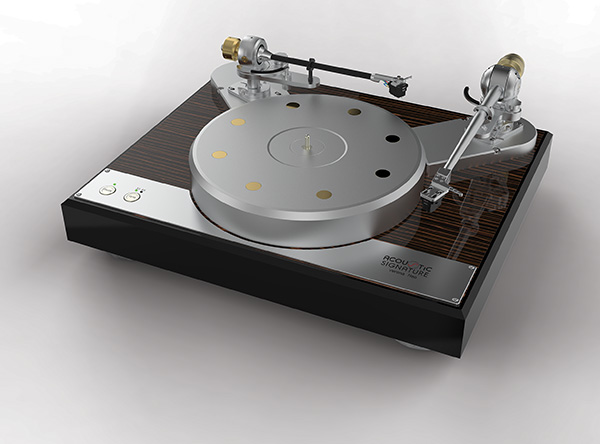
When I visited the Acoustic Signature factory in 2023, I watched as they hewed massive slabs of aluminum into beautiful, heavyweight turntables. This approach is the opposite of the lightweight-but-rigid philosophy embraced by Rega, and while the resulting performance has different strengths, I would argue that it is at least equally valid. As with Rega, Acoustic Signature products have a purposeful simplicity, in a way that would allow a nonaudiophile to instantly recognize what their function is.
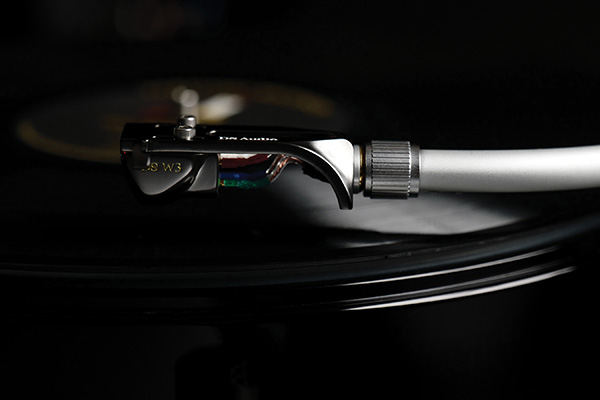
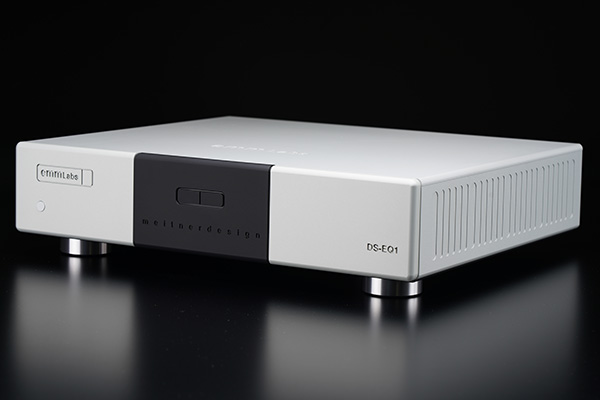
Meitner has been designing innovative hi-fi gear for the pro and consumer audio markets for more than 50 years, but for most of the last 30, he has been best known for his work with high-resolution digital audio and DSD recording. Despite this focus on digitaland despite that comment about the two leading phono cartridge technologiesdeep in his heart, Ed still loves analog and has fond memories of the Kenwood optical cartridges from the 1970s, which I discussed in last month's Spin Doctor column. So when Ed read that a company in Japan called DS Audio was bringing back an improved version of the optical cartridge using modern materials, he contacted designer Tetsuaki Aoyagi to learn more.
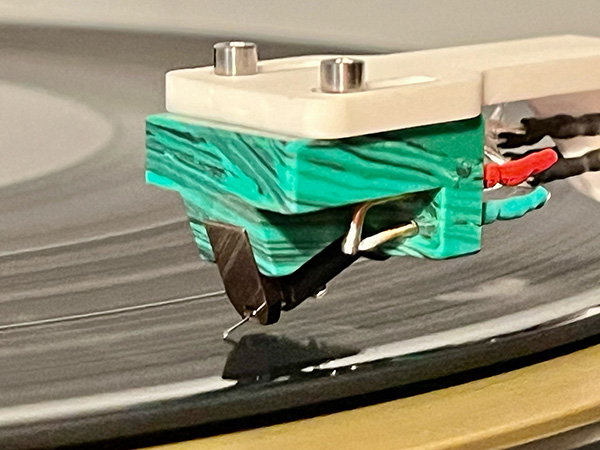
A few months earlier, I had convinced my nonaudiophile dad to upgrade the family stereo. We went from our ancient Monacor SMX-50 tube receiver to a pretty weird but less ancient Sony all-in-one cassette system called the TC-133CS. I failed to understand that the new Sony's magnetic phono input was incompatible with our old ceramic cartridge. Once I figured that out, I tried to convince my dad that what we really needed was a Shure M75ED. After all, that cartridge came from the same company that made the legendary V-15 Type III, widely regarded as the best cartridge in the world at the time. My dad, however, had different plans. Guided by his home-product purchasing bible, Consumer Reports, he decided we should go instead with the less-costly Goldring.
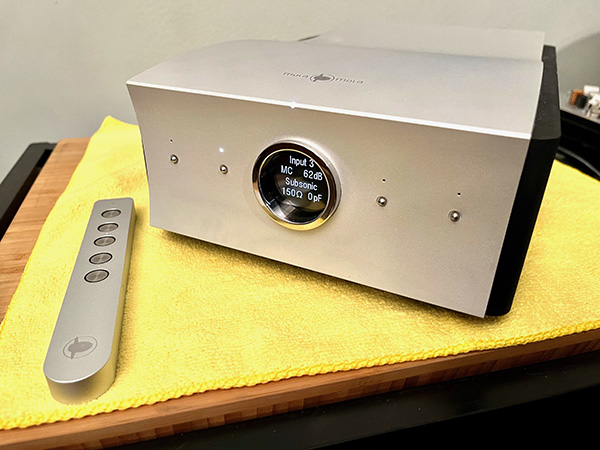
Phono playback EQ is one of those audiophile topics that stokes some people's passions, with plenty of disagreements about how important it is. I have seen grown men get into heated discussions about the history of record EQ curves, but in truth, the subject is only likely to matter if you listen to a lot of 78s or original mono LPs pressed between the late 1940s and the mid-1950s.
Once we were there, we were more or less free to move around in the capital city Tallinn, but leaving the city was strictly forbidden, except as part of a planned group excursion with our KGB minderser, "Intourist guides."
In prior screeds, I have discussed the category of turntable designers I like to call deep thinkers, who twist their brains to come up with fresh thinking about how to approach the task of playing a vinyl record. If there is a poster boy for deep thinkers, it's got to be Simon Brown.
Brown is based on the South Island of New Zealand. I'm thinking that being in such a far-flung part of the world must have given his head plenty of space to get creative. First, in 2011 he created The Wand tonearm, a striking unipivot design that features a fat carbon-fiber armtube nearly 1" in diameter (below). Art Dudley wrote about The Wand in 2019, and I highly recommend that you read his thoughts, especially about his struggles to set up The Wand.
Five months later, in May 2020, we received the second blow in this double whammy of bad tonearm news. That's when the Ichikawa Jewel Company of Japan, maker of Jelco tonearms, announced without warning that they were shutting down operations, closing their doors for good. They blamed a combination of an aging workforce, worn-out tooling that needed to be replaced, and the coronavirus pandemic. . .
We lost two key players all at once, but it's not as if we suddenly had nowhere to turn for tonearms. Turntable manufacturers like Acoustic Signature, Clearaudio, Origin Live, Pro-Ject, Rega, and VPI all sell their tonearms separately . . . A number of smaller tonearm specialists have popped up in recent decades: Acoustical Systems, Graham, GrooveMaster, Kuzma, Reed, Schick, Schröder, and at the ultrahigh end, Swedish Analog Technologies. Now we can add Korf Audio to the list.
Whether it's a thicker chassis, more powerful motor, more precise bearing, more effective isolation system, or something else, the emphasis is always on stepping things up a notch or two, rather than reinventing the wheel. This obsession can result in some impressive 'tablessome of the most impressive in the world, with awesome attention to detail. But are they the best sounding?
The other camp is what I call the deep thinkers. They approach the task of playing a record from a theoretical perspective and leverage their knowledge of physics to come up with fresh and innovative designs. The results may look unconventional, or even odd at first glance, but when such lateral thinking clicks, it can really push the boundaries of what's possible.