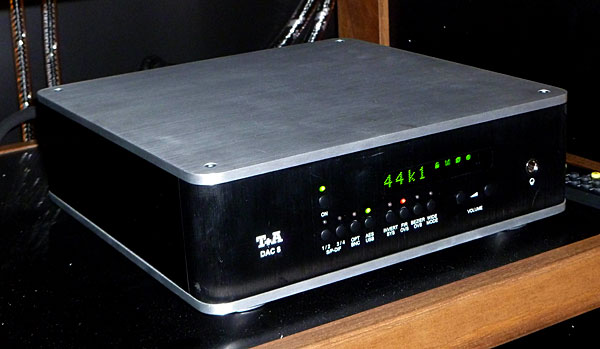
T+A DAC 8 DAC/Pre
T+A employs aggressive jitter management, multiple filter options, and runs eight 32 bit Burr Brown converters. All analog stages are fully discrete and I'm going to guess it sounds pretty good too.
Inside the CD 1 is a Linux-based computer that analyzes the data coming off of the 4x speed drive. Parasound says that the computer keeps checking the data until it is satisfied it has a bit prefect stream. Balanced and unbalanced outputs are included as well as SPDIF for those looking to employ their own DAC.
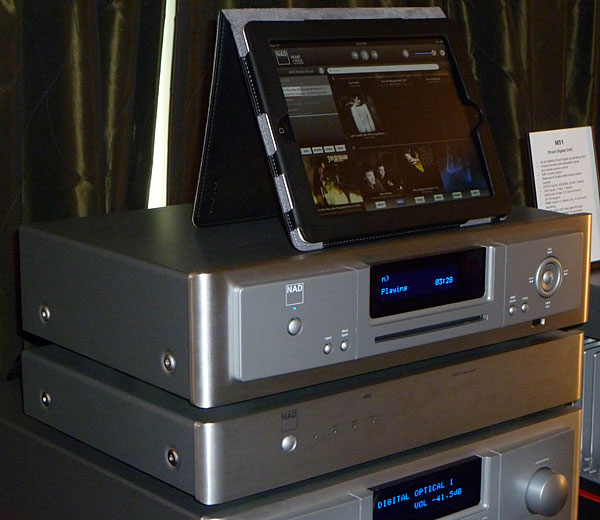
The M50 has WiFi, ethernet, USB and HDMI to handle PCM files up to 24/192 and has a CD slot for ripping discs and retrieving metadata. Streaming services should be available as options in about six months. For storing files, the M52 connects via USB and runs a 3TB RAID 5 Array. All functions can then be controlled via NAD's iPad app.
Being based on an Oppo means it will play just about any audio disc you have on hand and also do 3D Blu-ray and upscale video to 4K if you have a display to handle it. On the audio side, there is also a separate balanced stereo analog output added by Electrocompaniet.
Such was the case with the dCS room in the Venetian. The company is celebrating their 25th anniversary and Sony offered an assist in the form of a couple dozen DSD tracks straight from the vaults to hard drive. The Debussy DAC can now process DSD 64 via USB (free software upgrade available from the dealer next week), and for my demo I picked Santana's "Black Magic Woman", settling into audio ecstasy.
dCS also had their complete Vivaldi stack set up at the Mirage hotel, with a presentation hosted by Wilson's Peter McGrath. Once again the sound was extraordinary as McGrath played some 24/88 files of Mahler's Fifth that he had recorded himself with Grado microphones. I only wish every one of you could have been there.
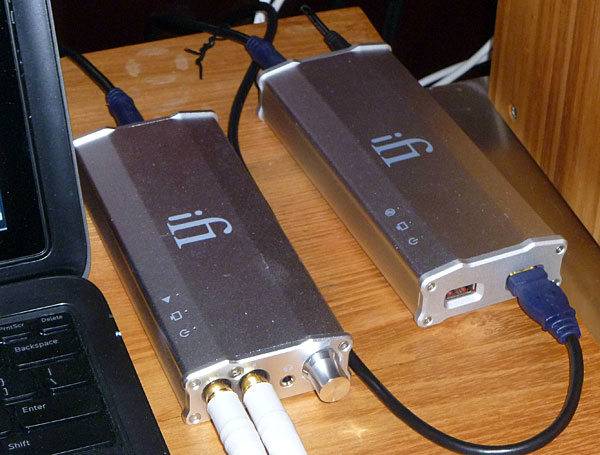
The iDAC sports a 24/192 USB asynch input with headphone amp, analog volume control and ESS Sabre DAC. Adding the Power Plant means your computer USB is no longer doing the heavy lifting and all of the iDAC components get a "super-regulated" filtered power supply.
The $249 rBlink gives you the ability to connect any Bluetooth device like an iPhone wirelessly to the system. Plug the rBlink into an extra input on your stereo, and then have the Bluetooth enabled iDevice add it from their menu. Maybe not the best sound in the world (though better than it used to be with Bluetooth), but easy for your pals and great fun at parties.