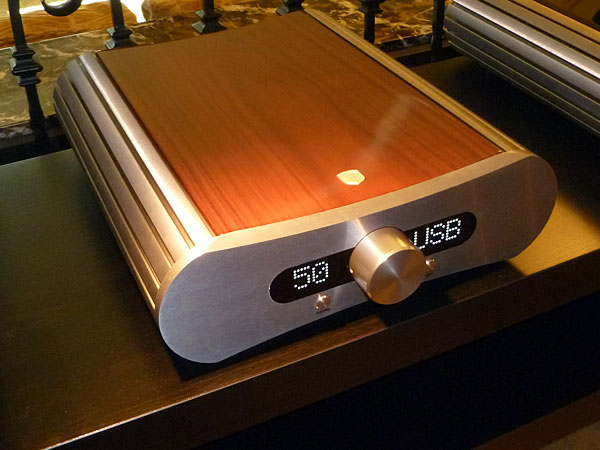
Gato PRD-3 Pre Amplifier/DAC
Also worth mentioning is how the volume control display works: as you turn the knob, the numbers on the display slide up and down instead of just changing. Probably has to be seen to be understood, but way cool.
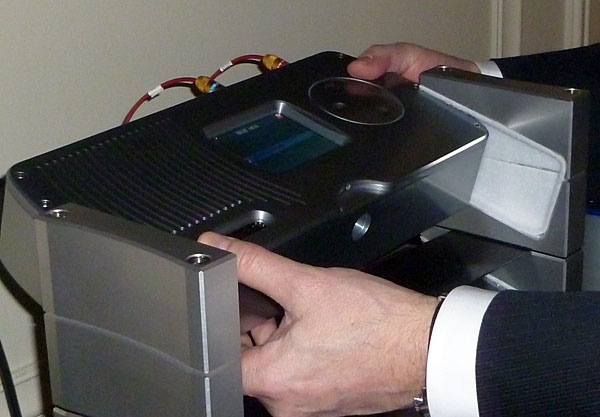
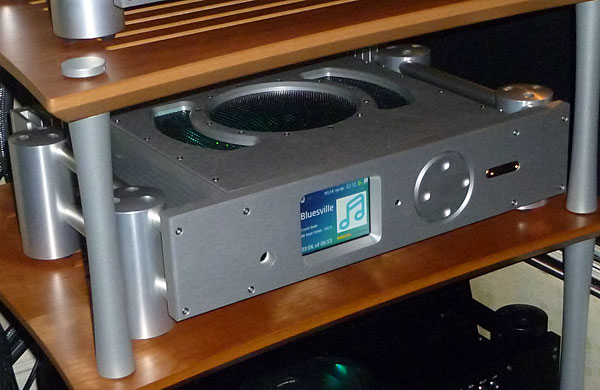
The MB100 lets you stream from the internal 1TB drive, wirelessly from your personal device, or hook up USB, eSata or NAS drives. You can also stream from Pandora, Spotify, etc. All is controlled via an iOS or Android custom app, web browser or TV user interface and output to either digital or analog ports on the back.
Available in April or May this year for around $6,500 retail. Go with the glow.
PS: Some of you must have similar memories of listening to music as a kid while the Mac's green and blue lights cast an eerie hue on the ceiling?
Keep in mind that Korg makes the DSD recording devices that many labels are using, including MA Records.
Aimed at both the headphone enthusiast and home listener, the Hugo (goes everywhere "you go") has five digital inputs including 24/192 optical, 24/384 Coax SPDIF, 16/48 driverless USB (for tablets/phones), 32/394 or DSD128 USB, and A2DP Bluetooth link. Outputs include two 3.5mm headphone jacks, 1/4 inch headphone jack and a pair of RCA jacks.
Inside is a rechargeable Li-ion battery for portable use, since the USB does not draw any power and of course, FPGA circuitry which the company is known for. And colors. Chord is also known for putting a window into their DAC's soul on the top of their cases (which indicates the resolution of what's playing), and for the Hugo, they've added a colorful volume control marble as well.
Price in the US will be $2395 when the Hugo is released in the next few weeks.
Price remains the same at $13k and is available with the update now. More details in Jason Serinus' previous report.
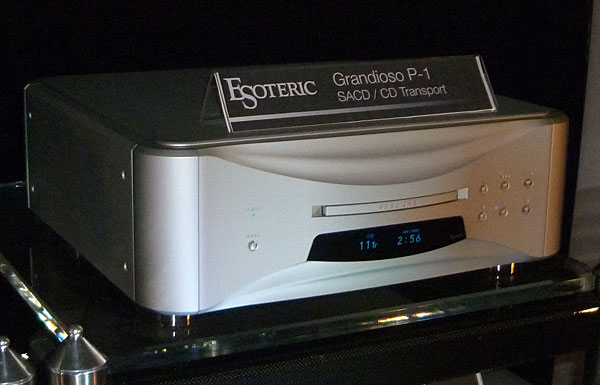
Both the P1 and its D1a can be connected by a BNC cable for clock sync, and the company says that the D1 employs a 36bit digital to analog processing algorithm for PCM. In addition to accepting the P1 signal via HDMI, the D1 has six more inputs including USB, AES/EBU, SPDIF (x2), optical and i.LINK.
The P1 also features a two-chassis design with separate power supply (not shown), "leather-finish" remote control and a $44k price tag. Both the P1 and D1 are housed in a gorgeous aluminum chassis with a fine-ribbed finish.