Dick Olsher
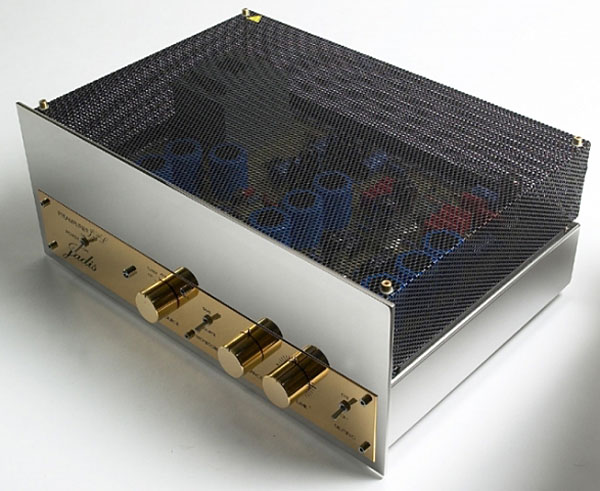
Pawel/Ensemble PA-1 & Reference loudspeakers
Ten seconds to ignition. Relax, buckle in, and welcome to Stereophile's Good Times time machine. Flux capacitors fully energized. Ignition. Not to worry, that slight tingling sensation is perfectly normal. Roll back your calendar to...June 28, 1933. We're at the Eighth Annual convention of the Institute of Radio Engineers in Chicago. Harry Olsen is on the podium, describing a new wide-range cone loudspeaker for high-fidelity sound reproduction.
Quiet, please, Mr. Olsen is about to describe the disadvantages of multipledrive-unit systems. "The radiating surfaces must be separated by a finite distance, with the result that this system will exhibit peculiar directional characteristics in the overlap region where the sound radiation issues from both sources. To reduce this effect to a minimum, the overlap region must be confined to a very small range which requires an elaborate electric filter system for allocating the frequency bands of the units. The greater space required for the two loudspeakers is another important factor. The cost of two separate field structures and vibrating systems will be considerably greater than that of a single unit."

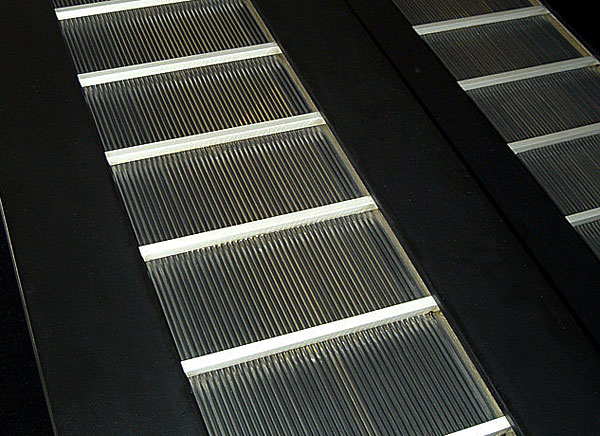
Audiostatic ES-100 loudspeaker
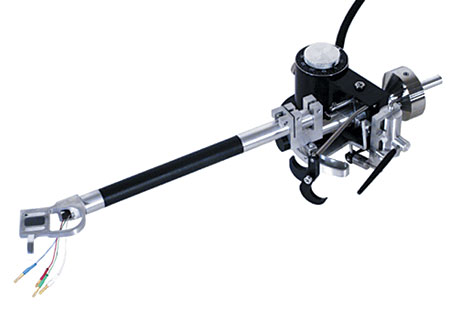
The Tri-Planar Tonearm
While brushing my teeth this morning, it occurred to me that there are significant similarities between a toothbrush and a tonearm/cartridge. The bristles would be analogous to the cartridge and the brush handle to the tonearm. In either case it is the business end of the device that does all the work. The bristles track the contours of your ivories in search of hazardous waste deposits, while the cartridge tracks the record groove transducing wall modulations into an electrical signal. I think that this is where the old adage came from: "A used cartridge is like a used toothbrush—nobody wants one!"
Fried Model G/3 loudspeaker
Tim de Paravicini
<B><I>Stereophile</I>: </B>You are president of Esoteric Audio Research, a British manufacturer of tube amplifiers, and a world-renowned designer of tube equipment and output transformers. I thought we'd begin with a little background. Where were you born? What kind of education did you get to prepare you for a career in audio?
Manley Laboratories 175 monoblock power amplifier
Neither its rather pedestrian name nor Manley Labs' own <A HREF="http://www.manleylabs.com/containerpages/100200.html">literature</A> gives much of a clue as to the 175 monoblock's special pedigree. Where are the bands, the fanfare?! After all, the rolling-out of a 6L6–based high-power audiophile-grade tube amplifier definitely qualifies in my book as a momentous occasion. Deplorably, such happenings are rare indeed; the 6L6 has been unjustly neglected in high-end circles.
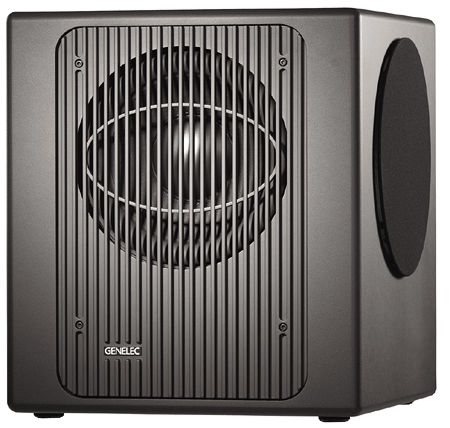
The Science of Subwoofing
There was a time, as recently as 40 years ago, when frequencies below 100Hz were considered extreme lows, and reproduction below 50Hz was about as common as the unicorn. From our present technological perch, it's too easy to smirk condescendingly at such primitive conditions. But just so you're able to sympathize with the plight of these disadvantaged audiophiles, I should tell you that there were two perfectly good reasons for this parlous state of affairs. First of all, program material at that time was devoid of deep bass; not because it was removed during disc mastering but simply because there wasn't any to begin with. The professional tape recorders of the day featured a frequency response of 50–15kHz, ±2dB—just about on a par with the frequency performance capability of a cheap 1988 cassette tape deck.
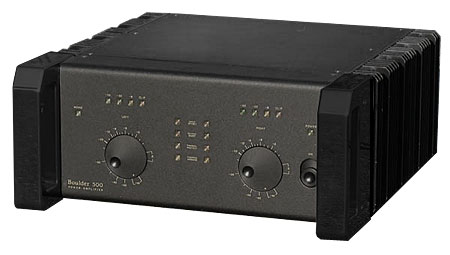
Boulder 500 power amplifier
Yet another amp from Colorado! This is the third amp to come my way from that state (the others being the Spectrascan and the Rowland Research), and at this point, after living with it for a couple of months, I'm quite comfortable in declaring the Boulder 500 to be one helluvan amp.
Fourier 6 loudspeaker
The Fourier 6 has the special ability to generate large coherent sonic fields, from a box small enough to slip into an ordinary shopping bag. At $499/pair, the 6 competes directly with another remarkable-imaging, compact American speaker, the <A HREF="http://www.stereophile.com/standloudspeakers/446">Spica TC-50</A> ($420/pair).