Jack English, John Atkinson

Counterpoint Clearfield Metropolitan loudspeaker
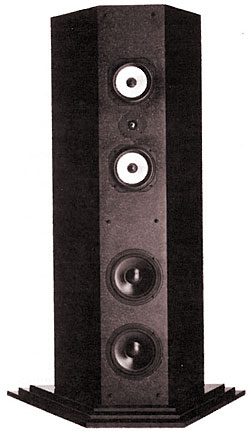
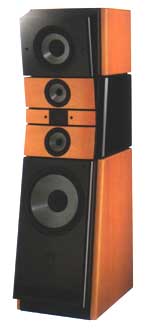
893count.250.jpgWhile Clearfield Audio may be a new name to many of you, it represents the marriage of two well-established members of the high-end community: Counterpoint and designer Albert Von Schweikert. Counterpoint had been working to add speakers to its product lineup for some time. The partnership with Von Schweikert, whom Stereophile readers will remember as the designer of the Vortex Screen favorably reviewed by Robert Harley in July 1989, fills out Counterpoint's high-end product line from source—the company showed a CD transport at the June 1993 CES—to speaker.

The Metropolitan
The developmental history of Vortex speakers provides a meaningful framework for the design of the Clearfield offerings, especially the Metropolitans, or Mets. Like the Vortex designs, the Mets are three-ways with transmission-loaded bass. Like the Kevlar Reference Screen (reviewed by Robert Greene in The Abso!ute Sound's "double-issue" 83/84, December '92), the Mets use Kevlar-coned midrange units from Focal that cover a broad range from 125Hz to 2kHz. What's dramatically different is the overall driver layout.

Continue Reading »

Audio Physic Step loudspeaker

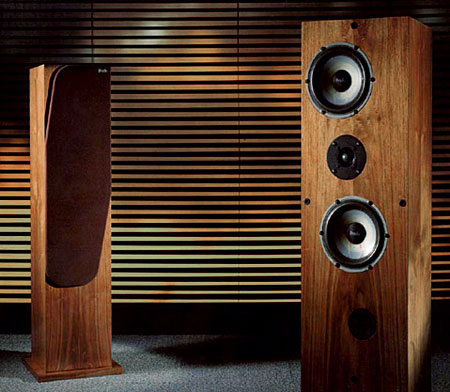
Immedia introduced the German Audio Physic speakers at the 1994 Winter CES. As I mentioned in my Show report (Vol.17 No.4), I felt the price:performance ratios of the three models displayed was an indirect one: the least-expensive—the Step—sounded best. Since I'm always looking for products that offer great bang for the buck, I arranged to receive a pair of review samples.
Continue Reading »

R.I.P High-End Audio?

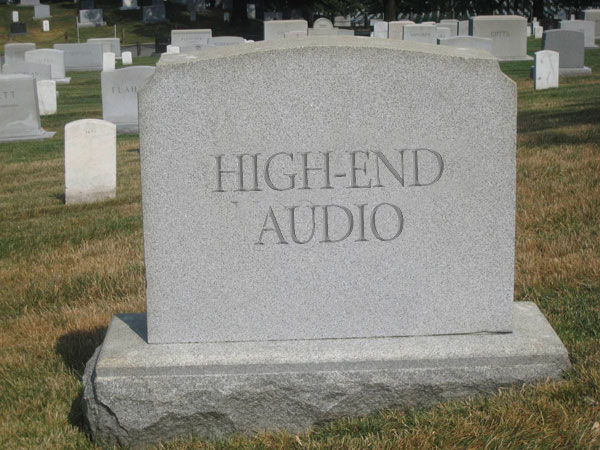
Slowly, painfully, high-end audio seems to be dying. We all know it but we're apparently unable to resuscitate the patient. US dealers are closing at alarming rates—it must be the economy. Women continue to avoid the High End—it must be the technobabble combined with male equipment fetishism. Younger people aren't hopping aboard—it must be all those other things competing for their money. (Then again, it might be the High End's abhorrence of rock'n'roll.)
Continue Reading »

Focal-JMlab Grand Utopia loudspeaker

When you wish upon a star,
Makes no difference who you are;
Anything your heart desires,
Will come to you
.—Jiminy Cricket

12-21-92-17-52-46. Big deal, another $100,000 lottery winner. Where's Jean-Phillipe? Probably off getting us something to drink. Who can blame him? I can't believe people sit around dreaming and waiting to hear all these winning numbers. J-P, you out there?

Young, good-looking, bright—J-P had a lot going for him. He certainly didn't need to sit here listening to winning lottery numbers. Ah, there you are. What are you mumbling about?

"12-21-92-17-52-46. I've won! I've won! I've won!" He shouted over and over, almost crushing me in a bear hug.

My oh my, J-P had really won a big one. And what was it he'd been dreaming about while buying all those tickets every payday for the last three years? Speakers! He'd wanted to own the best loudspeakers in the world, and now he could.

Continue Reading »

Conrad-Johnson Premier 7A preamplifier

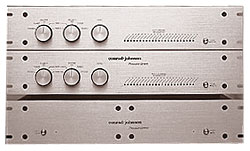
Conrad-Johnson launched the all-tube Premier 7 in 1988 as an all-out sonic assault on the state of the preamplifier art. A great deal has happened since then. For starters, C-J has gotten a great deal of feedback from customers, dealers, and reviewers. None other than <A HREF="http://www.stereophile.com/interviews/66">J. Gordon Holt</A> (<I>Stereophile</I>, November 1988, Vol.11 No.11) concluded that: "It appears that nothing which could possibly have improved its sound had been omitted....It is, in fact, about as close as any tubed preamp has come to being perfectly neutral in sound&mdash;in nearly all respects." In the now-defunct <I>Sounds Like...</I> (issue 3), Sam Burstein concluded that "It is, with certain reservations, absolutely delightful to one's musical senses." And, speaking of absolutes, even Harry Pearson gave the Premier 7 a rave in the first round of his preamplifier survey (<I>TAS</I>, issue 58). As icing on the cake, John Atkinson (<I>Stereophile</I>, Vol.12 No.8) concluded that the 7 had "the requisite degree of sonic magic to make it a Class A recommended preamplifier."

Continue Reading »

Epos ES25 loudspeaker

If reviewers can be believed, the diminutive, $995/pair Epos ES11 loudspeaker has been a phenomenal success worldwide since its 1990 introduction. <I>Stereophile</I> added its voice to this hallelujah chorus in Vol.14 No.7, when the '11 kicked butt in a blind-listening-panel evaluation of inexpensive small speakers. While the ES11 did plenty of things extremely well, it was inevitable that it was limited in terms of ultimate sound-pressure levels (spls), deep-bass extension, and dynamic persuasiveness. While the ES11 was an unqualified success given its modest size and price, one couldn't help but wonder what Epos might be capable of in a larger model. (While a larger Epos model already existed in the $1695/pair <A HREF="http://www.stereophile.com/standloudspeakers/566">ES14</A&gt;, it predated the technology of the ES11 by four years.)

Continue Reading »

PSB Alpha loudspeaker

As I said during the 1991 <I>Stereophile</I> writers' conference (<A HREF="http://www.stereophile.com/interviews/109">Vol.14 No.12</A>): "There's immense satisfaction in finding that next Audible Illusions or Vandersteen or Rotel." My oh my, am I satisfied! But before you start writing checks, hold onto those pens for a few moments. The PSB Alphas are not ProAc, Hales, Quad, or even Vandersteen killers. Goodness, what do you expect for $200?

Continue Reading »
Advertisement
Advertisement
Advertisement