John Atkinson

New Cantus CD Features Luminous Sound

In June 2007, I again recorded Minnesotan male choir Cantus live on location, this time in the glorious acoustic of Sauder Concert Hall at Goshen College, in Goshen, Indiana. The resultant CD, <I>While You Are Alive</I> (Cantus CTS-1208), is the eighth I have engineered of the group; it is a collection of 20th- and 21st-century works that explores, illuminates, and celebrates all stages of life, from birth to death.

Continue Reading »

Subjective Fact or Objective Fantasy?

Blame the Puritans! say I. The high end has always had an ostinato accompaniment of grumbles from those who appear to feel that it is immoral to want to listen to music with as high a quality as possible. In a recent letter, for example, <I>Fanfare</I> and <I>Stereo Review</I> contributor and <A HREF="http://www.stereophile.com/reference/101">author Howard Ferstler</A> states that "the audio world has more products of bogus quality and shills promoting them than any other industry, bar none," and trots out the old saw that audiophiles "end up spending an excessive amount of money on equipment or tweaking techniques of surprisingly dubious quality."

Continue Reading »

Esoteric MG-20 loudspeaker

Audio shows are where reviewers search out products for possible review. We are always on the lookout&#151;or listenout&#151;for components that transcend the boundaries of the ordinary, that set the pulse racing a little faster. The 2007 Rocky Mountain Audio Fest, held in Denver last October, was the first RMAF I had attended, and among the rooms that impressed me was one featuring components from the Japanese brand Esoteric, which was celebrating its 20th anniversary.

Continue Reading »

MartinLogan Sequel II loudspeaker

Loudspeaker designers are dreamers. Something takes hold of a man&#151;the fact that loudspeaker designers are <I>all</I> men must be significant&#151;and he wrestles with recalcitrant wood, arcane drive-units, and sundry coils, capacitors, and cables, to produce something which will be individual in its sound quality yet inherently more true to the original sound. An impossible task. Yet if there were to be an aristocratic subset of those dreamers, it would be those who have taken upon themselves the burden of producing <I>electrostatic</I> loudspeakers. For these farsighted engineers, there is no standing on the shoulders of others, there is no recourse to tried and tested combinations of other manufacturers' drive-units. Every aspect of the design, no matter how apparently insignificant, has to be created afresh from first principles. For a new electrostatic design to produce a sound at all represents a great triumph for its progenitor, let alone having it sound musical. And to produce an electrostatic loudspeaker that is also possessed of great visual beauty is indeed a bonus.

Continue Reading »

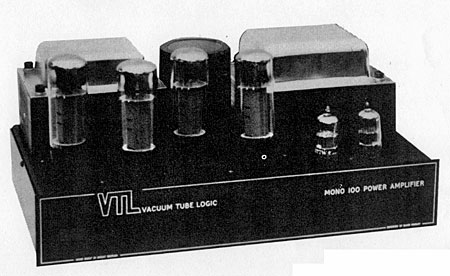
VTL 100W Compact monoblock power amplifier

The last time I was in England, I happened to be rummaging through some boxes in my mother's garage, boxes containing photographs, my old school books, concert programs, diaries, postcards—all the bric-a-brac you collect throughout your life that you'll never have a need for and can never discard. If anything, such rubbish is perhaps the nearest thing to roots that anyone can have these days. Among the boxes was an amplifier that had been an everyday companion of mine for many years, the vintage Vox AC100 I had used to amplify my Fender bass when on the road.
Continue Reading »

PrimaLuna ProLogue Eight CD player

There's a retro, Heathkit vibe to the curiously capitalized PrimaLuna ProLogue Eight CD player: a shelf of glowing tubes and a chunky transformer case perched atop a plain black chassis. But on closer inspection, it seems there's much more going on here. The chassis is made of heavy-gauge steel, with (according to the manual) a "five-coat, high-gloss, automotive finish," each coating hand-rubbed and -polished. The tube sockets are ceramic, the output jacks gold-plated. Inside, separate toroidal transformers power each channel. Custom-designed isolation transformers separate the analog and digital devices, to reduce noise. The power supply incorporates 11 separate regulation circuits. The output stage is dual-mono with zero feedback. Audio-handling chips include a Burr-Brown SRC4192 that upsamples "Red Book" data to 24-bit/192kHz, and one 24-bit Burr-Brown PCM1792 DAC per channel. Only the tiny silver control buttons (on the otherwise hefty faceplate of machined aluminum) betray a whiff of chintz.

Continue Reading »

Avalon NP Evolution 2.0 loudspeaker

After a year spent exploring the best that can be obtained from minimonitor loudspeakers, I embarked on what will be an equally long examination of what floorstanding towers have to offer. I began with the <A HREF="http://www.stereophile.com/floorloudspeakers/1207sonus">Sonus Faber Cremona Elipsa</A> ($20,800/pair) in December 2007, followed in 2008 by: in February, the <A HREF="http://www.stereophile.com/floorloudspeakers/208kef">KEF Reference 207/2</A> ($20,000/pair); in April, the <A HREF="http://www.stereophile.com/floorloudspeakers/408psb">PSB Synchrony One</A> ($4500/pair); and in May, the <A HREF="http://www.stereophile.com/floorloudspeakers/508mag">Magico V3</A> ($25,000/pair). For this review, I've been listening to a speaker aimed at those with shallower pockets than are required even for the PSB: the Avalon NP Evolution 2.0, which costs just $1995/pair.

Continue Reading »

Acoustic Energy AE3 loudspeaker

Back in the Spring of 1988, I was sent a pair of diminutive two-way speakers that totally redefined for me what miniature loudspeakers were supposed to be about. That model, <A HREF="http://www.stereophile.com/standloudspeakers/526">Acoustic Energy's AE1</A>, may have offered short measure in the low-bass department, but its apparently effortless dynamics, musically natural balance, and tangible imaging made it a winner. It also broke the mold of modern audiophile speaker design by featuring a 4.5" woofer with a metal cone just 3.5" in diameter. (Various companies have experimented with metal-cone drive-units in the past, only Ohm and pro-sound company Hartke having had any previous commercial success, though Monitor Audio now also offers a range of speakers with metal-cone woofers, their Studio line.) Since that time, Acoustic Energy has tried to produce a full-range speaker that built on the success of the AE1, but with only limited success, in my opinion. While their AE2 added a second identical woofer, and offered useful increases in bass extension and dynamic range, I felt it to be too colored in the midrange to be a real audiophile contender (see Vol.13 No.2, February 1990, p.134.)

Continue Reading »

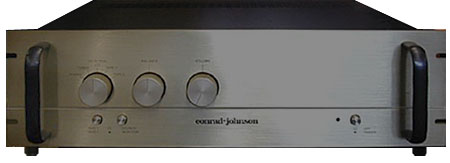
Conrad-Johnson PV9 preamplifier

As I write, it is garage-sale season here again in Santa Fe, and a recent sign near my home advertised "Over 3000 LPs, good condition, low prices." To my surprise, the seller wasn't a yuppie enamored of his new CD player but a true collector discarding the duplicates and dogs from his collection. 30 minutes later, many LPs heavier&mdash;including a mint Flanders &amp; Swan <I>At the Drop of a Hat</I> (footnote 1)&mdash;and not too many dollars lighter, I returned to a great night's listening courtesy of the black vinyl disc.

Continue Reading »

Westlake BBSM-6F loudspeaker

I've been musing much of late on what enables some hi-fi components to sound natural while others always seem to add an edge of artificiality to their sound. This dichotomy was examined in last month's "<A HREF="http://www.stereophile.com/asweseeit/109">As We See It</A>," where I asked a representative group of <I>Stereophile</I> writers to discuss the fact that many high-end components regarded as being neutral in their sonic character, with apparently little wrong in their measured performance, can actually sound quite unmusical. This would seem to suggest that the <I>nature</I> of what a component does wrong is of greater importance than the <I>level</I> of what it does wrong: 1% of one kind of distortion can be innocuous, even musically appropriate, whereas 0.01% of a different kind of distortion can be musical anathema.

Continue Reading »
Advertisement
Advertisement
Advertisement