Against the Dying of the Light: the Second Cantus CD
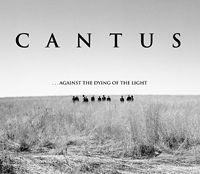
<B>Part 1: Wes Phillips on the CD's genesis</B>


<B>Part 1: Wes Phillips on the CD's genesis</B>
"Is that it?" I asked.
"Suicide junctions," I calls 'em. The ones with which I'm most familiar are on I-278, just north of the Verrazano Narrows Bridge in Brooklyn, New York, and along North Mopac in Austin, Texas, but they must exist all over the US. Traffic about to enter the freeway must first cross the line of faster-traveling offcoming cars, the intersection's on- and off-ramps crossing in a shallow <B>X</B>.
On Sunday, December 1, 2002, we celebrated five years of uninterrupted webcasting, our website having emerged from the Internet darkness on December 1, 1997 to become, at least in my eyes, an institution. Ralph Waldo Emerson wrote that "an institution is the lengthened shadow of one man," and www.stereophile.com is definitely the shadow of erstwhile high-end audio retailer Jon Iverson.

 "The monthly miracle," it's called in publishing: that magical moment when the new issue of your magazine arrives in the mailbox hot from the printer. And with this issue of Stereophile—No.274, or Vol.25 No.11—we celebrate the 40th anniversary of the start of our "miracle." With the 20 pages of Issue No.1, Vol.1 No.1, cover-dated September-October 1962, "Ye Editor & Publisher" J. Gordon Holt introduced both a new audio magazine and the philosophy that an audio product is best reviewed by doing exactly what its purchasers will do: listen to it. On that small rock of an idea was founded not only Stereophile but the entire high-end audio industry. Here, reprinted from a 1974 anthology of the first 12 issues, is J. Gordon Holt's description of the events that led up to the founding of Stereophile:
 "Most important." That was the phrase I used when I e-mailed the members of Stereophile's extended family of reviewers and writers to ask for suggestions when I began to compile this list. I didn't want to be more specific because I wanted to cast the net as wide as possible. But there are many factors that make an audio component "important": design innovation, sound quality, sales figures, influence on other designers, influence on the evolving market, influence on system synergy.
<IMG SRC="/images/archivesart/40thlogo.jpg" WIDTH=150 HEIGHT=150 HSPACE=6 VSPACE=4 BORDER=0 ALIGN=LEFT><B><I>Stereophile</I>: The Time Line</B>
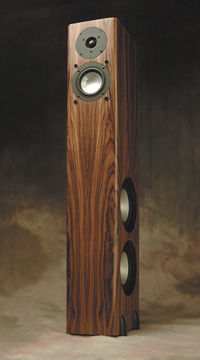
When it was suggested that I call in on speaker manufacturer RBH Sound during a planned <A HREF="http://www.stereophile.com//asweseeit/470/">trip to Utah</A> in the fall of 2001, my response was "Who is RBH?" To my embarrassment, the speaker company had not popped up on my radar screen since it was formed in Los Angeles in 1976. However, I had certainly heard some of the speakers they had manufactured for other companies, most notably the McIntosh models of the early 1980s, with their line arrays of dome tweeters.