Michael Fremer

ProAc Response D28 loudspeaker

Has any modern designer of high-performance speakers extracted more music from a two-way box than ProAc's Stewart Tyler? His early-1990s stand-mounted <A HREF="http://www.stereophile.com/standloudspeakers/792proac">Response 2</A> (later upgraded to the Response 2S) was an instant classic, and while his tiny <A HREF="http://www.stereophile.com/standloudspeakers/0484proac">Tablette</A&gt; proved controversial for being bass-shy and relatively pricey, his track record of two-way speakers remains unassailable.

Continue Reading »

AQVOX Audio Devices Phono 2Ci phono preamplifier

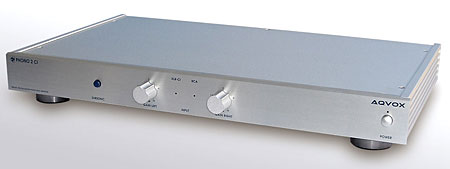
The German company AQVOX Audio Devices has produced an innovative moving-coil/moving-magnet solid-state phono preamplifier, the Phono 2Ci, that's as intriguing for its technology and performance as it is for its relatively low price: $1400. The zero-feedback, op-amp&#150;free circuit uses a compact switch-mode power supply that's built into the chassis and features conventional voltage gain for moving-magnet cartridges via its RCA jacks, and current gain for moving-coil cartridges through the balanced XLR inputs. Rear-panel switches select between RCA or XLR inputs and offer a convenient ground lift. Either the single-ended or the balanced outputs can be used with either input. Unfortunately, the tight spacing of the RCA input and output jacks, which are mounted on the circuit board, will somewhat limit your choice of cables: Pairs of thick-barreled plugs will have difficulty fitting.

Continue Reading »

Rega P3-24, RB301, & Elys 2 turntable, tonearm, & phono cartridge

It's now been eight years since a Rega P3 turntable passed through my listening room. While the new P3-24 superficially resembles the P3 (and virtually every other Rega 'table), the company has made some significant changes, including upgrading to the high-quality, low-voltage (24V), electronically adjusted motor used in the more expensive P5, P7, and P9. As in those models, an electronic circuit trims the phase angle of the P3-24's motor coils, thus substantially reducing motor vibrations. In 1998, during a factory tour, a Rega engineer demonstrated the circuit's effectiveness to me. As he adjusted the circuit board's pot, vibrations from the motor dramatically decreased, until it was difficult to tell if the motor was spinning or not. Back then, this "hand-trimmed" motor technology was available only in the P9. The P3-24 uses a less sophisticated version of the same basic idea.
Continue Reading »

Cabasse La Sphère powered loudspeaker

In an unfortunate coincidence, a few nights before the Cabasse team arrived to install the company's unusual-looking La Sph&#232;re powered speaker system, VOOM HD Networks, Monster HD channel, which is exclusively devoted to B horror movies, broadcast <I>The Crawling Eye</I> (aka <I>The Trollenberg Terror</I>), a 1958 black-and-white howler starring Forrest Tucker. I watched.

Continue Reading »

Marantz SM-11S1 Reference power amplifier

Some of the old audio names, such as Eico and Pilot, are gone. Others&mdash;Fisher, AR, KLH, H.H. Scott, etc.&mdash;have been rendered meaningless by corporate mergers and acquisitions. Yet more than 50 years after their founding, McIntosh and Marantz, arguably the two most prestigious names in American high-quality audio electronics, survive. The products they make today are probably closer in spirit to their original classics of half a century ago than at any time since the early 1970s.

Continue Reading »

Soundsmith SMMC1 moving-iron phono cartridge

The audio industry may have lost a legend and a prolific innovator in <A HREF="http://www.stereophile.com/news/11260">Henry Kloss</A> a few years back, but it still has another affable, creative eccentric in <A HREF="http://blog.stereophile.com/ces2008/011008smith/">Peter Ledermann</A>. In the mid-1970s, Ledermann was director of engineering at <A HREF="http://www.stereophile.com/historical/1005bozak">Bozak</A&gt;, where, with Rudy Bozak, he helped develop a miniature bookshelf speaker and a miniature powered subwoofer. Before that, Ledermann was a design engineer at RAM Audio Systems, working with Richard Majestic on the designs of everything from high-power, minimal-feedback power amplifiers and preamplifiers to phono cartridge systems. He was also an award-winning senior research engineer at IBM, and the primary inventor of 11 IBM patents.

Continue Reading »

DALI Helicon 400 Mk.2 loudspeaker

Danish Audiophile Loudspeaker Industries (DALI), a relatively large maker of loudspeakers, was founded in 1982 by the peripatetic Peter Lyngdorf, who has worked with or founded Steinway/Lyngdorf, Lyngdorf Audio, TacT, NAD, etc. Audionord International, another company founded by Lyngdorf, owns DALI as well as American subsidiary DALI USA, along with yet another Lyngdorf creation: the 60 Hi-Fi Klubben stores, said to be the world's largest chain of high-end audio retail shops. Whew! The guy keeps busy.

Continue Reading »

Balanced Audio Technology Rex line preamplifier

If any single link in the audio chain should be free of sonic personality, it's the preamplifier. Though a preamplifier's basic job description is "source selector with volume control," from hi-fi's earliest days preamps have been the designated dashboard: the more dials, switches, and lights, the better. All that control came at the cost of quiet, transparency, and tonal neutrality. Still, the quixotic quest for the mythical "straight wire with gain" continued to lead to minimalist designs, including impractical unbuffered "passive" preamps, in which cable length, thus capacitance, affected frequency response.

Continue Reading »

The Swift Boating of Audiophiles

The "Want to make an easy $1,000,000?" e-mail wasn't a scam from Nigeria but an alert from Paul DiComo, late of Polk Audio and now of Definitive Technology, about a double-blind cable-identification challenge made by The Annoying Randi, a magician and debunker of paranormal events who goes by the name of "The Amazing Randi."

Continue Reading »

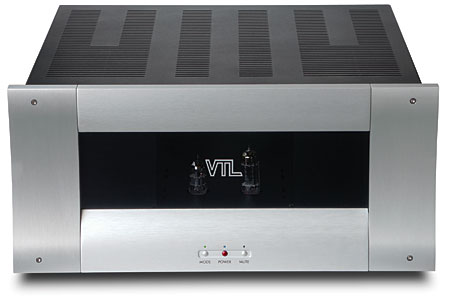
VTL MB-450 Series II Signature monoblock power amplifier

Stop me if you've heard this one: Back in the early 1990s, just after the fall of the Soviet Union, I debated professor of music engineering and magazine columnist Ken Pohlmann on a talk show on the CBS radio network. The subject was analog sound vs digital sound, but I guess when Pohlmann felt I was getting the upper hand, he felt he needed to play the tube card. Derisively, he said, "I bet you're one of those tube guys, too, aren't you?" Before I could open my mouth, he continued: "You know, the Soviet Union's military gear, including the MIG fighters, ran on tube electronics, and look what happened to them!"

Continue Reading »
Advertisement
Advertisement
Advertisement