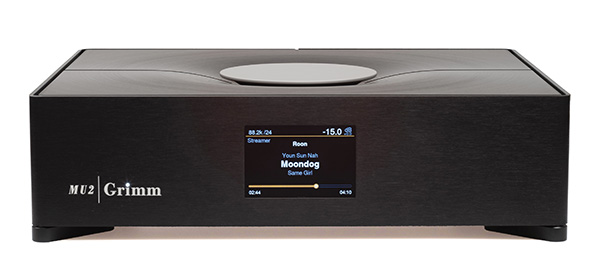
Grimm Audio MU2 streaming preamplifier
An all-in-one streamer-DAC-preamp would not have held much appeal for me if my old system was up and running. This, however, was a different time, and I was offered the Grimm MU2 for review with ideal timing.
Yes, that aspect of the product was appealing, but the real trigger for me was that when I began this review, the StormAudio ISP Evo was the only consumer device to fully incorporate the latest version of Dirac Live Active Room Treatment (ART).
Even more recently, I dipped my toe into Dolby Atmos, which made it necessary to lash up at least four more channels. That was a big problem, since neither JRiver nor Roon can support and sync more than one output device at a time, and the multichannel DACs I already owned tap out at eight channels.
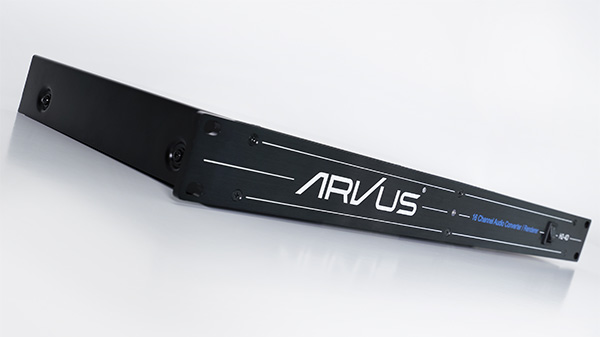
I turned to the Arvus H2-4D Renderer, which offers 16 channels of digital output over AES3 and 16 channels of balanced-analog output. This worked, but piping everything through the Arvus meant forswearing DSP, including DiracLive. I really needed a DAC with at least 12 channels.
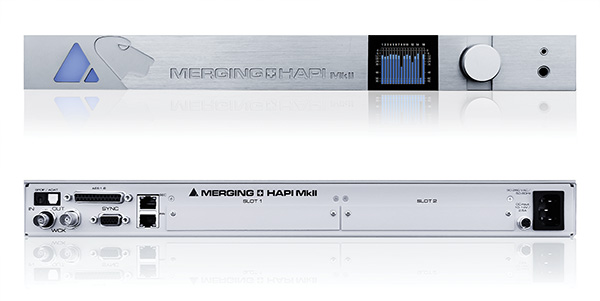
The Merging+Hapi has been around for years...
I had my reasonsespecially price. The prices of those earlier Estelons were a poor fit for my budget. I was also troubled by the fact that, despite rhetoric about driver and component choice, advanced cabinet materials and construction, and fastidious engineering, Estelon has been stingy with details and specificationsnot a complete disqualifier but rather a missed opportunity to appeal to objectivist proclivities.
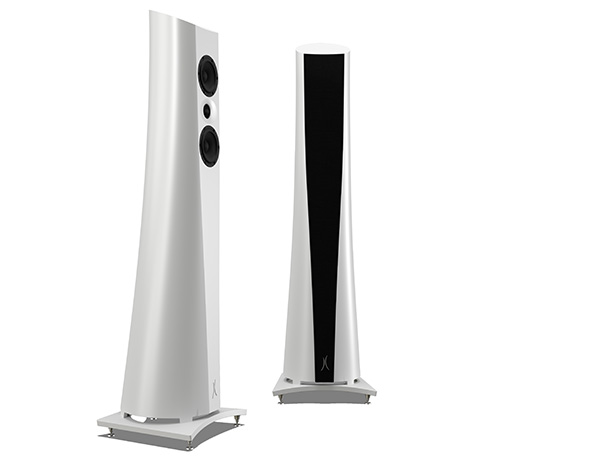
What changed my mind? First, while Estelon is deservedly known for the elegance of its designs, the AURA is, to me, the cleanest design the company has yet achieved . . . Second, at $19,900/pair, the AURA is much less expensive than the earlier models, including the Forza reviewed by Michael Fremer and the XB Diamond Mk.2 reviewed by Jim Austin.
Since then, I've had only floorstanders, home-made and manufactured, and I never seriously considered owning small speakers again except, perhaps, as part of a surround sound system. With that bias, why am I reviewing the B&W 705 S3?
Up to now, access to Atmos has been largely restricted to HT hardware; its success for music will depend on wide availability and non-HT options for audiophile music lovers to stream and to play discs or files in Atmos, especially in lossless versions. Enter the Arvus H2-4D.