J. Gordon Holt

Dynaco Stereo 120 transistor power amplifier

One by one, the major amplifier manufacturers have acceded to the pressures of the marketplace and introduced "solid-state" models, whether or not these happened to sound as good as their previous tube-type units. Dynaco was one of the last of the hold outs, preferring, according to their advertisements, to wait until they could produce a solid-state unit that was at least as good as their best tube types. Now, they've taken the plunge at last, with their Stereo 120.
Continue Reading »
Genelec Studio Monitor 1031A loudspeaker & Studio Monitor 1092A powered subwoofer

Which loudspeakers do audio professionals listen to? And why should we care? After all, it's not as if recording engineers are the kind of refined, sensitive, music-loving types who read Stereophile. As much as they may love music, many audio pros appear only to view the original sounds of musical instruments as raw materials to be creatively reshaped and manipulated. (Okay, there are exceptions. But recordists who care about the sounds of real instruments usually record them in real acoustic spaces rather than in studios, and use as little signal processing as they can get away with.)
Continue Reading »

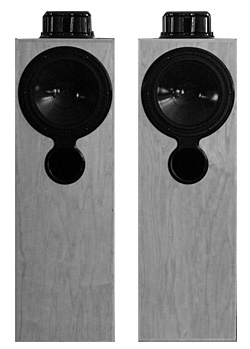
Linaeum Model 10 & Center-Channel loudspeakers

666linneumIt's been a long time since we've seen a really new tweeter design. Only five basic types have ever been developed: cones, domes, panels, ribbons, and ionic plasmas. And the most recent of these—the long-defunct DuKane "blue-glow" Ionovac—was introduced 40 years ago. Since then, tweeter development has been more evolutionary than revolutionary, a series of refinements that has made them more efficient, more reliable, and smoother and more extended in response.
Continue Reading »

Carver Silver Seven-t monoblock power amplifier

In 1988, Bob Carver set out to design the best amplifier he possibly could, without regard for cost. It was more of an ego exercise than an attempt to build a product with wide commercial appeal. The result was the four-chassis, $17,500 Silver Seven.

Interestingly, Bob Carver chose vacuum tubes to realize his dream of building the ultimate power amplifier. The Silver Seven uses fourteen KT88 output tubes per channel, and puts out 375W into 8 ohms. Bob built three pairs of Silver Sevens, not expecting to sell many at the $17,500 asking price. When those sold quickly, another 10 pairs were manufactured. Now, demand is so great that Silver Sevens are built in groups of 30 pairs.

Continue Reading »

The Pros & Cons of Electrostatic Loudspeakers

The main inherent advantage of the full-range electrostatic loud speaker system is that it allows a single diaphragm to embody the conflicting attributes needed for optimal performance at both extremes of the audio range. Its thin-membrane diaphragm can be made exceedingly light, for superb transient response and extended HF response, yet it can be about as large in area as desired, for extended LF response.
Continue Reading »

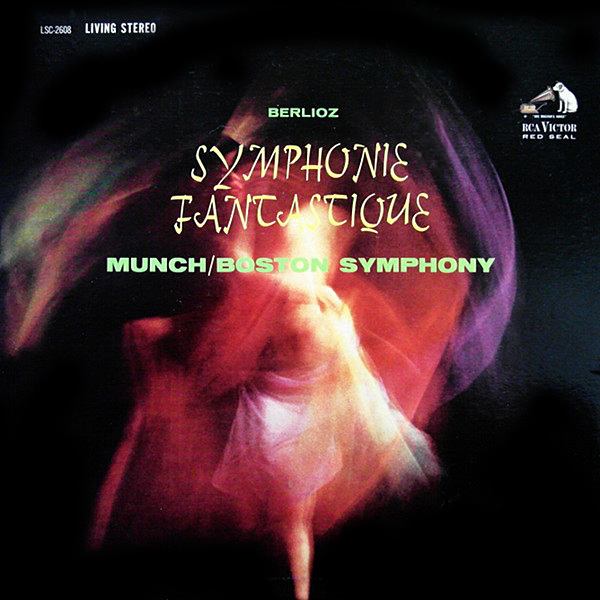
Recording of November 1962: Berlioz: Symphonie fantastique

Berlioz: Symphonie fantastique
Boston Symphony Orchestra, Charles Munch, conductor
RCA Victor LSC-2608 (LP). TT: 48:40

It is easy to forget that the hi-fi movements—the "March to the Scaffold" and the "Dream of a Witches' Sabbath"—comprise barely a third of the music in the Symphonie fantastique, yet when we listen to most of the available versions of this, we can understand why the first three movements are usually passed up by the record listener. Two are slow and brooding, one is a wispy sort of waltz, and all three require a certain combination of flowing gentleness and grotesquerie that few orchestras and fewer conductors can carry off. It is in these first three movements where most readings of Berlioz' best-known work fall flat. Either they are too sweetly pastoral or too episodic and choppy, or they degenerate into unreliered dullness.

Continue Reading »

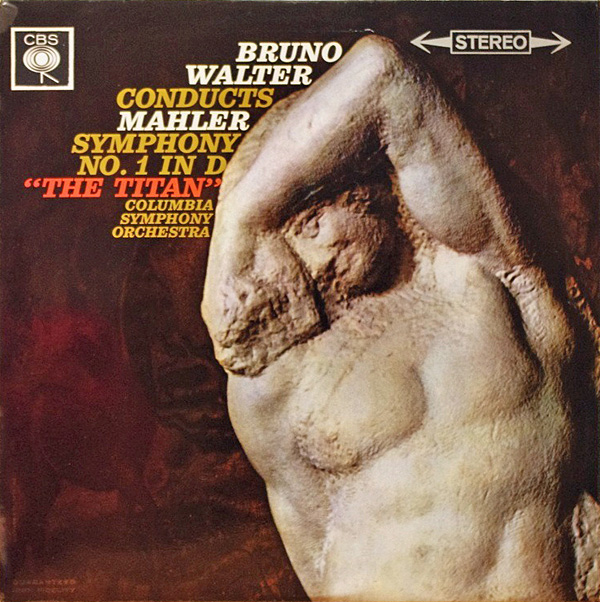
Recording of March 1963: Mahler: Symphony No.1

Mahler: Symphony No.1 in D ("The Titan")
Columbia Symphony Orchestra, Bruno Walter, conductor
Columbia MS-6394 (LP). John McClure, prod. TT: 52:15

This is one of those rare combinations of a superb recording and a stunning performance. As far as I'm concerned, it is the best Mahler First that Bruno Walter committed to discs during his lifetime, including the last one that he made with the New York Philharmonic. And the fact that this recording is far superior to that accorded Walter when he conducted the New York Philharmonic does not detract one bit from my feeling about this new release.

Continue Reading »

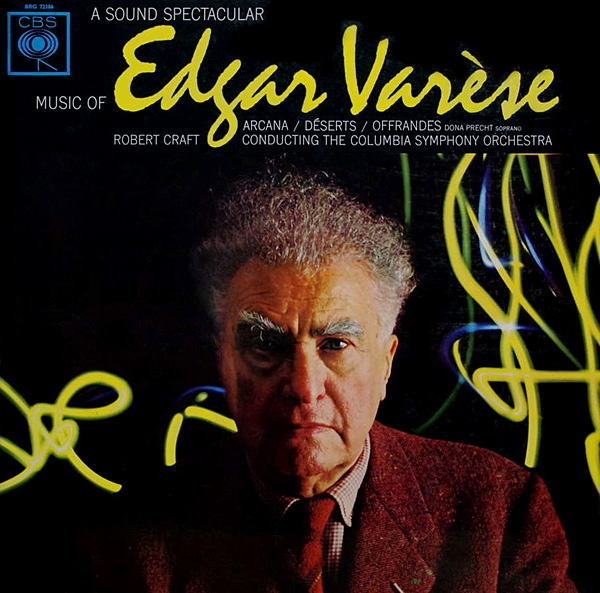
Recording of December 1963: Music of Edgar Varèse, Vol.2

Music of Edgar Varèse, Vol.2
Arcana, Déserts, Offrandes, Chanson De Là-Haut (Song From High)
Dona Precht, soprano, Columbia Symphony Orchestra, Robert Craft, conductor.
Columbia Masterworks MS-6362 (LP). John McClure, Thomas Frost, prods. TT: 24:45.

In electronic music, the sounds of musical instruments, natural noise-makers and electronic signal generators are recorded on tape, modified by running them at higher- or lower-than-normal speeds and manipulating their tonal content, and then combined in rhythmic and tonal patterns to create entirely new forms of music.

Continue Reading »
Advertisement
Advertisement
Advertisement