J. Gordon Holt

Recording of June 1964: Joan Baez In Concert, Part 2

Joan Baez In Concert, Part 2
Joan Baez, vocals, guitar
Vanguard VTC-1679 (tape), VSD-2123 (LP). Maynard Solomon, prod., Reice Hamel, eng. TT: 48:00.

Well, we finally got ourselves equipped to review 4-track open-reel tapes, via a slightly modified Ampex F-44. All the tapes we have auditioned had noticeably higher hiss than the average stereo disc, but this was not loud enough to be distracting except when the tapes were reproduced at very high levels. Even then, we found the smooth, even hiss to be less objectionable than the ticks and pops from some discs played at the same level.
Continue Reading »

Recording of August 1964: Vaughan Williams: Symphony No.2

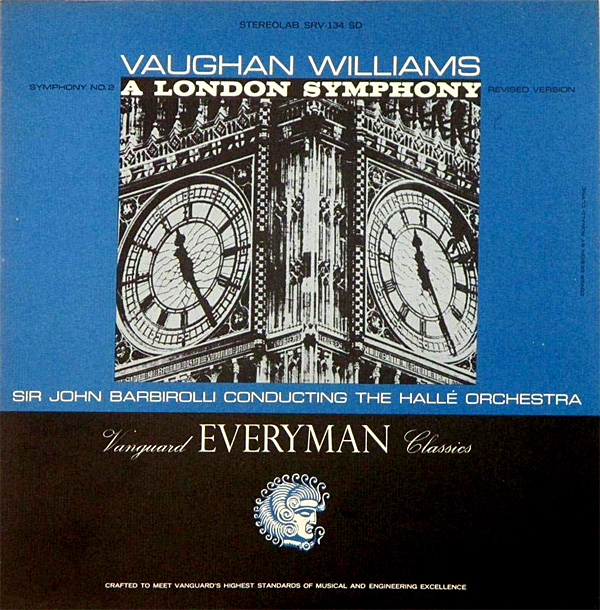
Vaughan Williams: Symphony No.2 (A London Symphony)
Hallé Orchestra, Sir John Barbirolli, conductor.
Vanguard Everyman, SRV-134-SD (1963 LP). Reissued in 1982 as PRT Collector GSGC 2035 (LP). Recorded by Pye (UK) in 1957.

This is undoubtedly the best London Symphony that's been committed to stereo to date, and I wouldn't be surprised if it held top place for years to come. I can find nothing to criticize about the performance, and the recording is awe-inspiring—rich, warm and natural, with some phenomenally low bass and very wide dynamic range, yet without the slightest audible trace of breakup during crescendos.

Continue Reading »

Recording of December 1964: Music at the Court of King Henry VII

Trio Flauto Dolce: Music at the Court of King Henry VII
Jacobean Fantasias; Kleine Geistliche Konzerte (Schutz): Elizabethan Ayres; Sonata in e (Boismortier); Domine, Dominus Noster (Campra).
Martha Bixler (recorders), Eric Leber (recorders, harpsichord), Morris Newman (recorders, bassoon), Robert White (tenor).
Posthorn Recordings (footnote) TFD-1 (LP). Jerry Bruck, eng.

This is another disc that was submitted for review on the basis of our bitter complaints in the August 1964 issue about unmusical gimmickry in commercial recordings. Like the Phoenix disc reviewed elsewhere in this issue, this is a first release. It carries a technical note to the effect that it was made with "a minimum of technical fuss and electronic gadgetry," and like the Phoenix, it sounds that way.

Continue Reading »

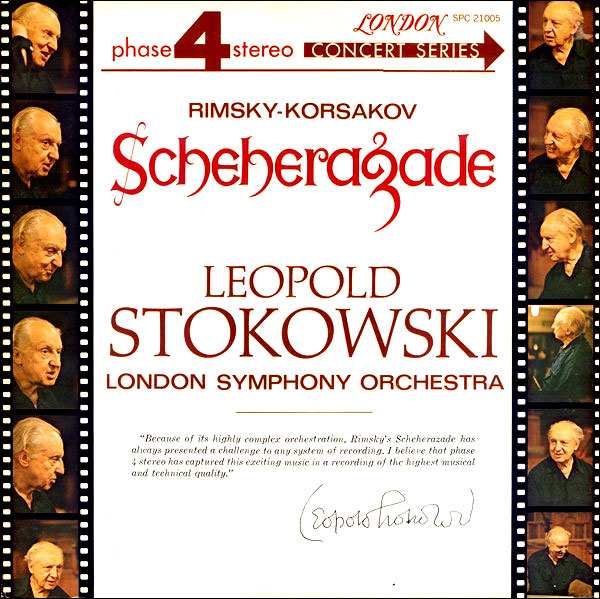
Recording of October 1965: Rimsky-Korsakov: Scheherazade

Rimsky-Korsakov: Scheherazade
London Symphony Orchestra, Leopold Stokowski, cond., Erich Gruenberg , solo violin.
London Phase 4 SPC-21005 (LP). Recorded September 22, 1964. Kingsway Hall, London. Marty Wargo, prod., Tony D'Amato, recording dir., Arthur Lilley, eng.

This is infuriating. Along comes the performance of Scheherazade that we've been waiting for, and the powers that be at London Records decide, God knows why, to bestow upon it the dubious blessing of Phase 4 recording. The sound is positively vast and cavernous, the bass booms, the highs scream, the harp sounds like it's 10' tall, and instruments wander back and forth across the stereo stage as if nobody had thought to tell the musicians where to sit.

Continue Reading »

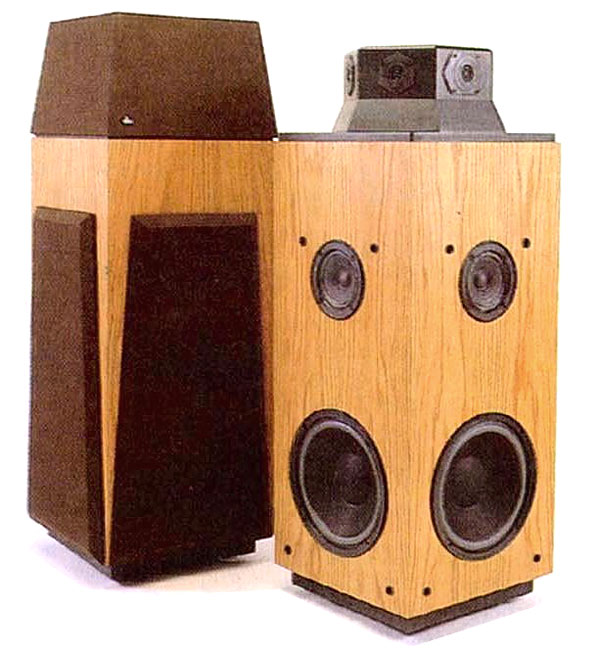
dbx Soundfield 1A loudspeaker

The unsung sage who first observed that high-end audio is a solitary vice was probably not implying that audiophiles are antisocial; he was merely acknowledging the fact that a decent stereo stage is usually only audible from one place in the entire listening room—the so-called sweet spot. Stray from that spot, and the whole soundstage shifts to one side, spaciousness collapses, and images become vague and unstable. This is the antisocial aspect: only one member of a group can hear good stereo at any one time. (The gracious host at a listenfest will take a secondary seat, allowing his guests to take turns sitting in the sweet spot.)
Continue Reading »

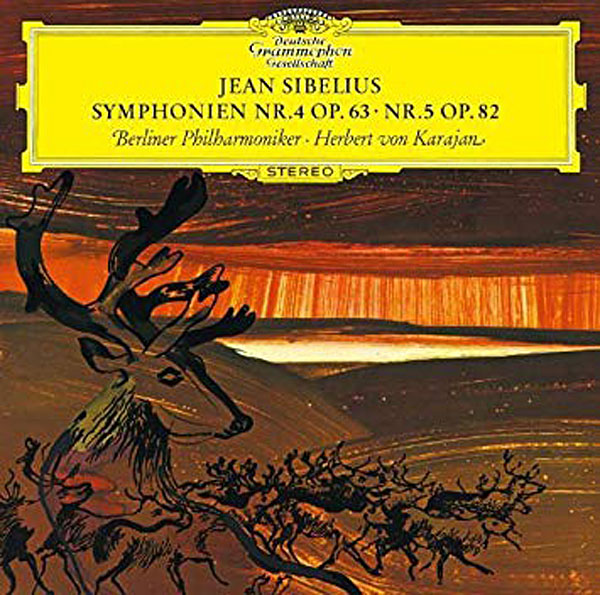
Recording of September 1966: Sibelius: Symphonies Nos.4 & 5

Sibelius: Symphonies Nos.4 & 5, The Swan of Tuonela, Tapiola
Berlin Philharmonic, Herbert von Karajan
Deutsche-Grammophon 138 974 (LP, Symphony 4). Both symphonies reissued on CD (Deutsche Grammophon 457 748 2)

Magnificent, musically natural recordings with some of the deepest, fattest bass and richest, warmest orchestral sound that's been committed to recordings for many years. The discs are a shade more lucid than the tapes, but not much. Take your pick.—J. Gordon Holt

Continue Reading »

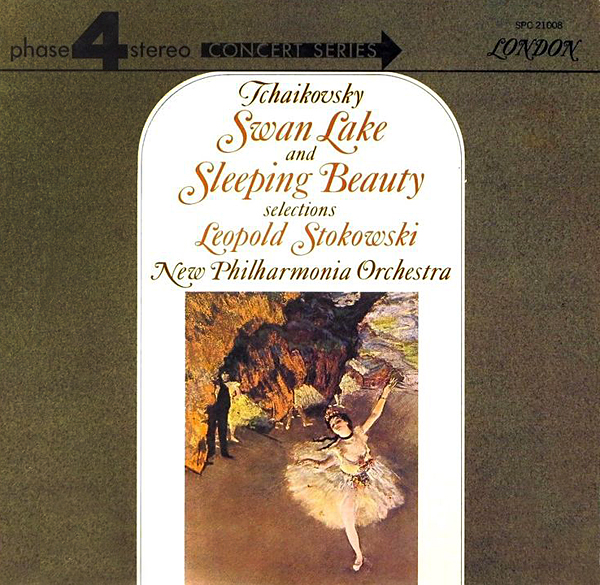
Recording of December 1966: Tchaikovsky: Swan Lake & Sleeping Beauty

Tchaikovsky: Swan Lake & Sleeping Beauty Selections
New Philharmonia Orchestra, Stokowsky
London Phase-4 SPC 21008 (LP); Ampex LCL-75008 (open-reel tape). Tony D'Amato, Marty Wargo, prods.; Arthur Lilley, eng. TT: 46:50.

These are exciting, lilting, concert-style (as opposed to ballet-style) performances of the best-known excerpts from Tchaikovsky's second- and third-most-popular ballets. (First, of course, is the Nutcracker.) The recording is a surprise, after the excesses we've heard on earlier Phase-4 recordings.

Continue Reading »

Recording of April 1967: An Audio Obstacle Course

An Audio Obstacle Course: The Shure Trackability Test Record
Shure Bros. TTR-101.

Shure's new "Supertrack" V-15 Type II pickup was designed as an answer to all those high-powered discs whose excessive modulations make them shatter all over the place on lesser pickups, But just in case anyone didn't happen to own any of these difficult discs, Shure decided to issue one of these, too. The result is a collection of some of the meanest modulations ever gathered together in one place.

Continue Reading »

Recording of February 1968: Chopin; Nocturnes

Chopin; Nocturnes
Arthur Rubinstein, piano
RCA Victor LSC-7050 (2 LPs) (reissued on CD as RCA Victor Red Seal 0902 663049-2). Max Wilcox, prod.; Tom MacCluskey, Sergio Marcotulli, engs. Recorded August 30–September 2, 1965, 2 February 21, 1967.

If these Nocturnes are never played better than this, we couldn't care less. These are exquisite performances!

The recording, via RCA Victor's Dynagroove process is a far cry from the earlier excesses that gave Dynagroove its horrid reputation among perfectionists. One is simply not aware of the recording at all, as long as it is played at the right volume, which is about what you would hear from a good first-balcony concert-hall seat.

Continue Reading »
Advertisement
Advertisement
Advertisement