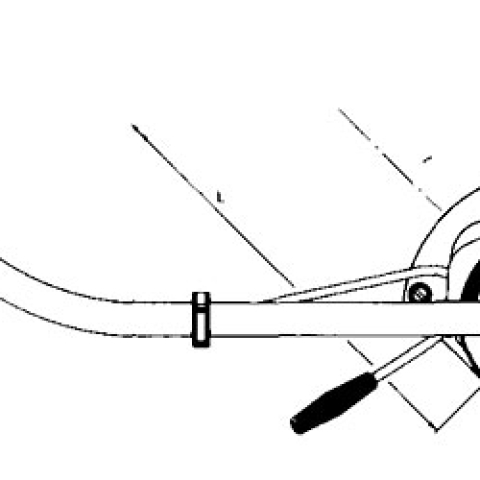
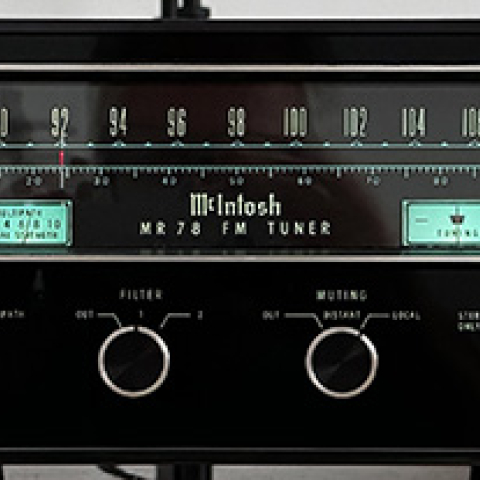
1987 will mark Stereophile's 25th year of continuous (if initially sometimes sporadic) publication. And while we haven't yet decided what we're going to do in celebration, the first issue of 1987 does seem to be as good a time as any to contrast the state of the audio art when we began publication with what is routinely possible today. In 1962, the LP record had been around for 10 years, the stereo disc for four, and the audio marketplace was in chaos. The "hi-fi" mania which had made audio a multi-million dollar business during the late 1950s had peaked out, and public acceptance of stereo was growing at a much slower rate. Component audio was still the way to go, but the ranks of "specialty" manufacturers designing products for perfectionists had become swollen with scads of me-tooers turning out dross in hopes that the public would buy anything labeled "Stereo." It was a period of shakedown, during which big advertising budgets were to make brands like Fisher, McIntosh, Klipsch, and Electro-Voice into household words, while perfectionist audio went "underground" to support smaller firms like Dynaco, Marantz, Lectronics (now called Fried Products), Bozak, and Janszen. Solid-state components had not yet appeared in stores, but, despite the complaints of reactionaries who declared that stereo was unmusical and a violation of God's law (footnote 1), it was becoming increasingly difficult to buy a mono preamplifier. The perfectionist's choices of electronics then were the Marantz 8A and Dynaco Mark III power amps, and the Marantz 7A and Dynaco PAS-2 preamps. The top-ranked speakers were the Janszen Model Nine full-range electrostatic, the horn-loaded Electro-Voice Patrician 700, and the all-direct-radiator Bozak B-310. The top turntables were the Thorens TD-124 and the Fairchild 412-1A, the preferred cartridges were the Grado "Classic," the Shure "Laboratory Standard" M-3LS, the ESL P-1, and an Ortofon 'coil which appeared to have no model number. The favored tonearms were the ESL 310, the Gray 108C, and Shure's M212 arm and miniature cartridge combo.
Because almost all components back then were more colored than today's, mating of pieces with complementary characteristics was essential to achieve an acceptable sound. Nevertheless, even by today's standards, a well-matched 1962 system could produce quite respectably musical noises. It was just harder to do. What has changed in the last quarter-century is the ease with which those early standards can be met with moderately priced components (footnote 2), and the dramatic upping of the standards by which state-of-the-art sound reproduction is judged. Here, then, are some examples of how audio has progressed since 1962. (If this sounds like a long time to you kids out there, consider that it took 48 years to get from the cylinder and acoustical horn to the electrically-cut disc.) Measures of Subjectivity
When Stereophile pioneered the "subjective" testing of audio products, there were only four objective measurements available for the qualitative assessment of amplifier or preamplifier performance: frequency response, harmonic distortion, intermodulation distortion, and signal/noise ratio. Transducer (speaker and cartridge) measurements were limited to frequency response, distortion, efficiency (more correctly, sensitivity), and dispersion, while turntables were evaluated according to their rumble, speed accuracy, and speed variation. There were a few other tests available for things like phase shift and dielectric absorption, but since those things were known not to affect the sound (!!), they were deemed to be of merely academic interest.
Today, the science of objective qualitative assessment, using such tools as Time Delay Spectrometry and Fast Fourier Analysis, has added to those original tests new ones for slew rate and SID, stability, power-supply regulation, harmonic-by-harmonic spectrum analysis, clipping characteristics, overload recovery, spurious (unwanted) rectification, time alignment, trackability, acoustic breakthrough, current capability, damping factor, skin effect, time-delayed resonances, and coherence. And some of the older, "irrelevant" measurements, particularly those for phase shift and dielectric absorption, have been found to be more meaningful than anyone had previously suspected. The fact that few of these truly informative measurements are ever cited by magazines like Stereo Review, who claim to believe in objective measurement as a means of equipment evaluation, merely confirms what we have long suspected: they aren't really interested in distinguishing the good from the bad. This doesn't bother us at all, however; if they were interested, there might be little need for Stereophile. (Fortunately, for us, the available measurements still don't tell everything about a component's sound. Even after 25 years of Stereophile, the ear remains the final arbiter of sound quality.) Trackability
When mono LPs first appeared, many of them were roundly condemned in the audio press for being "overcut" (footnote 3). Everyone assumed it was the fault of the discs: those cut below a certain modulation level would track cleanly, while discs exceeding that level suffered from horrible, tearing distortion. As cartridges improved during the 1950s, "overcutting" became less and less of a problem—until the advent of the stereo disc, which sent everyone back to square one on trackability. Mistracking was again king! But it had already begun to dawn on designers—and a few consumers—that mistracking was more the fault of the cartridge than the disc.
Simultaneously, audiophiles and electronics designers were learning that what used to be called "groove breakup" from mistracking was almost as much a function of early-stage (preamp) distortion as it was of poor groove tracing. Yes, the cartridge often did provide the system with garbage to work with, but any distortion in the early system stages exacerbated it to a greater or lesser extent. The realization of this gave rise to the "Spec Wars," wherein preamp manufacturers tried to outdo each other in terms of ever-lower levels of measured distortion. Today, cartridges capable of tracking old LPs and stereo discs perfectly have become commonplace, and it is possible to buy, at less-than-appalling prices, supertracking cartridges that will handle, without stress, practically anything that can be cut on a disc. Except for a small handful of high-powered classical recordings (like Telarc's Concerto for Cannon and Wiped-Out Woofer) and a few genuinely overcut pops (footnote 4), mistracking has become virtually a thing of the past.
Footnote 1: Does that sound familiar, somehow? Footnote 2: In terms of equivalent purchasing power of the almighty dollar. Footnote 3: Well, at least one member of the audio press: Audio magazine. That was back in the days when hi-fi magazines reviewed only classical recordings, and when Audio's only classical reviewer was (the late) Edward Tatnall Canby. The reviewers for other magazines never noticed anything about a recording except its performance and, if the sound was sufficiently strident to be conspicuous, its "brilliance." In fact, it was the mainstream audio press's approbation of shrillness that helped make RCA and CBS recordings what they became during the next 20 years.
Footnote 4: These days, a "genuinely" overcut disc is defined as one in which the groove modulations exceed an angle of incidence with the stylus of 45 degrees. Any angle greater than this causes the force in line with the average groove direction to exceed the force deflecting the stylus. This causes the stylus to climb one groove wall, thus losing contact with the other groove wall.
When Stereophile pioneered the "subjective" testing of audio products, there were only four objective measurements available for the qualitative assessment of amplifier or preamplifier performance: frequency response, harmonic distortion, intermodulation distortion, and signal/noise ratio. Transducer (speaker and cartridge) measurements were limited to frequency response, distortion, efficiency (more correctly, sensitivity), and dispersion, while turntables were evaluated according to their rumble, speed accuracy, and speed variation. There were a few other tests available for things like phase shift and dielectric absorption, but since those things were known not to affect the sound (!!), they were deemed to be of merely academic interest.
When mono LPs first appeared, many of them were roundly condemned in the audio press for being "overcut" (footnote 3). Everyone assumed it was the fault of the discs: those cut below a certain modulation level would track cleanly, while discs exceeding that level suffered from horrible, tearing distortion. As cartridges improved during the 1950s, "overcutting" became less and less of a problem—until the advent of the stereo disc, which sent everyone back to square one on trackability. Mistracking was again king! But it had already begun to dawn on designers—and a few consumers—that mistracking was more the fault of the cartridge than the disc.
Footnote 1: Does that sound familiar, somehow? Footnote 2: In terms of equivalent purchasing power of the almighty dollar. Footnote 3: Well, at least one member of the audio press: Audio magazine. That was back in the days when hi-fi magazines reviewed only classical recordings, and when Audio's only classical reviewer was (the late) Edward Tatnall Canby. The reviewers for other magazines never noticed anything about a recording except its performance and, if the sound was sufficiently strident to be conspicuous, its "brilliance." In fact, it was the mainstream audio press's approbation of shrillness that helped make RCA and CBS recordings what they became during the next 20 years.