Hard rock in the 1970s was mostly a game for dudes. Although Janis Joplin and Grace Slick had broken through in the 1960s with major rock hits, Coven lead singer Jinx Dawson had gained some notoriety, and Fanny (one of the first all-female rock bands) had some success, the rock charts were male dominated.
That's not surprising, given the aggressive, testosterone-driven nature of the music. But there were plenty of female rock fans, and what teenage male doesn't appreciate a pretty woman belting out a solid rocker? The stage was set for women to kick open the door and make some chart-topping hits.
Enter the Wilson sisters, Ann and Nancy. They were talented, beautiful, and able to write hard-rock anthems and softer fare—not quite folk-rock, but songs of introspection and vulnerability. The Wilsons joined the band Heart around 1974. The next year, Heart released its debut LP, Dreamboat Annie, which turned into an unexpected hit, selling a million copies in 14 months and peaking at #7 on the Billboard Top 200 albums chart. "Magic Man" peaked at #9 on the Top 100 singles chart. "Crazy on You" topped out at #35.
In retrospect, Dreamboat Annie is considered a glass-ceiling–shattering landmark, proving that women could front a mainstream hard-rock band with at least as much technical proficiency and raw intensity as their male contemporaries. The diversity of styles and themes in its 10 tracks—from the Led Zeppelin–inspired "Magic Man," to the dreamy and somewhat psychedelic "Soul of the Sea," and on to the folk-ish rock of the title track—showcased the sisters' skills as singers and songwriters, plus Nancy Wilson's guitar chops.
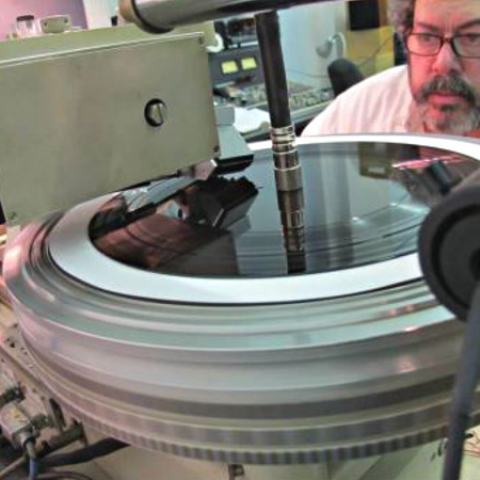
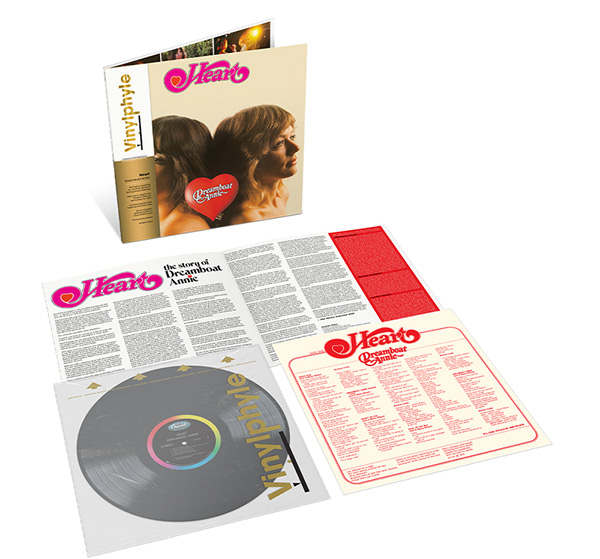
A new all-analog vinyl reissue, part of Universal Music's VinylPhyle series (Capitol/UMe 802488027533), is a worthy sonic reexamination of Heart's debut LP. Mastered by Joe Nino-Hernes at Sterling Sound Nashville, its weighty yet crisp and punchy sound complements the music in the grooves. Plated and pressed at RTI in Camarillo, California, the copy I received played almost dead quiet.
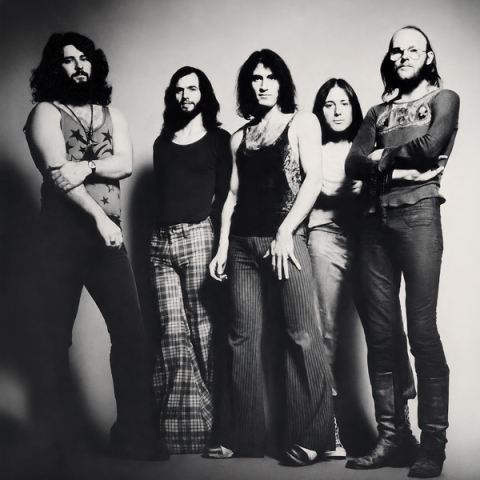
The band that became Heart had its roots in Seattle in the late 1960s. Guitarist Roger Fisher and bassist Steve Fossen started out in various bar bands, becoming White Heart in the early 1970s then changing the name to Heart in 1973. Fisher's brother, Mike, took up with Ann Wilson around the time he fled to Canada to avoid the Vietnam-era draft. The rest of the band joined him in the Vancouver BC area in 1973. Ann Wilson joined Heart then as the lead singer. She convinced her sister Nancy to move north in 1974, and then convinced Heart to give Nancy a shot at rhythm guitar. Keyboard player Howard Leese joined around the time the band made a demo tape with producer Mike Flicker. Much of the drum work on Dreamboat Annie is handled by session man Kat Hendrikse. Drummer Mike Derosier joined Heart during the album's production. He can be heard on the hard rockers "White Lightning and Wine" and "Sing Child."
An admirable aspect of Dreamboat Annie is its sound production. Recorded at Can-Base Studios in Vancouver and released on the tiny and short-lived Mushroom label, it sounds like something produced in mid-'70s Los Angeles or London. This is due to the good taste and skill of producer Flicker and engineer Rolf Henneman. The propulsive, detailed sound no doubt helped the hits jump out of many a car speaker and modest home stereo. This sound quality carries through to the VinylPhyle reissue.
Like the Rhino High Fidelity AAA vinyl series, VinylPhyle releases include a four-page insert with photos of the tapes used to cut the record and a new historical essay about the album. In this case, the tapes were made at Can-Base, are clearly labeled "COPY" (with two underlines), and are Dolby A encoded. Assuming all that information is accurate, kudos to Can-Base: Very little punch, growl, or detail was lost in the copying process.
I compared this new Dreamboat Annie LP to a Mushroom Records version I bought around 1978, mastered at Kendun by "JG" (Jeff Gilbert, according to the deadwax marks database at Discogs, footnote 1). The older vinyl is noisier and lacks the low-end weight and thump of Nino-Hernes's cut. It's also softer in the top end. In short, it's of its time. My ears prefer the new VinylPhyle version, which is appropriately more in-your-face without being crunched or overloud. The Mobile Fidelity CD remaster sounds similar to the Mushroom LP but with a deeper and firmer bottom end. Both are admirably dynamic, especially in the drum sound. The current Qobuz 24/192 stream sounds like it was made from the same tapes as Nino-Hernes's remaster, but as a "flat transfer" rather than applying any mastering art and craft. In other words—or the same words—it sounds flat.
Heart's time with Mushroom Records didn't end well. As Dreamboat Annie climbed the charts, the label published a suggestive ad in the December 30, 1976, Rolling Stone magazine without advance notice to the band (footnote 2). The Wilson sisters were offended and irate. Renegotiations of their recording contract broke down, and the band stopped working on a follow-up album. In the spring of 1977, Mushroom Records released the first version of Magazine, comprised of rough mixes and live recordings. Lawsuits ensued, and Mushroom was forced to pull back the approximately 50,000 copies that made it to retail (footote 3). The band signed with CBS-affiliated Portrait Records and released Little Queen, an even bigger hit led by "Barracuda." Eventually, Heart and Mushroom Records reached a deal. For three days in March 1978, the band worked at Sea-West Studios, Seattle, and finished Magazine to their satisfaction. It eventually sold over a million copies. Perhaps that fine album is in the queue for a VinylPhyle reissue.
Footnote 1: See discogs.com/forum/thread/810326. Footnote 2: See superseventies.com/oaaa/oaaa_heart1.jpg. Footnote 3: Here is an out-of-order but high-quality needle-drop playlist of the original Magazine LP: tinyurl.com/vyns6ue9.
Footnote 1: See discogs.com/forum/thread/810326. Footnote 2: See superseventies.com/oaaa/oaaa_heart1.jpg. Footnote 3: Here is an out-of-order but high-quality needle-drop playlist of the original Magazine LP: tinyurl.com/vyns6ue9.