It only took 40 years, but I think digital can now compete one-on-one with analog for exciting, satisfying sonics and user satisfaction. It took a long time to happen, but I think it was worth the wait. By their very nature, analog and digital sound different, but I don't think a cogent argument could be made today that recordings sound more or less musical in one format or the other. While I'm comfortable in either format, I like some of the features that digital enables, such as AI suggestions of "similar" recordings. Lately, when it's late and things get dark and cozy, I like to curl up with a Qobuz playlist.
Description and setup
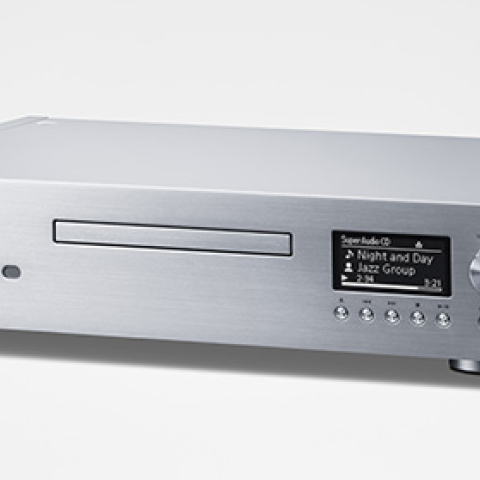
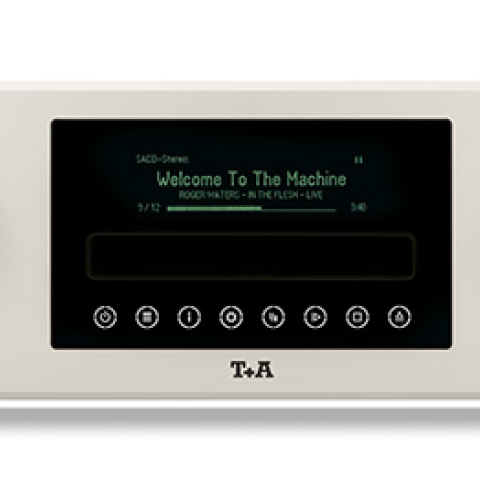
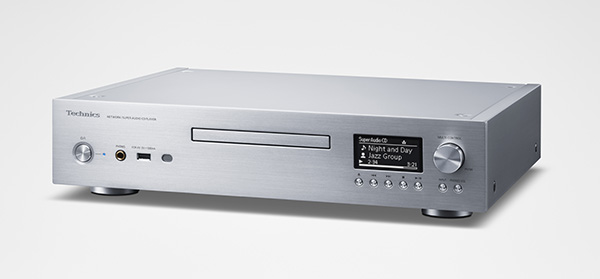
In the realms of marketing, storytelling, and popular culture, naming is everything. Why? Because names explain, and names describe, and when they are just right, they remain in the brains of their beholders long after the named object is out of production and out of sight. Technics calls the SL-G700M2 a "Network/Super Audio CD player." It's a multisource streaming/SACD disc player with a streamer, a DAC, and app support. The T+A MP 3100 HV G3 "Multi Source Player" I reviewed in the June issue was exactly this kind of device: Both spin CDs and SACDs, and have a network streamer, a D/A converter, and an app for my iPad. You tell me: Are these new, full-service digital devices "players," or "transports," or "streamers," or "receivers," or what? In an era of multifunction devices, names don't mean much (footnote 1).
Neither of those product names, of the Technics or the T+A, will remain in my brain for more than a few minutes. The SL-G700M2 part might hang in there for a month or two—it has a ring of authority—but I will not remember it as long as I remember components with more memorable names: Audio Consolette (from Marantz), Ampzilla (from G.A.S.), or Charlie the Digital Tuner (from Sumo). Those names are fun to remember. "SL-G700M2 Network/Super Audio CD Player?" Not so much.
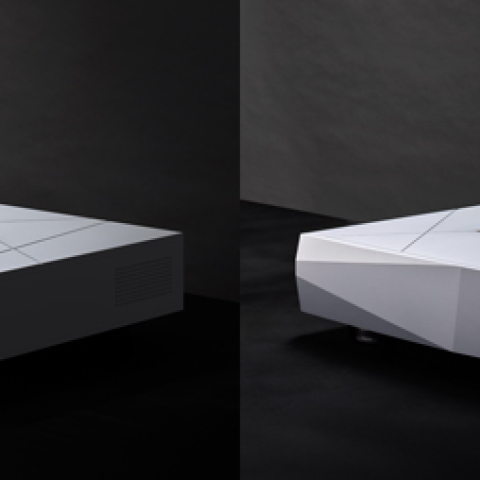
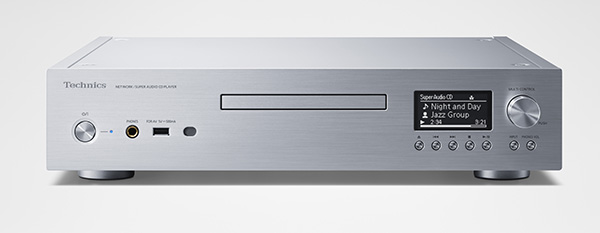 The SL-G700M2 is a low-slung, heavy box, deeper than most players at roughly 17" W × 4" H × 16" D—it's almost square—and it weighs just under 27lb. It has what Technics America rep Bill Voss called a "deep menu." I froze with panic when Bill Voss spoke those cursed words. I read "deep menu" as a euphemism for "unstifled complexity." Demons begat demons, and even with the SL-G700M2's clear, well-written manual, I could not get it to play a CD. Even after downloading the latest upgrade, I could not make music come out.
I called Voss in desperation. The patient Mr. Voss explained that the SL-G700M2 wouldn't play CDs, or Qobuz Connect, or internet radio, or any kind of music until you "set it up." "Setup" even has its own button on the remote control. Voss patiently walked me through myriad Yes/No questions and assured me that when setup was complete, the 700 would be as plug 'n' play as I could hope.
Readers need not worry: I am certain any Gen Z person would consider my setup tribulations trifling and pathetic. The Menu really was easy to navigate once I saw how it worked.
The SL-G700M2 is a low-slung, heavy box, deeper than most players at roughly 17" W × 4" H × 16" D—it's almost square—and it weighs just under 27lb. It has what Technics America rep Bill Voss called a "deep menu." I froze with panic when Bill Voss spoke those cursed words. I read "deep menu" as a euphemism for "unstifled complexity." Demons begat demons, and even with the SL-G700M2's clear, well-written manual, I could not get it to play a CD. Even after downloading the latest upgrade, I could not make music come out.
I called Voss in desperation. The patient Mr. Voss explained that the SL-G700M2 wouldn't play CDs, or Qobuz Connect, or internet radio, or any kind of music until you "set it up." "Setup" even has its own button on the remote control. Voss patiently walked me through myriad Yes/No questions and assured me that when setup was complete, the 700 would be as plug 'n' play as I could hope.
Readers need not worry: I am certain any Gen Z person would consider my setup tribulations trifling and pathetic. The Menu really was easy to navigate once I saw how it worked.
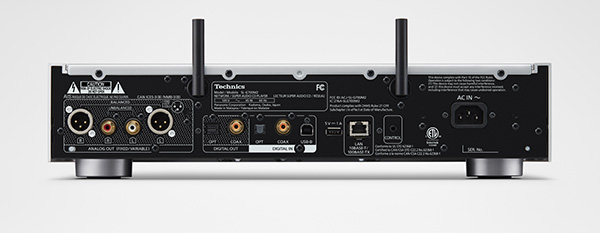 The SL-G700M2's disc player plays SACD (but only stereo, not multichannel), CD, CD-R, and CD-RW. Preset streaming services include internet radio, Spotify, Amazon Music, Tidal, Qobuz Connect, Deezer, Podcasts, Roon (Ready), and Google Cast. I mainly played music from Qobuz Connect, CDs, and SACDs. Via the streaming (Ethernet) input, the SL-G700M2 supports MP3, AAC, WAV, FLAC, AIFF, ALAC, and DSD up to their maximum possible bitrate and sampling frequency. You can cast music to it from a phone via Bluetooth version 4.2. It includes a ¼" (6.3mm) headphone jack and two USB Type A connectors (one front, one rear) for connecting flash drives or SSDs. In addition to the streaming input, digital inputs are TosLink, RCA S/PDIF, and USB-B. The SL-G700M2 also has digital outputs: TosLink and coaxial S/PDIF. Analog outputs are provided on both balanced (three-pin XLR) and single-ended (RCA) connectors.
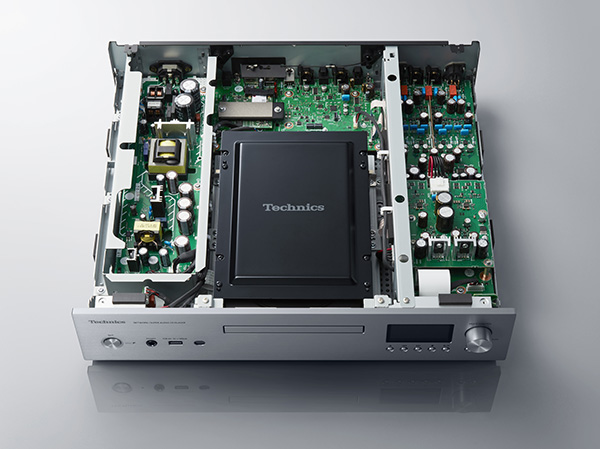
"The filter circuit after the D/A conversion uses an amplifier circuit with a unique discrete configuration instead of an operational amplifier IC," reads a passage on the Technics website. "This circuit realizes even higher responsiveness and S/N"—S/N ratio—"and reproduces even the most subtle sounds." Not sure, but this could be related to the voltage-tickles-current circuit I found in the SL-G700M2's headphone amplifier, which I found highly effective. Like the Technics SL-1300G's delta-sigma turntable drive system (see Gramophone Dreams #92), I think Technics may be on to something.
The SL-G700M2's disc player plays SACD (but only stereo, not multichannel), CD, CD-R, and CD-RW. Preset streaming services include internet radio, Spotify, Amazon Music, Tidal, Qobuz Connect, Deezer, Podcasts, Roon (Ready), and Google Cast. I mainly played music from Qobuz Connect, CDs, and SACDs. Via the streaming (Ethernet) input, the SL-G700M2 supports MP3, AAC, WAV, FLAC, AIFF, ALAC, and DSD up to their maximum possible bitrate and sampling frequency. You can cast music to it from a phone via Bluetooth version 4.2. It includes a ¼" (6.3mm) headphone jack and two USB Type A connectors (one front, one rear) for connecting flash drives or SSDs. In addition to the streaming input, digital inputs are TosLink, RCA S/PDIF, and USB-B. The SL-G700M2 also has digital outputs: TosLink and coaxial S/PDIF. Analog outputs are provided on both balanced (three-pin XLR) and single-ended (RCA) connectors.
"The filter circuit after the D/A conversion uses an amplifier circuit with a unique discrete configuration instead of an operational amplifier IC," reads a passage on the Technics website. "This circuit realizes even higher responsiveness and S/N"—S/N ratio—"and reproduces even the most subtle sounds." Not sure, but this could be related to the voltage-tickles-current circuit I found in the SL-G700M2's headphone amplifier, which I found highly effective. Like the Technics SL-1300G's delta-sigma turntable drive system (see Gramophone Dreams #92), I think Technics may be on to something.
 Here's a list of some of the machine's key features:
The main boast on Technics's website was about their new "proprietary coherent processing technology," which "improves the reproducibility of impulse signals by minimizing amplitude and phase deviations that occur throughout the D/A conversion process for signals up to 192kHz PCM using proprietary digital signal processing. With this processing, purity of the sound is increased, and the sound image is clearer." However, "DSD signals such as Super Audio CD are input directly to the DAC without performing this coherent processing."
Mentioned next is "Current Injection Active Noise Canceling," which the website says "removes unwanted noise by applying inverse phase current, combined with a high-speed (300kHz) switching power supply."
Last but not least, there's "Pure Disc Playback" mode: "When playing SACD/CDs, this mode shuts off all network interface circuits to significantly reduce noise and improve sound quality."
As the product name, or number, indicates, this is not the first SL-G700 Technics has produced. Changes with the "M2" version are:
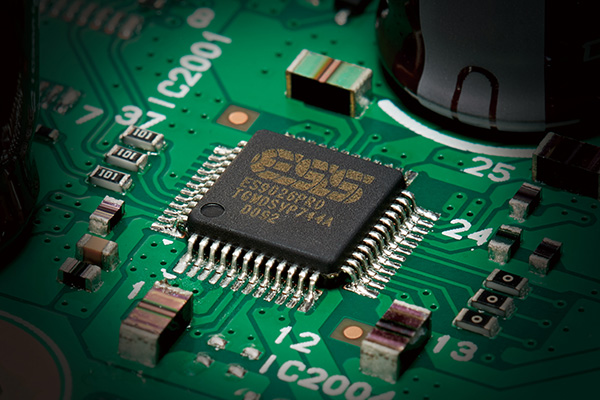
• A new DAC chip, the ESS ES9026PRO, in place of the previous AKM AK4497
• A new "reinforced" "High Speed Switching" power supply
• Characteristic (phase/amplitude) optimization on analog
• Added USB-B input functionality.
The Technics SL-G700M2 is manufactured in Malaysia, costs $3999.99, and comes with a three-year parts and labor warranty.
Here's a list of some of the machine's key features:
The main boast on Technics's website was about their new "proprietary coherent processing technology," which "improves the reproducibility of impulse signals by minimizing amplitude and phase deviations that occur throughout the D/A conversion process for signals up to 192kHz PCM using proprietary digital signal processing. With this processing, purity of the sound is increased, and the sound image is clearer." However, "DSD signals such as Super Audio CD are input directly to the DAC without performing this coherent processing."
Mentioned next is "Current Injection Active Noise Canceling," which the website says "removes unwanted noise by applying inverse phase current, combined with a high-speed (300kHz) switching power supply."
Last but not least, there's "Pure Disc Playback" mode: "When playing SACD/CDs, this mode shuts off all network interface circuits to significantly reduce noise and improve sound quality."
As the product name, or number, indicates, this is not the first SL-G700 Technics has produced. Changes with the "M2" version are:
• A new DAC chip, the ESS ES9026PRO, in place of the previous AKM AK4497
• A new "reinforced" "High Speed Switching" power supply
• Characteristic (phase/amplitude) optimization on analog
• Added USB-B input functionality.
The Technics SL-G700M2 is manufactured in Malaysia, costs $3999.99, and comes with a three-year parts and labor warranty.
 Listening
If you're one of those audiophiles who knows the work of bassists Matt Brewer or Christian McBride, or drummers Bill Stewart or Billy Drummond, but has no clue who Sly Dunbar and Robbie Shakespeare are (aka Sly & Robbie), please let me lift the rock you're hiding under and direct you toward the Qobuz playlist "Sly & Robbie, The Riddim Twins of Reggae" (footnote 2). All the music on this playlist will make you move and groove in some new and unexpected way while demonstrating the duo's impact on global music. Track to track, song to song, these remastered recordings showed me the incredible range of Sly & Robbie's creative prowess. I've heard "(You Gotta Walk) Don't Look Back" from the 1972 Jimmy Cliff film The Harder They Come more than 1000 times on more than 100 stereos, and I swear I never heard it with cleaner, tighter, more tuneful bass than I did via the SL-G700M2 playing the 2002 remastering of the movie soundtrack. Vocal clarity and voice articultion were cherishable.
When Sly Dunbar died recently, Levi's ran a video ad of him playing drums, with no mention of his name—just their little logo in the upper left corner. It seemed a classy way of honoring him and themselves.
It pleased me greatly to observe how the spellbinding performances on "MJ Technical Disc vol. 4," Great Performances on 78s (MJ Records CD MJCD-1003), jumped out of my Falcon Gold Badge LS3/5a's and gripped my attention for more than two days. Because the performances are so extraordinary, each of these tracks is powerful and mesmerizing, especially the J.S. Bach Cello Suite No.1 in G major with Pablo Casals. But for me, the most haunting and poetic track is a 1914 acoustic recording of tenor John McCormack singing Schubert's "Ave Maria" accompanied by violinist Fritz Kreisler. The purity and transcendental mood of this acoustic recording had me thinking that sonics and poetics-wise, this McCormack-Kreisler "Ave Maria" is surely among the most haunting audio recordings of all time. If you hear it once, you'll never forget it.
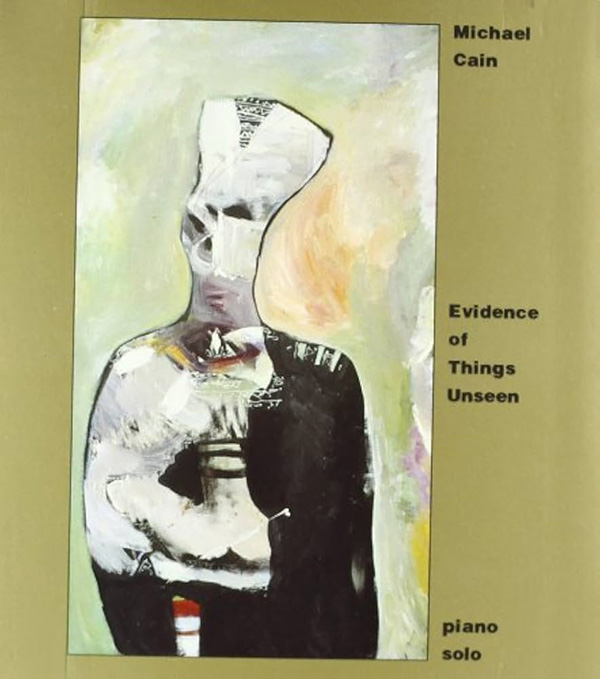 This CD reminded me that I need to spend more time listening to recordings made in the pre-electric recording era. The trick is finding digital transfers that have not, in their efforts to lower the noise level, also removed the breathy good parts. Sonics-wise, this was a super-wow moment, but no matter how pure and beautiful and captivating the sound was, these artists' performances always upstaged it. I'm putting this disc in the next Records to Live For. The best way I know to hear what any audio component is doing to a system's sound is to listen to well-recorded solo piano while looking out for some thumbprint or affectation it's imposing on the sound, or some coloration. For at least 30 years, one of my chief go-to discs for well-recorded solo piano has been Michael Cain's Evidence of Things Unseen on an M•A Recordings CD (M031A). With the Technics SL-G700M2, this disc, which I know extremely well, came across as very slightly dry and a touch hard, not as supple, viscous, and airy as it does with TEAC's VRDS 701T transport feeding HoloAudio's Spring 3 LTE or the Denafrips Terminator Plus. Both of those DACs present on the soft, colorful side of neutral. In contrast, the sound from the Technics was conspicuously sturdy and well-organized. Images had a more tangible density (footnote 3).
Most importantly, through the Technics player, the myriad nuances of Michael Cain's performance were upfront, seeking to be enjoyed. Reverb tails felt a bit scrunched, but tone never deviated from correct. I suspect that how the SL-G700M2 played this record is a good tell for how it will play most records—at least with the settings I chose in the setup menu.
This CD reminded me that I need to spend more time listening to recordings made in the pre-electric recording era. The trick is finding digital transfers that have not, in their efforts to lower the noise level, also removed the breathy good parts. Sonics-wise, this was a super-wow moment, but no matter how pure and beautiful and captivating the sound was, these artists' performances always upstaged it. I'm putting this disc in the next Records to Live For. The best way I know to hear what any audio component is doing to a system's sound is to listen to well-recorded solo piano while looking out for some thumbprint or affectation it's imposing on the sound, or some coloration. For at least 30 years, one of my chief go-to discs for well-recorded solo piano has been Michael Cain's Evidence of Things Unseen on an M•A Recordings CD (M031A). With the Technics SL-G700M2, this disc, which I know extremely well, came across as very slightly dry and a touch hard, not as supple, viscous, and airy as it does with TEAC's VRDS 701T transport feeding HoloAudio's Spring 3 LTE or the Denafrips Terminator Plus. Both of those DACs present on the soft, colorful side of neutral. In contrast, the sound from the Technics was conspicuously sturdy and well-organized. Images had a more tangible density (footnote 3).
Most importantly, through the Technics player, the myriad nuances of Michael Cain's performance were upfront, seeking to be enjoyed. Reverb tails felt a bit scrunched, but tone never deviated from correct. I suspect that how the SL-G700M2 played this record is a good tell for how it will play most records—at least with the settings I chose in the setup menu.
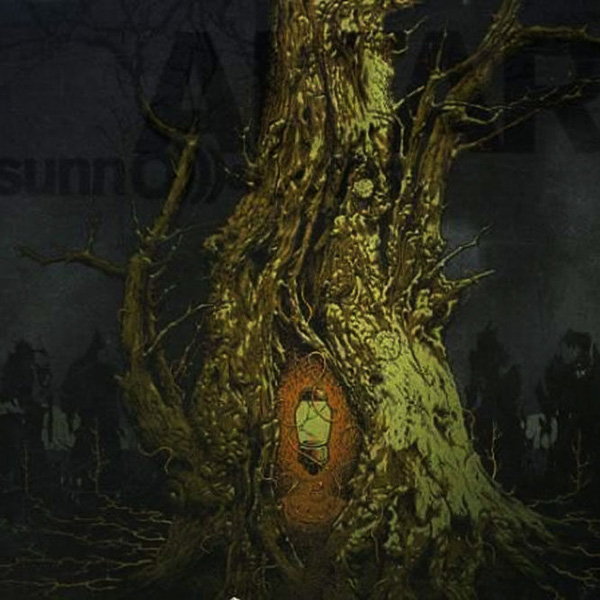 Every time I play the Sunn O))) & Boris composition Altar (Southern Lord CD sunn62), my desk shakes, my pencils rattle, and I am reminded what a pair of Kleenex boxes my speakers are. This music was made for light shows and giant horn speakers—but I was surprised at how satisfyingly big, deep, detailed, and rock solid it seemed with the Technics CD player driving my sealed-box Falcons. Picture armored steel and diesel locomotives. With the SL-G700M2, I could feel stuff like that coming out of my LS3/5a's. It was the DAC doing that.
The SL-G700M2 does not soften or emulsify recordings, and it is never short on electromotive force and relentless momentum. Of that I can assure you.
So, what about Super Audio discs?
Every time I play the Sunn O))) & Boris composition Altar (Southern Lord CD sunn62), my desk shakes, my pencils rattle, and I am reminded what a pair of Kleenex boxes my speakers are. This music was made for light shows and giant horn speakers—but I was surprised at how satisfyingly big, deep, detailed, and rock solid it seemed with the Technics CD player driving my sealed-box Falcons. Picture armored steel and diesel locomotives. With the SL-G700M2, I could feel stuff like that coming out of my LS3/5a's. It was the DAC doing that.
The SL-G700M2 does not soften or emulsify recordings, and it is never short on electromotive force and relentless momentum. Of that I can assure you.
So, what about Super Audio discs?
The iron-fisted authority I got with PCM streaming changed to charm and delicacy when I put an SACD in the drawer. I was using M•A Recordings' MA on SA, Crystal Cable's SACD sampler (Hybrid SACD, M•A Recordings, no catalog number). Reverb and room acoustics were mildly reduced compared to the native DSD files I have of these tracks, but the sound was pure and crystal clear. Spatial mapping was near-military grade. If you're an SACD cognoscente and can't afford an Esoteric or T+A-level machine, this might be the new working person's SACD player. It has clarity and presence enough to impress anyone. I wanted to play David Chesky's ground-breaking MQA CD, Inside the Moment (JD397) featuring Camille Thurman on tenor saxophone and vocals, Mark Whitfield on guitar, Ben Allison playing bass, and my favorite master-of-sticks Billy Drummond on drums. Conveniently, there's an MQA button on the SL-700M2's remote control.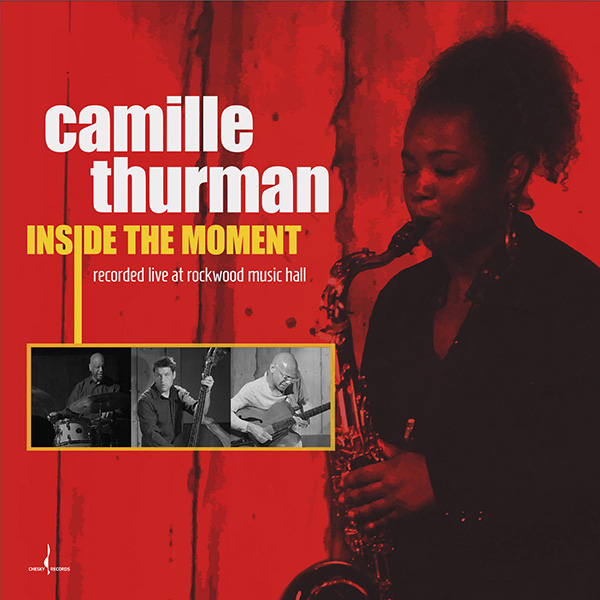 Adding to the MQA fun, this music was recorded with a B&K Binaural Head. Even with floor speakers, the sound was super 3D; enough to see the dummy head on a table in the center of the room near the stage and hear the couple next to me placing their order with the table waiter. Applause was less fleshy-palmed than it is with my dCS Lina, but Mark Whitfield's guitar and Ben Allison's bass could not have sounded more real and present. The super-visual vibrating reality of this recording is unique in my experience. If you have headphones and a machine that plays MQA CDs, the realism of the room, the stage, and Camille Thurman will stun you. This is a binaural recording. As such, it became dramatically more real, clear, and immediate when I plugged in headphones—specifically HiFiMan's new Susvara Unveiled. With headphones, my brain spoke instantly: Yep, this is as real as it can get with a microphone and a tape recorder.
According to a special sheet included with the SL-G700M2's owner's manual, "The SL-G700M2 uses a Class AA headphone amplifier with separate circuits for voltage amplification and current amplification of the audio signal.
"The voltage is amplified by a high-grade operational amplifier, the current is amplified by an operational amplifier with high current supply capability, and the high-grade PWM signal output from the JENO Engine is converted to analog with high precision."
The owner's manual sheet concludes, "This makes it possible to reproduce music with low distortion and wide frequency range no matter what the load impedance of the headphone is."
Adding to the MQA fun, this music was recorded with a B&K Binaural Head. Even with floor speakers, the sound was super 3D; enough to see the dummy head on a table in the center of the room near the stage and hear the couple next to me placing their order with the table waiter. Applause was less fleshy-palmed than it is with my dCS Lina, but Mark Whitfield's guitar and Ben Allison's bass could not have sounded more real and present. The super-visual vibrating reality of this recording is unique in my experience. If you have headphones and a machine that plays MQA CDs, the realism of the room, the stage, and Camille Thurman will stun you. This is a binaural recording. As such, it became dramatically more real, clear, and immediate when I plugged in headphones—specifically HiFiMan's new Susvara Unveiled. With headphones, my brain spoke instantly: Yep, this is as real as it can get with a microphone and a tape recorder.
According to a special sheet included with the SL-G700M2's owner's manual, "The SL-G700M2 uses a Class AA headphone amplifier with separate circuits for voltage amplification and current amplification of the audio signal.
"The voltage is amplified by a high-grade operational amplifier, the current is amplified by an operational amplifier with high current supply capability, and the high-grade PWM signal output from the JENO Engine is converted to analog with high precision."
The owner's manual sheet concludes, "This makes it possible to reproduce music with low distortion and wide frequency range no matter what the load impedance of the headphone is."
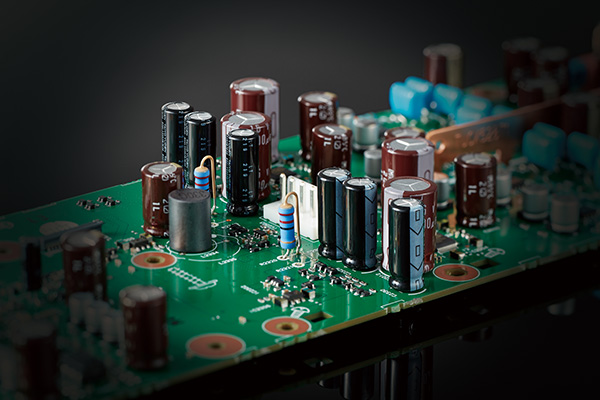 I couldn't explain exactly how this amp works, but the block diagram suggests it's a sensitive voltage amplifier tickling a waterfall of load current. Whatever it was, there was no doubt it was doing its job extremely well.
With a 45-ohm impedance and an 86dB sensitivity, the Susvara Unveiled are only a little easier to drive than their famously impossible-to-drive, 82dB-sensitive forebear, but they sure did light up with the SL-G700M2's headphone amplifier. It played these $8000 headphones with spectacular transparency and effortless élan. I could spot no dynamic compression. I dare say the Unveiled have never sounded stronger, breathier, more transparent, or better resolved than they did while connected to this Technics CD player. I could not believe this much audio excitement was coming out of a ¼" socket on the front of a CD player.
No grain, zero fog, perfect tone, and a dynamic vigor that I can only describe as full-on intoxicating. This was more than a wow moment; it was when Technics's SACD player came fully out and strutted its incredible audio-sonic stuff.
Keep in mind that I was playing an MQA-encoded binaural recording on a CD, through a pair of world-class headphones driven by what I quickly realized was an extraordinary headphone amplifier. All the digital ducks were marching in perfect order, and it was a spectacle to behold.
Impressed but still curious about what was up with this amplifier, I tried my 250-ohm Beyerdynamic DT 880s, and once again the Technics "Class AA" headphone amplifier performed like a star, displaying extraordinary control of the diaphragms in this venerable studio-quality headphone. With the Beyers, the Camille Thurman album displayed the most lifelike tone and transient action. The sound from the Beyers felt immediate and touchable, clean, and neutral to the max. That made two successive gold stars for the SL-G700M2's headphone amp.
Up for one more test, I tried the Grado Signature HP100 SE, whose price ($2495) and 32-ohm, 117dB sensitivity make it an easy match with the Technics CD player. I don't believe in judgment calls or using words like good, better, best, but I could not imagine sensible people ever wanting something more resolved or luxurious. If I owned this CD player, DAC, server, and amp, I'd choose this Grado HP100 SE headphone because, more than the other fancy 'phones, it vanished behind the music. With the Grado, the amp and headphone flattered each other.
I couldn't explain exactly how this amp works, but the block diagram suggests it's a sensitive voltage amplifier tickling a waterfall of load current. Whatever it was, there was no doubt it was doing its job extremely well.
With a 45-ohm impedance and an 86dB sensitivity, the Susvara Unveiled are only a little easier to drive than their famously impossible-to-drive, 82dB-sensitive forebear, but they sure did light up with the SL-G700M2's headphone amplifier. It played these $8000 headphones with spectacular transparency and effortless élan. I could spot no dynamic compression. I dare say the Unveiled have never sounded stronger, breathier, more transparent, or better resolved than they did while connected to this Technics CD player. I could not believe this much audio excitement was coming out of a ¼" socket on the front of a CD player.
No grain, zero fog, perfect tone, and a dynamic vigor that I can only describe as full-on intoxicating. This was more than a wow moment; it was when Technics's SACD player came fully out and strutted its incredible audio-sonic stuff.
Keep in mind that I was playing an MQA-encoded binaural recording on a CD, through a pair of world-class headphones driven by what I quickly realized was an extraordinary headphone amplifier. All the digital ducks were marching in perfect order, and it was a spectacle to behold.
Impressed but still curious about what was up with this amplifier, I tried my 250-ohm Beyerdynamic DT 880s, and once again the Technics "Class AA" headphone amplifier performed like a star, displaying extraordinary control of the diaphragms in this venerable studio-quality headphone. With the Beyers, the Camille Thurman album displayed the most lifelike tone and transient action. The sound from the Beyers felt immediate and touchable, clean, and neutral to the max. That made two successive gold stars for the SL-G700M2's headphone amp.
Up for one more test, I tried the Grado Signature HP100 SE, whose price ($2495) and 32-ohm, 117dB sensitivity make it an easy match with the Technics CD player. I don't believe in judgment calls or using words like good, better, best, but I could not imagine sensible people ever wanting something more resolved or luxurious. If I owned this CD player, DAC, server, and amp, I'd choose this Grado HP100 SE headphone because, more than the other fancy 'phones, it vanished behind the music. With the Grado, the amp and headphone flattered each other.
 Thumbprints
At the beginning of this report, I promised I'd be on the lookout for whatever kind of thumbprint or veil or sonic twist the Technics SL-G700M2 might add to recordings, so I'm happy to report: I think I found it. It is a muscled, fit body. The SL-G700M2 makes every PCM recording sound fit and mesomorphic. Surprisingly, it makes native DSD sound almost ectomorphic—delicate, finely wrought, and super color-saturated—as though images are being viewed through a polarizing filter, which is how I always describe native DSD. The other thing I noticed about the SL-G700M2 was how it felt the way it looked, low-slung and unobtrusive, with no Las Vegas faceplate clamoring for attention. It stayed out of my system's spotlight and let the music grab all the attention. In other words, it fit in nicely.
Footnote 1: Two-plus years ago, I wrote an As We See It essay focused on digital devices and nomenclature. I argued that the industry should agree on what to call stuff, and I proposed some possibilities. The word "streamer," I argued, should be used for all-digital devices that take data from the internet and send it to a DAC. A broader category is "transport"—like a CD transport, which reads data from a CD and sends it to a DAC—so a network streamer is also a network transport. Any device with analog outputs—that converts the data and outputs music—should be called a "player," analogous to a CD player. By that standard, Technics got it right: "Network/Super Audio CD player" perfectly captures what this device does.—Jim Austin
Footnote 2: See open.qobuz.com/playlist/55765586.
Footnote 3: I suspect these are largely differences in conversion technology, between delta-sigma and R-2R processors.
In the realms of marketing, storytelling, and popular culture, naming is everything. Why? Because names explain, and names describe, and when they are just right, they remain in the brains of their beholders long after the named object is out of production and out of sight. Technics calls the SL-G700M2 a "Network/Super Audio CD player." It's a multisource streaming/SACD disc player with a streamer, a DAC, and app support. The T+A MP 3100 HV G3 "Multi Source Player" I reviewed in the June issue was exactly this kind of device: Both spin CDs and SACDs, and have a network streamer, a D/A converter, and an app for my iPad. You tell me: Are these new, full-service digital devices "players," or "transports," or "streamers," or "receivers," or what? In an era of multifunction devices, names don't mean much (footnote 1).
The SL-G700M2 is a low-slung, heavy box, deeper than most players at roughly 17" W × 4" H × 16" D—it's almost square—and it weighs just under 27lb. It has what Technics America rep Bill Voss called a "deep menu." I froze with panic when Bill Voss spoke those cursed words. I read "deep menu" as a euphemism for "unstifled complexity." Demons begat demons, and even with the SL-G700M2's clear, well-written manual, I could not get it to play a CD. Even after downloading the latest upgrade, I could not make music come out.
I called Voss in desperation. The patient Mr. Voss explained that the SL-G700M2 wouldn't play CDs, or Qobuz Connect, or internet radio, or any kind of music until you "set it up." "Setup" even has its own button on the remote control. Voss patiently walked me through myriad Yes/No questions and assured me that when setup was complete, the 700 would be as plug 'n' play as I could hope.
The SL-G700M2's disc player plays SACD (but only stereo, not multichannel), CD, CD-R, and CD-RW. Preset streaming services include internet radio, Spotify, Amazon Music, Tidal, Qobuz Connect, Deezer, Podcasts, Roon (Ready), and Google Cast. I mainly played music from Qobuz Connect, CDs, and SACDs. Via the streaming (Ethernet) input, the SL-G700M2 supports MP3, AAC, WAV, FLAC, AIFF, ALAC, and DSD up to their maximum possible bitrate and sampling frequency. You can cast music to it from a phone via Bluetooth version 4.2. It includes a ¼" (6.3mm) headphone jack and two USB Type A connectors (one front, one rear) for connecting flash drives or SSDs. In addition to the streaming input, digital inputs are TosLink, RCA S/PDIF, and USB-B. The SL-G700M2 also has digital outputs: TosLink and coaxial S/PDIF. Analog outputs are provided on both balanced (three-pin XLR) and single-ended (RCA) connectors.
"The filter circuit after the D/A conversion uses an amplifier circuit with a unique discrete configuration instead of an operational amplifier IC," reads a passage on the Technics website. "This circuit realizes even higher responsiveness and S/N"—S/N ratio—"and reproduces even the most subtle sounds." Not sure, but this could be related to the voltage-tickles-current circuit I found in the SL-G700M2's headphone amplifier, which I found highly effective. Like the Technics SL-1300G's delta-sigma turntable drive system (see Gramophone Dreams #92), I think Technics may be on to something.
Here's a list of some of the machine's key features:
The main boast on Technics's website was about their new "proprietary coherent processing technology," which "improves the reproducibility of impulse signals by minimizing amplitude and phase deviations that occur throughout the D/A conversion process for signals up to 192kHz PCM using proprietary digital signal processing. With this processing, purity of the sound is increased, and the sound image is clearer." However, "DSD signals such as Super Audio CD are input directly to the DAC without performing this coherent processing."
Mentioned next is "Current Injection Active Noise Canceling," which the website says "removes unwanted noise by applying inverse phase current, combined with a high-speed (300kHz) switching power supply."
Last but not least, there's "Pure Disc Playback" mode: "When playing SACD/CDs, this mode shuts off all network interface circuits to significantly reduce noise and improve sound quality."
ListeningIf you're one of those audiophiles who knows the work of bassists Matt Brewer or Christian McBride, or drummers Bill Stewart or Billy Drummond, but has no clue who Sly Dunbar and Robbie Shakespeare are (aka Sly & Robbie), please let me lift the rock you're hiding under and direct you toward the Qobuz playlist "Sly & Robbie, The Riddim Twins of Reggae" (footnote 2). All the music on this playlist will make you move and groove in some new and unexpected way while demonstrating the duo's impact on global music. Track to track, song to song, these remastered recordings showed me the incredible range of Sly & Robbie's creative prowess. I've heard "(You Gotta Walk) Don't Look Back" from the 1972 Jimmy Cliff film The Harder They Come more than 1000 times on more than 100 stereos, and I swear I never heard it with cleaner, tighter, more tuneful bass than I did via the SL-G700M2 playing the 2002 remastering of the movie soundtrack. Vocal clarity and voice articultion were cherishable.
This CD reminded me that I need to spend more time listening to recordings made in the pre-electric recording era. The trick is finding digital transfers that have not, in their efforts to lower the noise level, also removed the breathy good parts. Sonics-wise, this was a super-wow moment, but no matter how pure and beautiful and captivating the sound was, these artists' performances always upstaged it. I'm putting this disc in the next Records to Live For. The best way I know to hear what any audio component is doing to a system's sound is to listen to well-recorded solo piano while looking out for some thumbprint or affectation it's imposing on the sound, or some coloration. For at least 30 years, one of my chief go-to discs for well-recorded solo piano has been Michael Cain's Evidence of Things Unseen on an M•A Recordings CD (M031A). With the Technics SL-G700M2, this disc, which I know extremely well, came across as very slightly dry and a touch hard, not as supple, viscous, and airy as it does with TEAC's VRDS 701T transport feeding HoloAudio's Spring 3 LTE or the Denafrips Terminator Plus. Both of those DACs present on the soft, colorful side of neutral. In contrast, the sound from the Technics was conspicuously sturdy and well-organized. Images had a more tangible density (footnote 3).
Every time I play the Sunn O))) & Boris composition Altar (Southern Lord CD sunn62), my desk shakes, my pencils rattle, and I am reminded what a pair of Kleenex boxes my speakers are. This music was made for light shows and giant horn speakers—but I was surprised at how satisfyingly big, deep, detailed, and rock solid it seemed with the Technics CD player driving my sealed-box Falcons. Picture armored steel and diesel locomotives. With the SL-G700M2, I could feel stuff like that coming out of my LS3/5a's. It was the DAC doing that.
The SL-G700M2 does not soften or emulsify recordings, and it is never short on electromotive force and relentless momentum. Of that I can assure you.
The iron-fisted authority I got with PCM streaming changed to charm and delicacy when I put an SACD in the drawer. I was using M•A Recordings' MA on SA, Crystal Cable's SACD sampler (Hybrid SACD, M•A Recordings, no catalog number). Reverb and room acoustics were mildly reduced compared to the native DSD files I have of these tracks, but the sound was pure and crystal clear. Spatial mapping was near-military grade. If you're an SACD cognoscente and can't afford an Esoteric or T+A-level machine, this might be the new working person's SACD player. It has clarity and presence enough to impress anyone. I wanted to play David Chesky's ground-breaking MQA CD, Inside the Moment (JD397) featuring Camille Thurman on tenor saxophone and vocals, Mark Whitfield on guitar, Ben Allison playing bass, and my favorite master-of-sticks Billy Drummond on drums. Conveniently, there's an MQA button on the SL-700M2's remote control.
Adding to the MQA fun, this music was recorded with a B&K Binaural Head. Even with floor speakers, the sound was super 3D; enough to see the dummy head on a table in the center of the room near the stage and hear the couple next to me placing their order with the table waiter. Applause was less fleshy-palmed than it is with my dCS Lina, but Mark Whitfield's guitar and Ben Allison's bass could not have sounded more real and present. The super-visual vibrating reality of this recording is unique in my experience. If you have headphones and a machine that plays MQA CDs, the realism of the room, the stage, and Camille Thurman will stun you. This is a binaural recording. As such, it became dramatically more real, clear, and immediate when I plugged in headphones—specifically HiFiMan's new Susvara Unveiled. With headphones, my brain spoke instantly: Yep, this is as real as it can get with a microphone and a tape recorder.
I couldn't explain exactly how this amp works, but the block diagram suggests it's a sensitive voltage amplifier tickling a waterfall of load current. Whatever it was, there was no doubt it was doing its job extremely well.
With a 45-ohm impedance and an 86dB sensitivity, the Susvara Unveiled are only a little easier to drive than their famously impossible-to-drive, 82dB-sensitive forebear, but they sure did light up with the SL-G700M2's headphone amplifier. It played these $8000 headphones with spectacular transparency and effortless élan. I could spot no dynamic compression. I dare say the Unveiled have never sounded stronger, breathier, more transparent, or better resolved than they did while connected to this Technics CD player. I could not believe this much audio excitement was coming out of a ¼" socket on the front of a CD player.
No grain, zero fog, perfect tone, and a dynamic vigor that I can only describe as full-on intoxicating. This was more than a wow moment; it was when Technics's SACD player came fully out and strutted its incredible audio-sonic stuff.
ThumbprintsAt the beginning of this report, I promised I'd be on the lookout for whatever kind of thumbprint or veil or sonic twist the Technics SL-G700M2 might add to recordings, so I'm happy to report: I think I found it. It is a muscled, fit body. The SL-G700M2 makes every PCM recording sound fit and mesomorphic. Surprisingly, it makes native DSD sound almost ectomorphic—delicate, finely wrought, and super color-saturated—as though images are being viewed through a polarizing filter, which is how I always describe native DSD. The other thing I noticed about the SL-G700M2 was how it felt the way it looked, low-slung and unobtrusive, with no Las Vegas faceplate clamoring for attention. It stayed out of my system's spotlight and let the music grab all the attention. In other words, it fit in nicely.
Footnote 1: Two-plus years ago, I wrote an As We See It essay focused on digital devices and nomenclature. I argued that the industry should agree on what to call stuff, and I proposed some possibilities. The word "streamer," I argued, should be used for all-digital devices that take data from the internet and send it to a DAC. A broader category is "transport"—like a CD transport, which reads data from a CD and sends it to a DAC—so a network streamer is also a network transport. Any device with analog outputs—that converts the data and outputs music—should be called a "player," analogous to a CD player. By that standard, Technics got it right: "Network/Super Audio CD player" perfectly captures what this device does.—Jim Austin