Digital Processor Reviews

Sort By:  Post Date TitlePublish Date

Musical Fidelity X-24K D/A processor

The standalone digital/analog converter emerged as a product category in 1987 with the appearance of the Arcam Black Box and the Marantz CDA-94, closely followed by the PS Audio Link. The idea was that putting the sensitive D/A-conversion and analog stages in a separate enclosure with its own power supply would maximize the sound quality when compared with packing these circuits in the same box as the transport. However, it turned out that the routing of the digital data between transport and processor in the form of an S/PDIF- or AES/EBU-encoded bitstream could introduce word-clock jitterwhich undid much of the sonic advantages. (See "Bits is Bits" by Malcolm Hawksford and Chris Dunn, Stereophile, March 1996.)
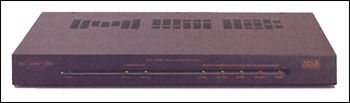
MSB Technology Link D/A converter

Recently, we've seen the digital "horsepower" race accelerate with the arrival of digital sources and devices with 24-bit and 96kHz sampling capability. Much of this has been spurred by the 24/96 labels emblazoned on the newer DVD players—and, within the purer confines of the audio community, by high-end DACs with this same ability. Indeed, it's possible that the dCS Elgar DAC, near and dear to John Atkinson's heart and a perennial Class A selection in Stereophile's "Recommended Components," performs so well with standard 16-bit/44.1kHz sources because its wider digital bandwidth permits greater linearity within the more restricted range of regular CDs.

dCS Elgar D/A processor

Things are changing rapidly in the world of professional digital audio. After a decade of stability, with slow but steady improvement in the quality of 16-bit, 44.1kHz audio, the cry among audio engineers is now "24/96!"—meaning 24-bit data sampled at 96kHz. Not coincidentally, DVD offers audiophiles a medium with the potential for playing back music encoded at this new mastering standard.

Mark Levinson No.37 CD transport & No.36S D/A converter

We are now well past the era in which every review of digital playback equipment had to begin with an apology for the medium. CD replay performance may, in fact, now be bumping up against a glass ceiling. But that doesn't discourage high-end audio manufacturers from trying to advance the art, and tempt audiophiles (at least those among us who are not hopeless digiphobes) out of our minds.

Genesis Technologies Digital Lens

Let's say you play a CD on a poor-quality CD transport and store the digital audio data in a massive computer memory. You then repeat the process, but this time play the CD into the memory from the finest CD transport extant (say, the Mark Levinson No.31). A week later you feed the two sets of data from the massive memory into a digital processor and listen to the music. Would the CD transports' sonic signatures be removed from the signal? Could you hear a difference between the transports a week later?

Meridian 518 Digital Audio Processor

The High End is a tidily ordered world. There are CD players, transports, and processors used to play stereo recordings and drive stereo preamplifiers. There are stereo or mono amplifiers used to drive a pair of speakers. And then there is the British high-end company Meridian, run by one J. Robert Stuart, one of audio's deeper thinkers and a Fellow of the Audio Engineering Society. Meridian does it their way. They put their amplifiers inside their speakers. Heck, Meridian even puts their D/A processors inside their speakers when they can. And two speakers to play back stereo recordings? Meridian believes in re-creating the original soundfield no matter how many speakers and channels it takes to do it right. And they do it sufficiently successfully that their Digital Theatre system, which does all of the above, was one of Stereophile's joint Home Theater products of 1995. [See also the 2000">http://www.stereophile.com//digitalsourcereviews/201/">2000 review of their Series 800 Digital Theatre.—Ed.]

Advertisement
Advertisement
Advertisement