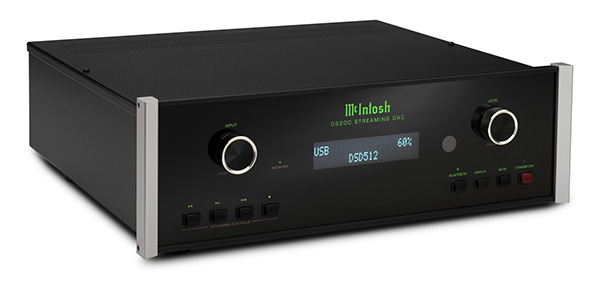
It only took 40 years, but I think digital can now compete one-on-one with analog for exciting, satisfying sonics and user satisfaction. It took a long time to happen, but I think it was worth the wait.
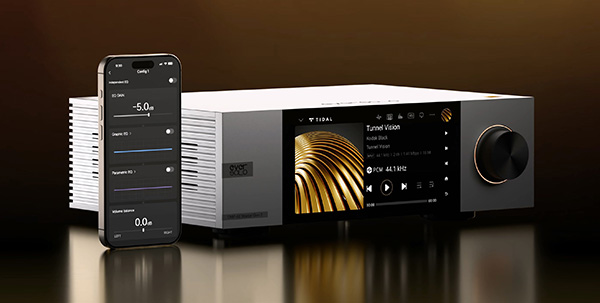
I am not big on streaming overall, but I do like to find new releases on Qobuz, enjoy the live feed from the Berlin Philharmonic via their Digital Concert Hall, and sample multichannel music on Apple Music. If I really like something, I buy discs or downloads to add to my local collection. But I must admit that audio streamers are hot!
In my studio, I have a hand-sized wood box. It is the soundbox of an African musical instrument with a small internal volume, a pencil-sized sound hole, a bent steel bridge, and an array of eight steel wires with flattened ends—a keyboard. It is called a mbira . . . you can buy a spiffy varnished mbira at Walmart, where it is called a "Kalimba."
When auditioning a new audio component, I invariably start with some ideas about what I should listen for, based on my preconceptions about the pitfalls and propensities of products in its category. For example, with digital, I'm listening for sound that's awake and unprocessed. With every component, I start by hoping I can spot their colorations and assess their level of importance.
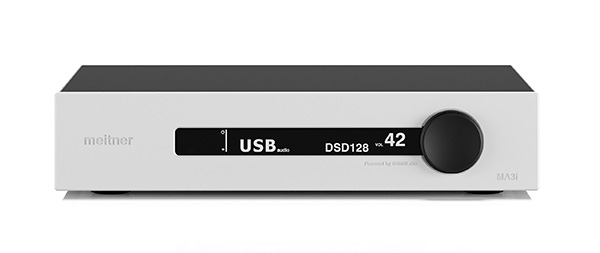
"Is the Meitner MA3i integrated DAC ($11,500) sufficiently different from its predecessor to warrant a full review?" That's the question Editor Jim Austin posed as he contemplated the alternative: a shorter follow-up to my 2022 review of the now discontinued MA3 ($10,500).
The more I listen—to gear I'm reviewing as well as other people's hi-fis—the more I believe in intangibles. One of these intangibles is the art of system building.
Lord knows I try to keep an open mind, but those good-measuring delta-sigma chip DACs rub me the wrong way. Their processing complexity vexes my mind, and there's never been a reconstruction or upsampling filter that I've been a fan of. Nevertheless, I believe that every audio component must be judged by how it sounds and feels in use.
Today I'll be describing an "acorn" DAC, the least-expensive yet. LAiV Audio's new µDAC is small, costs just $994 ($1049 as of January 1 2026), and is dancing at the same party as the high-intensity, high-priced DACs. It offers listeners a unique perspective on what quality digital can sound like.
McIntosh, which is based in my home state of New York, has long been in my audio life. It was the "house sound" where I grew up. My parents' stereo system was powered by a pair of MC75 tubed amplifiers (fed by a Marantz 7B preamp, driving Bozak Concert Grand speakers). In my father's recording studio, McIntosh amplifiers powered the monitors.
Over the years, I've listened to many headphones, beginning with the Grado SR60s I bought with my first paycheck. Since then, I've been lucky enough to sample many exotic cans, but I always return to the admittedly controversial realization that I happen to prefer ... earphones.