

Book Review: McIntosh: "...for the love of music..."
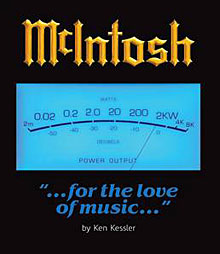
McIntosh: "...for the love of music..."
by Ken Kessler. McIntosh Laboratory, Inc., 2006. $150.00. Hardcover, 12" by 12" by 1.25", 315 pp. ISBN 0-9787236-0-0.
Available from McIntosh dealers and McIntosh">http://www.mcintoshlabs.com">McIntosh Laboratory, Inc., 2 Chambers Street, Binghamton, NY 13903. Tel: (800) 538-6576.
by Ken Kessler. McIntosh Laboratory, Inc., 2006. $150.00. Hardcover, 12" by 12" by 1.25", 315 pp. ISBN 0-9787236-0-0.
Available from McIntosh dealers and McIntosh">http://www.mcintoshlabs.com">McIntosh Laboratory, Inc., 2 Chambers Street, Binghamton, NY 13903. Tel: (800) 538-6576.



 Much as I like the prospect of being able to grunt a heartfelt Je ne regrette rien immediately before expiring, I know there will be too many what-ifs and wish-I-hadn'ts to make that even remotely possible. But here is one missed opportunity that won't flash before me, because John Atkinson has granted me a second chance.