Features

Sort By: Post DateTitle Publish Date

Colloms on Cables

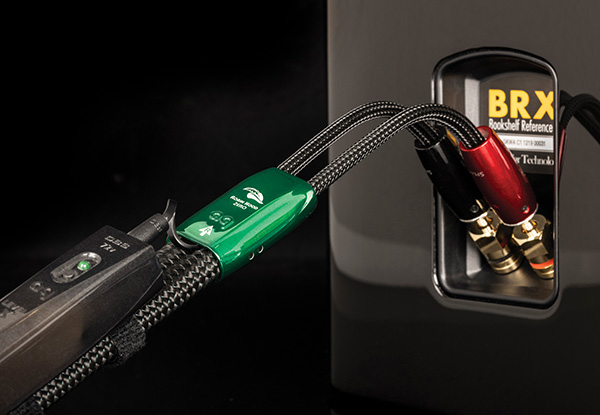
Underpinning a discussion about the merits of potentially costly specialist audio cables is an obvious question: Why do we need them? Doesn't almost all wire conduct audio signals with negligible distortion and very little loss of power? Specialist hi-fi cables seem expensive for what you get. Especially at the upper end, they seem like a worse value than electronics and loudspeakers. Depreciation is greater, too: Cables are almost a consumable.


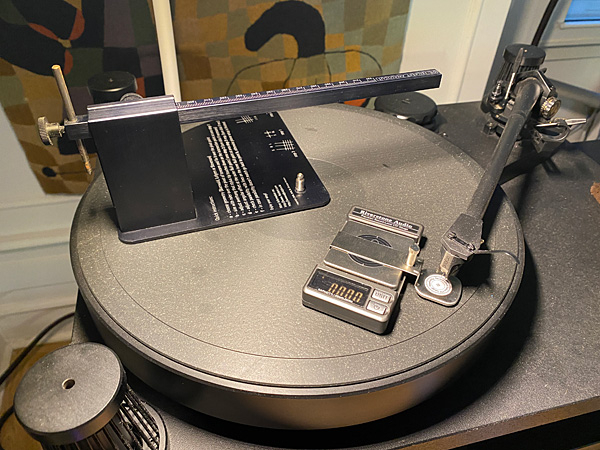
But if you wish to finesse the quality endeavor of classic separates-based hi-fi systems, you cannot do without them. Fundamentally, it is not the efficient transfer of audio power that's the issue; that is the easy bit. Rather, it is a matter of optimizing the transmission of the more subtle information that describes recorded acoustic, instrumental detail, the performers, and, not least, dynamics and rhythm: Are your feet tapping unconsciously in time to the performance?
NWAA Labs: Measurement Beyond The Atomic Level

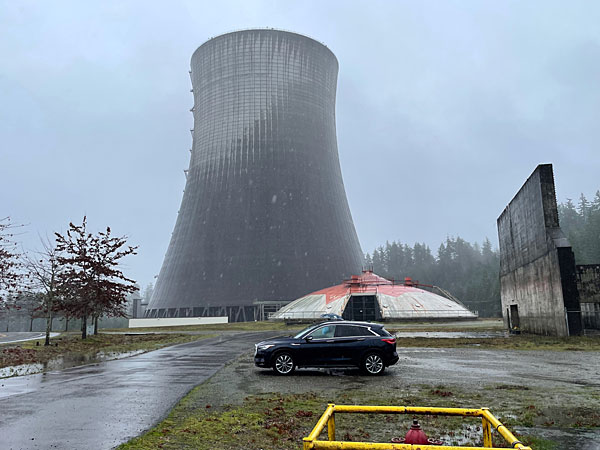
The setting is surreal. As you drive into the Satsop Business Park in rural Elma, Washington (pop. 3500, max), eyes immediately fixate on the looming 481'-tall cooling towers of an abandoned nuclear facility. Remnants of the largest nuclear power plant construction project in the United States, the site was mothballed in 1983, in part due to concerns triggered by reports of what had happened at Pennsylvania's Three Mile Island four years earlier.

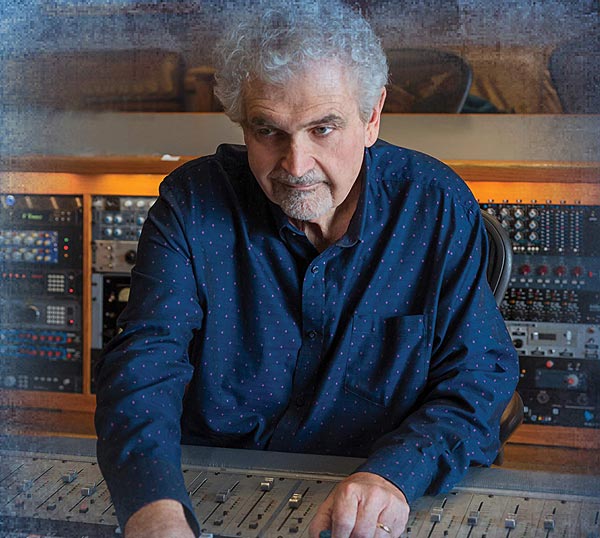
Kevin Gray: Vinyl-Mastering Master

When I need information about recordings, I go to Discogs. At Discogs, Kevin Gray has more than 2500 entries. That's as good an indicator as any of the amount of ground he has covered in his career so far as a creative participant in the recorded-music art known as mastering. Since starting out in the early 1970s, in Los Angeles, he has worked for all the major music labels and many independents, in all music genres.

500 Issues And Counting: a Publishing Milestone

We're all involved with the world we live in. Friends from 20 years ago? Hey, nice to see ya, put on a little weight I see. Generally, you hang with your crew, although you might miss the bigger picture that way.


I wrote for Stereophile from 1993 through 2002, and I remember my experiences fondly, including the pure pleasure of listening to music on all that wonderful audio equipment. But I hung with my tribe and never fully appreciated the crucible in which Stereophile was formed. It's a genuine saga; cue Ennio Morricone's soundtrack to Once Upon a Time in the West.

Book Review: Chairman at the Board

Chairman at the Board: Recording the Soundtrack of a Generation, by Bill Schnee. Backbeat Books, 2021. 219pp. $24.49, hard cover; $21.49, Kindle e-book.


It was September 2012, and Sasha Matson and I were in Los Angeles to record the singers for his jazz opera, Cooperstown. We had already recorded the instrumental backing with engineer Mike Marciano at Brooklyn's Systems Two studio, and the venue for the vocal tracking sessions was Bill Schnee's studio in North Hollywood.

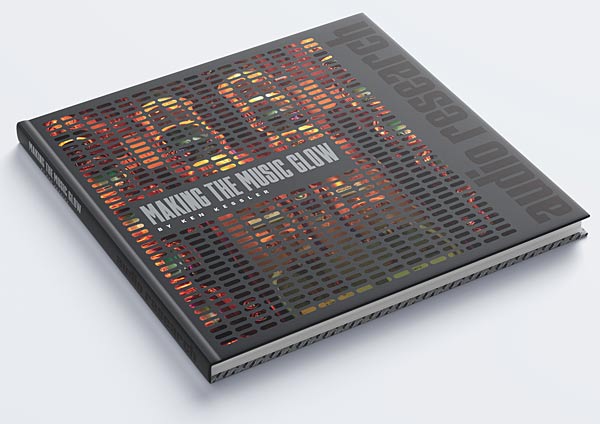
Book Review: Audio Research: Making the Music Glow

Book Review: Audio Research: Making the Music Glow

Written by Ken Kessler, designed by Henry Nolan. 220pp. $150. Available at Audio Research dealers and online at audioresearch.com.


I never met Audio Research Corporation founder William Zane Johnson, who died in 2011. But when he founded his now-legendary company in 1970, I and my ragged troupe of Dynaco modifiers were in the trenches, fighting the sand-warrior hordes during the first transistor onslaught.

Hi-Rez Audio Distinguished in Blind Testing

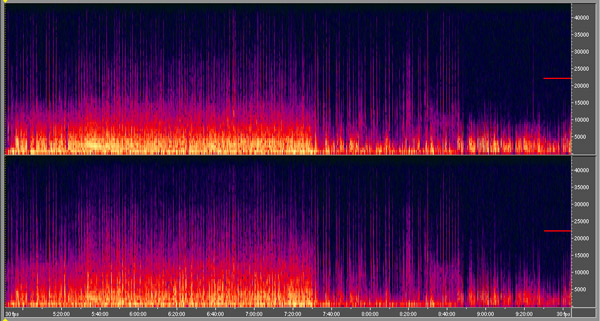
Spectral analysis of a live blues band recording made by John Atkinson, showing content up to 40kHz, from "What's Going On Up There?"


At the October 2019 Audio Engineering Society convention in New York, Yuki Fukuda and Shunsuke Ishimitsu, both of Hiroshima City University, presented results that show quite clearly that listeners can distinguish sounds encoded and reproduced at different sampling frequencies. Their trials differed from the previous ones in one important way: Instead of exposing test subjects to music at different resolutions, they used test tones.

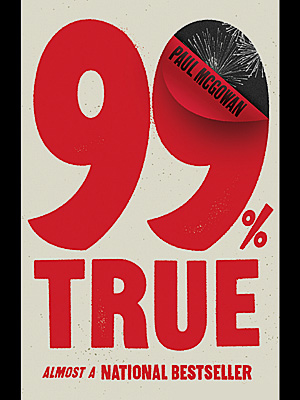
Book Review: 99% True: Almost a National Bestseller

1019psbbok.promo99% True: Almost a National Bestseller, by Paul McGowan. Lioncrest Publishing, 2019. 364pp. $25.00, hard cover; $15.99, paperback; $9.99, Kindle e-book.


To many audiophiles, high-end audio manufacturers must seem like monolithic entities, enduring for what seems like forever, like cliffs beside a familiar path. But as Paul McGowan explains in this unputdownable autobiography (footnote 1), behind the facade of stability things can be in financial turmoil, with success equally as risky as failure.

A Visit to the DALI Factory

DALI's loudspeaker factory in Nørager, Denmark. (Photo: DALI.)


Seen from the air, Denmark is a vista of farms and wind turbines. But once your plane touches down, it is a land of loudspeakers. Perhaps this is because audio has a long history in Denmark—it was a Dane, Valdemar Poulsen, who developed a magnetic wire recorder in 1898—but there are more loudspeaker manufacturers per person than any other country. According to Wikipedia, Denmark is home to 5.75 million people, compared with New York's five boroughs, which have a population of 8.67 million However, as well as drive-unit manufacturers Audio Technology, Peerless, Vifa (which merged with Peerless to form Danish Sound Technology), and ScanSpeak, there are Bang & Olufsen, DALI, Dynaudio, Gamut, Gryphon, Jamo, Lyngdorf Audio, Peak-Consult, and Raidho all making loudspeakers. Lots of loudpeakers.

Advertisement
Advertisement
Advertisement