Features

Sort By: Post DateTitle Publish Date

Devialet Diary

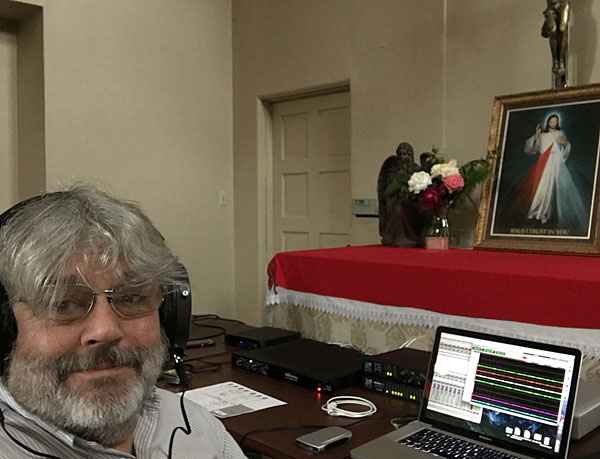
It's day five of our planned month-long stay à Paris, late April through most of May. My wife is here for work—for me, it's strictly for pleasure—and we're enjoying Paris's rich, sensual goodness: food, museums, architecture, coffee, people, food. And yet, earlier today, when we were out for a walk—we've been walking close to 10 miles each day, exploring the city—I realized that my life here has been missing something important.
Vinyl Apocalypse: the LP Shelving Dilemma

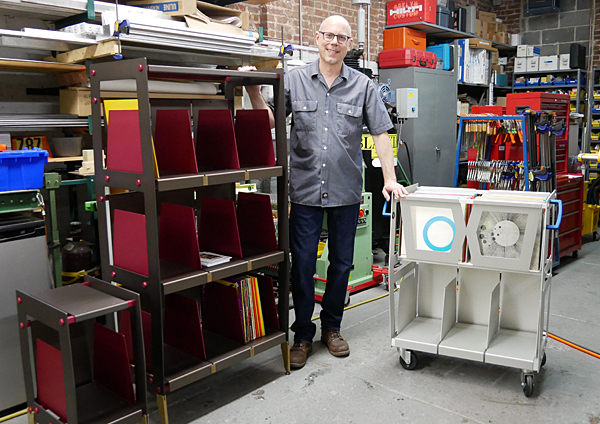
The three most traumatic events anyone can experience in life? The death of a loved one? A surprise audit by the IRS? Your entire LP collection purloined by a disgruntled ex-lover?


And, oh yes—moving.


As 2016 turned to 2017, my wife and I were forced to move from an apartment we wrongly assumed we'd never ever have to leave, which in New York City means a lot. Perhaps we were just a tad naïve?

Book Review: The New Analog

The New Analog: Listening and Reconnecting in a Digital World, by Damon Krukowski. The New Press, 2017. Hardcover, 240 pp., $24.95. Also available as an e-book.


Defining noise is tricky business.


In high-end audio, noise is often defined as the enemy—of music, beauty, truth. Engineers and enthusiasts alike spend significant amounts of time, energy, and money attempting to minimize or control noise so that it has the least possible impact on the source signal: music. In this way—if we are intelligent, careful, and fortunate—we can extract from our stereos cleaner, clearer, more naturally beautiful sound for listening experiences that are enriching, emotionally compelling, and, above all, fun. On the other hand, when noise is allowed to excessively modulate the signal, music can sound relatively abrasive, more mechanical, and, ultimately, less engaging.

Building a Sound Room: A Personal Journey

By the time we had finished the house tour and admired the quiet beauty of the fir-canopied neighborhood, we sensed that we would follow our hearts from unsafe and increasingly unaffordable East Oakland, CA to the serene hamlet of Port Townsend, WA. We also knew that the only suitable place for my reference/review system would be in the 22' x 22' detached garage

Of Headphones to Come

Some 100 engineers and scientists from around the globe assembled for the Audio Engineering Society's 2016 International Conference on Headphone Technology, in Aalborg, Denmark.


I figured it was coming, but it wasn't until just after I'd returned from the Audio Engineering Society's 2016 International Conference on Headphone Technology—held last August in Aalborg, Denmark—and was writing up my report and summary on the event for InnerFidelity.com (footnote 1) that I knew for sure: Headphones are about to change . . . a lot.

Listening to MQA

Last June, Jim Austin briefly discussed the operation of MQA in his review of the Meridian Explorer2 USB DAC, but you can find a more detailed explanation on Stereophile's website here and here. MQA involves two fundamental concepts, discussed in a paper presented to the Audio Engineering Society in October 2014. The first is responsible for a large reduction in the bandwidth required to store and stream high-resolution files, the second for a potential improvement in sound quality. . .

MQA: Questions and Answers

Author's Note: We are grateful to Stereophile for the opportunity to address some frequently repeated technical questions appearing in comments to articles. Recently this has included misunderstandings about noise calculation, dynamic range, resolution, definition, music spectra, channel capacity, lossless processing and temporal aspects of digital channels.


To simplify this document we have grouped the topics and set them as questions and answers either as response, tutorial or axiom. Some months ago we published a comprehensive Q&A for an online forum and to avoid repetition we occasionally refer to topics already discussed there (see [37] in the "References" sidebar).—J. Robert Stuart

A Visit to Bowers & Wilkins

In August 2015, I visited loudspeaker manufacturer Bowers & Wilkins in England. It was an exciting prospect to see the factory, and meet the people who designed and built the speakers I've been using for years. Of course, as the time of my visit approached, it was impossible not to speculate that something important was afoot—there was growing Internet buzz that it was time for B&W to update its 800-series speakers. Nonetheless, B&W remained tight-lipped.

Inside MQA

Jim Austin briefly discusses MQA in his review of the Explorer2 in this issue, but a more complete description of MQA can be found in an article posted on Stereophile's website at the end of 2014.


MQA involves two fundamental concepts, discussed in a paper presented to the Audio Engineering Society in October 2014, the first responsible for a potential improvement in sound quality, the second responsible for a large reduction in the bandwidth required for storage and streaming of high-resolution files...

Book Review: Lonely Avenue: The Unlikely Life & Times of Doc Pomus

Lonely Avenue: The Unlikely Life & Times of Doc Pomus

by Alex Halberstadt. Da Capo Press, 2007. Paperback, 272 pp., $16. Available as eBook.


Many people, after seeing him repeatedly at Manhattan's Forrest Hotel in the early 1960s, might have described the lyricist and songwriter Doc Pomus as the narrator of a Damon Runyon short story depicts himself: as someone "who is just around." Pomus lived for years in lackluster hotels like the Forrest, which Runyon himself had once called home, and his cronies could be just as colorful as Runyon's creations, including the gamblers—for a time, Pomus gambled for a living.

Advertisement
Advertisement
Advertisement