Features

Sort By: Post DateTitle Publish Date

Snake Oil: A Short History

If there's one thing audiophiles agree on, it's that snake oil is bad—even if they can't agree about what snake oil actually is.


In audio, snake oil means fake science or fake technology—anything that's claimed to improve the sound of a system but that looks like an obvious rip-off. For some people, expensive speaker cables and interconnects are snake oil. A few objectivists consider AC power treatments snake oil: most modern audio components, after all, can correct for AC line-voltage flaws and reject "ripple" in a power supply's output. A handful of hard-core objectivists maintain that every new digital technology since the advent of the Compact Disc is snake oil.

Stereophile's Products of 2018

Since fake news is on everyone's minds these days—I would say it's been in the news a lot, but that kind of reasoning is too circular even for me—it's worth keeping in mind that there's also such a thing as fake praise. You see it every day, whether it's a fake Google review—an alarming number of businesses seem unaware that real people don't actually say things like "the team at New Hartford Chevrolet really listened to all of my needs"—or fake trophies handed out to all 20 co-captains of your child's soccer team.


Then there are fake awards.

Noise, Resolution & Benchmark

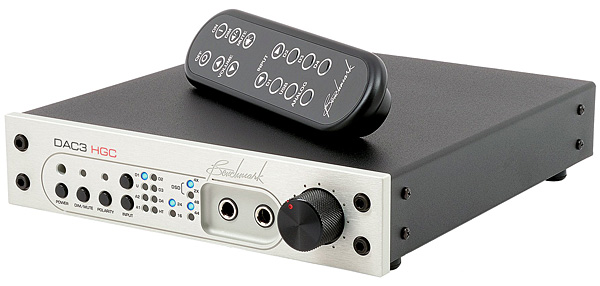
The most notable aspect of Benchmark Media Systems' DAC3 HGC ($2195), which I favorably reviewed in the November 2017 Stereophile (footnote 1), is its low noise floor. John Atkinson's measurements corroborated Benchmark's claim that the DAC3 is capable of "at least" 21-bit performance. While significantly less than the theoretical potential of a 24-bit data format, 21 bits is still the state of the art, and corresponds to a dynamic range—the ratio of the highest achievable digital-domain volume to the DAC's internal noise—of 128dB. That's well above the dynamic range that most power amplifiers can achieve. A good-measuring high-end solid-state amplifier is likely to have a dynamic range—the highest attainable ratio of signal to noise—of about 100dB ref. its maximum power.

Zen & the Art of A/D Conversion

In a series of recent feature articles for Stereophile, Jim Austin has examined how the controversial MQA codec works: "MQA Tested, Part 1," "MQA Tested Part 2: Into the Fold," "MQA Contextualized," "MQA, DRM, and Other Four-Letter Words," and, most recently, "MQA: Aliasing, B-Splines, Centers of Gravity." I doubt there is a Stereophile reader who is unaware of the fracas associated with MQA, and I have been repeatedly criticized on web forums for describing its underlying concept as "elegant."


But elegant it is, I feel.

MQA: Aliasing, B-Splines, Centers of Gravity

The right thing at the wrong time is the wrong thing.—Joshua Harris


The sampling theory formulated by Claude Shannon in the late 1940s had a key requirement: The signal to be sampled must be band-limited—that is, it must have an absolute upper-frequency limit. With that single constraint, Shannon's work yields a remarkable result: If you sample at twice that rate—two samples per period for the highest frequency the signal contains—you can reproduce that signal perfectly. Perfectly. That result set the foundation for digital audio, right up to the present. Cue the music.

MQA, DRM, and Other Four-Letter Words

In an article published in the March 2018 Stereophile, I wrote that critics have been attacking MQA, the audio codec developed by J. Robert Stuart and Peter Craven, by accusing it of being lossy. The critics are right: MQA is, in fact, a lossy codec—that is, not all of the data in the original recording are recovered when played back via MQA—though in a clever and innocuous way. For MQA's critics, though, that's not the point: They use lossy mainly for its negative emotional associations: When audiophiles hear lossy, they think MP3.

MQA Contextualized

When you come to a fork in the road, take it.—Yogi Berra


Over one busy week in 1986, Karlheinz Brandenburg laid the foundation of a technology that a few years later would upend the record business. Brandenburg, a PhD student in electrical engineering at the Friedrich-Alexander University Erlangen-Nuremberg, was figuring out how to code digital music efficiently enough that it could be delivered over digital telephone lines. A patent examiner had concluded that what the application proposed was impossible, so over a week of late nights, Brandenburg produced the proof of concept and more. It was another decade before the technology—MPEG-2 level III, more commonly known as MP3—would find its true home, the Internet.

MQA Tested Part 2: Into the Fold

Loss is nothing else but change, and change is Nature's delight.—Marcus Aurelius


Master Quality Authenticated (MQA), the audio codec from industry veterans Bob Stuart and Peter Craven, rests on two pillars: improved time-domain behavior, which is said to improve sound quality and what MQA Ltd. calls "audio origami," which yields reduced file size (for downloads) and data rate (for streaming). Last month I took a first peek at those time-domain issues, examining the impulse response of MQA's "upsampling renderer," the output side of this analog-to-analog system (footnote 1). This month I take a first look at the second pillar: MQA's approach to data-rate reduction. In particular, I'll consider critics' claims that MQA is a "lossy" codec.

MQA Tested, Part 1

I don't think I've ever seen an audio debate as nasty as the one over Master Quality Authenticated (MQA), the audio-encoding/decoding technology from industry veterans Bob Stuart, formerly of Meridian and now CEO of MQA Ltd., and Peter Craven. Stuart is the company's public face, and that face has been the target of many a mud pie thrown since the technology went public two years ago. Some of MQA's critics are courteous—a few are even well-informed—but the nastiness on-line is unprecedented, in my experience.

Stereophile's Products of 2017

The mice in the walls call summer to close while nets come down and leaves turn dead red, but by the time you see this there'll be holiday music in the air . . . and some generous soul might, just might, sneak a few looks through this issue of Stereophile to see what gifts to buy before the tree goes up and presents are opened—and all will be nice!


And what better way to serve those possible givers of audio gifts—and, at the same time, honor our hobby's most deserving designers and manufacturers—than with our annual Product of the Year awards?

Advertisement
Advertisement
Advertisement