Historical

Sort By:  Post Date TitlePublish Date

Stereophile: A Personal Odyssey

John Atkinson (left) and Richard Lehnert (right) in RL's house in May 2011, the day before RL moved from Santa Fe, New Mexico, to Ashland, Oregon. (Photo: Susannah Tyrrell)

I first became aware of the existence of Stereophile sometime in spring 1985, while working as a typesetter in Santa Fe, New Mexico. (Remember typesetting?) From far down the hall behind me I heard a big, high-pitched laugh. I turned to see my present boss guiding toward my dark typesetting cell my future boss: a very tall, balding, round-faced man with a huge grin who shambled along in loose chinos and a Hawaiian shirt in full sail.
Analog vs Digital: Home-Brew Science at the Edge of the Art

Publisher's note: The following article, from the early days of Compact Disc, is presented with no claim for absoluteness. (In fact, just as we go to press in the spring of 1986, we received a manuscript from Philip Greenspun, Product Review Editor of Computer Music Journal (Cambridge, MA), who had precisely the opposite result when comparing CD to analog versions of the same recording, though it was unclear that his test procedures were as thorough as in the tests by these authors.) The tests described are neither single- nor double-blind, and the author's decision to forego conversation while listening to the same products does not by any means guarantee lack of mutual influence—especially because their musical tastes are so well known to each other. Moreover, repeating the test with different phono equipment, a different CD player, and a different replica of the master tape would likely yield somewhat different results.

Nevertheless, I think the basic conclusion is sound: good CD reproduction is remarkably close to a fairly good version of master tape sound; there's a good chance that it's more accurate than what you'll get from the average cartridge, tonearm, and turntable.

The Pros & Cons of Electrostatic Loudspeakers

The main inherent advantage of the full-range electrostatic loud speaker system is that it allows a single diaphragm to embody the conflicting attributes needed for optimal performance at both extremes of the audio range. Its thin-membrane diaphragm can be made exceedingly light, for superb transient response and extended HF response, yet it can be about as large in area as desired, for extended LF response.

The Nonstick Embrace Of Home Theater

Editor's Note: 24 years ago, in January 1995, we published the first issue of Stereophile Guide to Home Theater, a sister publication intended to appeal to the the growing number of home-theater enthusiasts. Stereophile's founder, the late J. Gordon Holt, had gotten early into the idea of accompanying movies with high-quality sound, and when I first visited his New Mexico home in January 1986, his system included an Advent NTSC-format video projector.

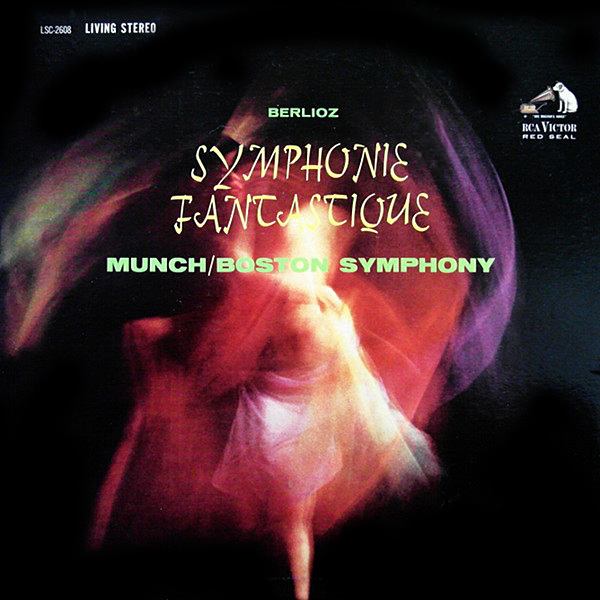
Recording of November 1962: Berlioz: Symphonie fantastique

Berlioz: Symphonie fantastique
Boston Symphony Orchestra, Charles Munch, conductor
RCA Victor LSC-2608 (LP). TT: 48:40

It is easy to forget that the hi-fi movements—the "March to the Scaffold" and the "Dream of a Witches' Sabbath"—comprise barely a third of the music in the Symphonie fantastique, yet when we listen to most of the available versions of this, we can understand why the first three movements are usually passed up by the record listener. Two are slow and brooding, one is a wispy sort of waltz, and all three require a certain combination of flowing gentleness and grotesquerie that few orchestras and fewer conductors can carry off. It is in these first three movements where most readings of Berlioz' best-known work fall flat. Either they are too sweetly pastoral or too episodic and choppy, or they degenerate into unreliered dullness.

Recording of June 1964: Joan Baez In Concert, Part 2

Joan Baez In Concert, Part 2
Joan Baez, vocals, guitar
Vanguard VTC-1679 (tape), VSD-2123 (LP). Maynard Solomon, prod., Reice Hamel, eng. TT: 48:00.

Well, we finally got ourselves equipped to review 4-track open-reel tapes, via a slightly modified Ampex F-44. All the tapes we have auditioned had noticeably higher hiss than the average stereo disc, but this was not loud enough to be distracting except when the tapes were reproduced at very high levels. Even then, we found the smooth, even hiss to be less objectionable than the ticks and pops from some discs played at the same level.

The Stereo Image

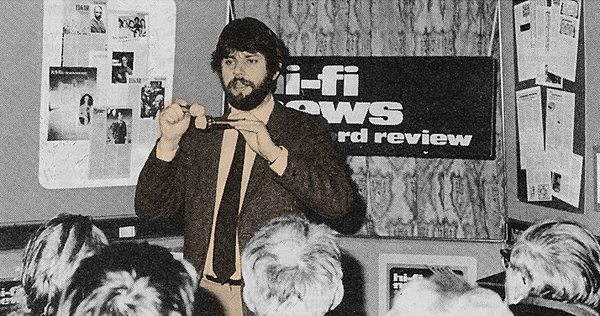
The author demonstrating stereo microphone techniques at an English audio show in 1981.

For most people the terms hi-fi and stereo are synonymous, and yet it is clear that there is still a great deal of confusion over what the word "stereo" actually means. There isn't even a consensus of opinion amongst producers of records, designers of hi-fi equipment, audio critics and music lovers as to the purpose of stereo, and considering that the arguments show no sign of diminishing in intensity, it is instructive to realise that 1981 sees both the 100th anniversary of Clement Ader's first stereo experiments and the 50th anniversary of Alan Blumlein's classic patent on stereo.

Dick Olsher Dahlia speaker

Do-It-Yourself (DIY) loudspeaker projects are quite common in the UK, where details about several excellent designs, including a recent one by Martin Colloms, have been published for public domain consumption. Stateside, the situation is rather grim, where only an occasional subwoofer project (always popular) makes it into the commercial magazines.

Listening Tests and Absolute Phase

The problem confronting the magazine reviewer when organising the necessary listening tests to accompany/reinforce the measured behavior of a device under test is complex. There has never been a problem with the measurement aspect; as long as someone has access to the same test gear—and full knowledge of the test conditions—then he should be able to replicate the critic's findings exactly (assuming an infinitely narrow spread of behaviour from sample to sample—a rasher assumption with some manufacturers' equipment than of others). However, when it comes to determining reliably the audible (or inaudible?) effects on music program by an amplifier/cartridge/loudspeaker etc. then the going gets tough.
Advertisement
Advertisement
Advertisement