Music and Recording Features

Sort By:  Post Date TitlePublish Date

Steven Wilson: A Master of Immersive Music

Photo By Adam Taylor

Steven Wilson loves changing the minds of spatial audio skeptics. He's the go-to Dolby Atmos and 5.1 mixmaster for many heritage artists, new-wave bands, and alternative acts. Best known for leading the post-prog collective Porcupine Tree, releasing a score of genre-stretching solo albums, and serving as a key creative contributor to such experimental groups as No-Man and Blackfield, Wilson's approach is simple: bring them into his studio and let the music do the talking.

Brilliant Corners #11: Willie and Merle

I said to Hank Williams, how lonely does it get?
Hank Williams hasn't answered yet
But I hear him coughing all night long
Oh, a hundred floors above me in the tower of song

          —Leonard Cohen, "Tower of Song"

When I was a child growing up in Moscow in the 1970s, our pop-musical landscape was dominated by the so-called bards. They were Soviet counterparts to singer-songwriters from the West, and they sang literate, knowing lyrics while accompanying themselves on acoustic guitars. Even the word used to describe them—bard'i—was adapted from English. And because they sometimes sang about aspects of day-to-day life that were off limits in public, their music rarely appeared on records and was circulated mostly on fuzzy-sounding homemade tapes.

The best known among the bards were a Georgian-Armenian poet named Bulat Okudjava—who sang sentimental ballads about (chaste) romantic love, childhood friends, and The Great Patriotic War—and an altogether more daring performer named Vladimir Vysotsky.

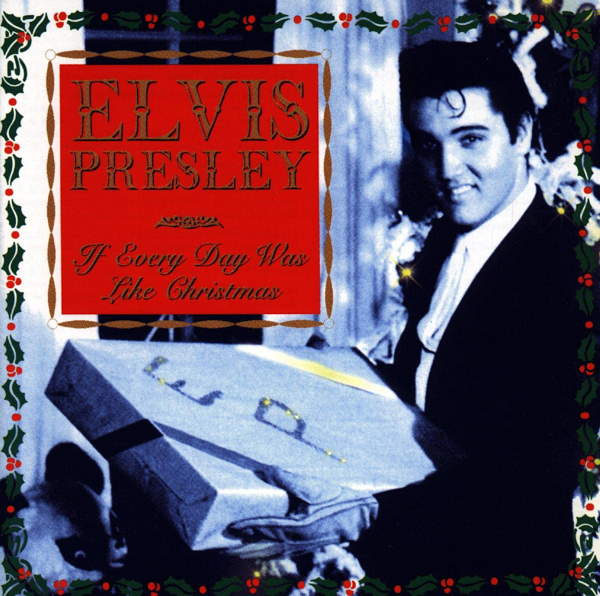
Santa's–Sorry, Sasha's–Christmas Playlist

In my house, I have a little stack of CDs that I bring out once a year—for Christmas Eve and Christmas day. I then put them away on the shelf until the following year. This annual Festival of Christmas Albums is met with varying degrees of pleasure and resignation by the family members present; listening is non-negotiable, though we may not make it through all of them. Once in a while a new Christmas album will make the cut and be added to the stack, but not every year.

On The Road Again, A Year Later

Teatro Morlacchi at Umbria. All Photos by Tim Dickeson.

It has been a year since my piece "On The Road Again: A Jazz Festival Journal From A Summer Of Plague And War" appeared, in the November 2022 issue of this magazine. It described three European jazz festivals I attended in July 2022.

In July 2023, I returned to Europe to attend two festivals. The COVID-19 plague and its fallout had significantly subsided. The war in Ukraine was still raging, but this time I didn't get near it. In 2022, I went to a festival in Romania, which borders Ukraine. In 2023, I only went to Italy.

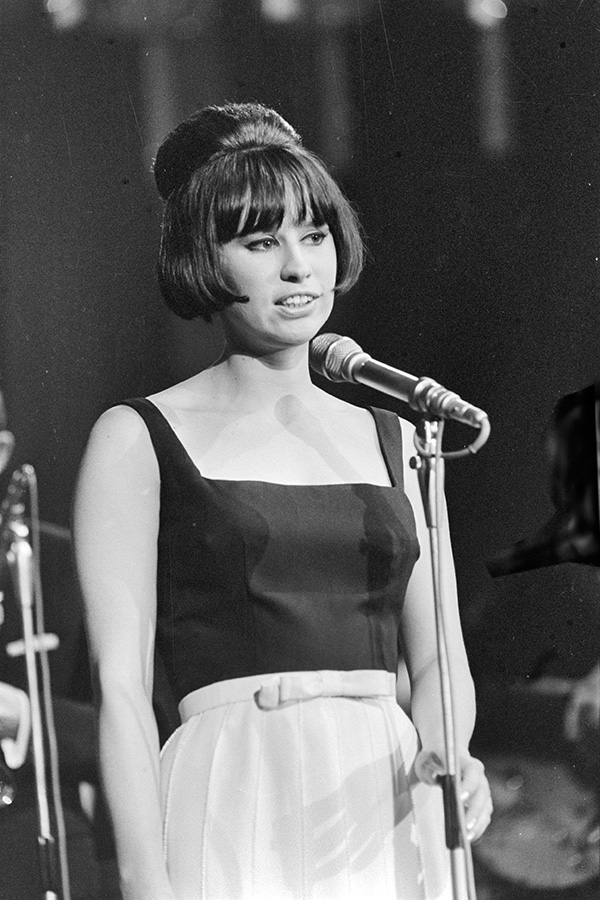
Samara Joy

Photo by Meredith Truax

23 year-old Samara Joy is the recipient of the 2023 Grammy Awards for best new artist and best jazz vocal album. Her 2022 sophomore outing, Linger Awhile (Verve), is a jubilant celebration of The American Songbook. Her warm, velvet-dark vocal tone, graceful swing sense, and intuitive interpretations provide a master class in classic jazz fundamentals.

Joy owns the past but also the present. On her TikTok channel, "Samarajoysings," she has accumulated 585,100 Followers and 4.3 million Likes. The channel documents performances of such standards as "A Foggy Day," "Guess Who I Saw Today," an a capella "Somewhere Over the Rainbow," and a sublime "Round Midnight," delivered in multi-octave glory. Old and new, together. Read that last bit again, about TikTok. That Joy is popular with jazz fans will surprise no one who has heard her music. That she has won such a following on a platform dominated by 10–19-year-olds—mainly by singing 70-year-old songs—boggles the mind.

Jazz at a Dark Moment: the 2023 San Jose Jazz Winter Fest

Jazz emerged from the African-American experience in the United States, so it is not surprising that it has been socially relevant since its earliest manifestations. Sonny Rollins put the matter succinctly: "jazz is protest music."

In 1923, Bessie Smith sang songs based on her experience of racism and sexism. In 1939, Billie Holiday recorded "Strange Fruit," a chilling song about a lynching. Charles Mingus's 1959 classic "Fables of Faubus" secured a permanent place in music history for the segregationist governor of Arkansas; thanks to Mingus, among jazz fans at least, the name "Orval Faubus" will ever be synonymous with bigotry.

But if social activism is nothing new in jazz, it has never been so prevalent as it is today. At some point in the new millennium, it began to feel like every new jazz album had to have at least one overtly political track. The reasons for this development may lie in the extreme political polarization of our society. The divisiveness of the Trump Era forced everyone, including artists, to choose sides.

But the ways jazz has woven itself into contemporary history go far beyond standoffs between progressives and conservatives . . .

Robbie Fulks is Bringing It All Back Home

In 2009, Robbie Fulks decided to make a change. For almost 20 years, the singer/songwriter had led a series of hard-hitting country-rock bands across America and beyond, his blistering guitar chops and madcap levity (the latter frequently testing, if not violating, standards of taste) winning him a modest-sized but ardent fan base.

"I was fatigued from what I'd been doing," Fulks told me recently via Zoom, sitting in his kitchen in Atwater Village, a Los Angeles neighborhood between Glendale and Burbank. "Me on acoustic guitar, with electric guitar, bass guitar and drums, that was my sound for something like 13 years. I was so tired of it, I was actually thinking of doing something other than music."

Advertisement
Advertisement
Advertisement