Phono Cartridge Reviews

Sort By:  Post Date TitlePublish Date

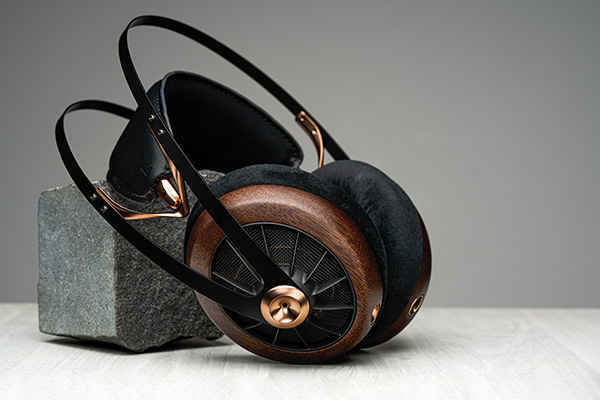
Gramophone Dreams #83: Benz Micro Gullwing SLR, Goldring Ethos phono cartridges, Meze 109 Pro headphones
It was almost Christmas, a perfect, chilly, blue-sky day to visit the Met Museum and see the Manet/Degas show before it ended. On my way, walking north on Madison Avenue, I passed the uptown branch of Gagosian Gallery and noticed a brightly lit poster behind thick glass announcing their exhibition of American artist Brice Marden's last paintings. The title of the show was "Let the painting make you," which sounded like an invite and a challenge, so of course I had to go in. I was in the perfect mood to ride in Gagosian's swanky private elevator and see how a famously serious painter with a six-decade career chose to communicate his last thoughts.
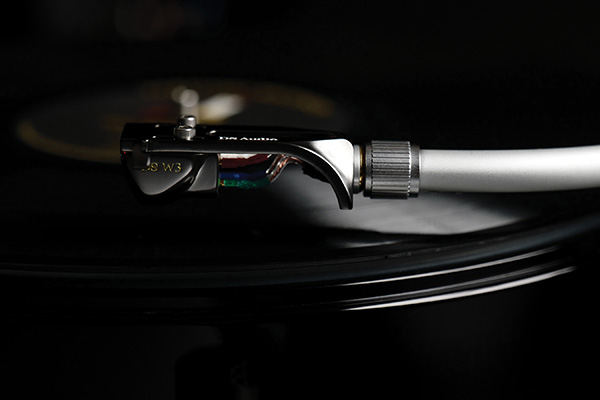
Spin Doctor #11: Alternative Phono Cartridge Technologies and the DS Audio DS-W3 optical cartridge system

Over the last 50 years, I must have installed well over 1000 phono cartridges, but I still remember the very first one: a Goldring G850 I put into the family Garrard Autoslim turntable when I was 11 years old. In 1973, the G850 was the least expensive moving magnet cartridge Goldring made. The change from the flipover-stylus ceramic cartridge that came with the Garrard wasn't an attempt to satisfy a youthful audiophile itch but, rather, a result of my first encounter with a system compatibility problem.

A few months earlier, I had convinced my nonaudiophile dad to upgrade the family stereo. We went from our ancient Monacor SMX-50 tube receiver to a pretty weird but less ancient Sony all-in-one cassette system called the TC-133CS. I failed to understand that the new Sony's magnetic phono input was incompatible with our old ceramic cartridge. Once I figured that out, I tried to convince my dad that what we really needed was a Shure M75ED. After all, that cartridge came from the same company that made the legendary V-15 Type III, widely regarded as the best cartridge in the world at the time. My dad, however, had different plans. Guided by his home-product purchasing bible, Consumer Reports, he decided we should go instead with the less-costly Goldring.

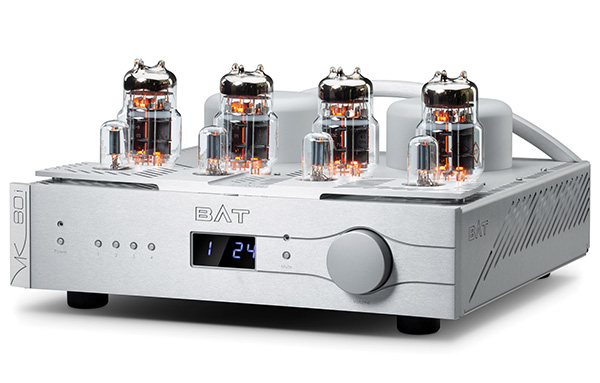
Brilliant Corners #12: Balanced Audio Technology VK-80i integrated amplifier, Ortofon Cadenza Bronze phono cartridge

In 1976, a Soviet fighter pilot named Viktor Belenko made an emergency landing in Hokkaido, Japan. He was flying a MiG-25 supersonic interceptor jet and, upon touching down, requested political asylum. This proved to be a stroke of brilliant luck for the Americans. The MiG-25 remains one of the fastest and highest-flying aircraft ever produced, and Belenko's defection allowed them to have a tantalizing look at the technology inside.

Among the top-secret loot found inside the Soviet jet was a large, heavy triode vacuum tube used as a regulator in the power supply of the MiG's radio. It was known as the 6C33C. (The enormous electromagnetic pulse caused by a nuclear explosion would fry a transistor. Tubes were used in military equipment with such an eventuality in mind.)

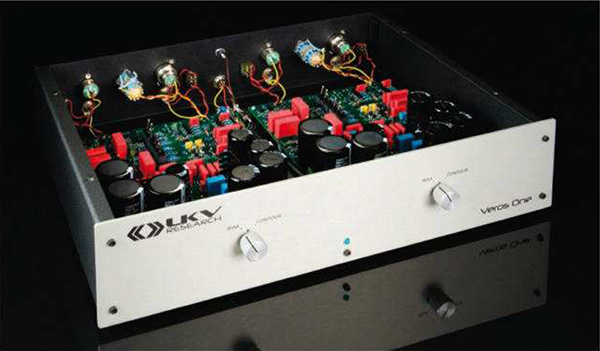
Analog Corner #249: LKV Research Veros One phono preamp, Triangle Art Apollo MC cartridge

Designer Bill Hutchins, of LKV Research, builds the 2-SB moving-magnet/moving-coil phono preamplifier in North Conway, in the White Mountains of New Hampshire; he uses as many US-sourced parts as possible, and sells his products factory direct. I reviewed the 2-SB in March 2014, on AnalogPlanet.com: the 2-SB's sound was exceptionally fine—especially if you like refined, solid-state quiet and detail, and especially considering its then-price of $2500. Since that review's publication, the 2-SB has been upgraded with a version of the third gain stage from LKV's JFET-based Veros One phono preamp ($6500; see below), and its price has risen to a still-reasonable $3000.

In May 2014, Bill Hutchins introduced the Veros One phono preamplifier ($6500).

Spin Doctor #9: Soviet-era Hi-Fi & 2 Aidas phono cartridges

In 1985, I visited what was then known as Soviet Estonia with my family. My paternal grandparents, Mimi and Pop, had emigrated to the US from this small Baltic country in 1929. Fifty-six years later, after more than a decade of rejection, the family was granted permission by the Soviet authorities to visit our ancestral homeland, and the whole family, including Mimi, made the trek. (Pop died in 1962.)

Once we were there, we were more or less free to move around in the capital city Tallinn, but leaving the city was strictly forbidden, except as part of a planned group excursion with our KGB minders—er, "Intourist guides."

Spin Doctor #7: Korf Audio TA-SF9R tonearm, Zu Audio DL-103 Mk.II Rev B phono cartridge, Gates CB100 transcription turntable

About four years ago, the stand-alone tonearm market went through a bit of a crisis. First, in December 2019, SME announced that it would stop selling tonearms separately, effective immediately. From that point on, SME tonearms would be available only in combination with SME turntables. . .

Five months later, in May 2020, we received the second blow in this double whammy of bad tonearm news. That's when the Ichikawa Jewel Company of Japan, maker of Jelco tonearms, announced without warning that they were shutting down operations, closing their doors for good. They blamed a combination of an aging workforce, worn-out tooling that needed to be replaced, and the coronavirus pandemic. . .

We lost two key players all at once, but it's not as if we suddenly had nowhere to turn for tonearms. Turntable manufacturers like Acoustic Signature, Clearaudio, Origin Live, Pro-Ject, Rega, and VPI all sell their tonearms separately . . . A number of smaller tonearm specialists have popped up in recent decades: Acoustical Systems, Graham, GrooveMaster, Kuzma, Reed, Schick, Schröder, and at the ultrahigh end, Swedish Analog Technologies. Now we can add Korf Audio to the list.

Gramophone Dreams #78: The EMT Experience

If you've read any of my previous Dreams, you no doubt realize that I am an empiricist by trade—that I believe in the value of relaxed, mindful observation, especially if my solitary observances are independently corroborated by others. Whenever possible, I test my observations by getting either the Spin Doctor, the Audiophiliac, or my Russian neighbor to listen and tell me what they notice. If they notice the same things I noticed, independently, I relax. Corroboration is important because when I submit a review, I have an obligation to get it right. I need to be confident that readers, when they listen, will likely hear the same thing I heard, for themselves.

Analog Corner #253: Mikey Gets Ortofon SPU'd

Last spring, at the High End show in Munich, I met with Leif Johannsen, R&D manager and chief designer of Ortofon, who walked me through the company's exhibition. Among the new products he showed me were two low-cost, low-output SPU (stereo pickup) moving-coil cartridges.

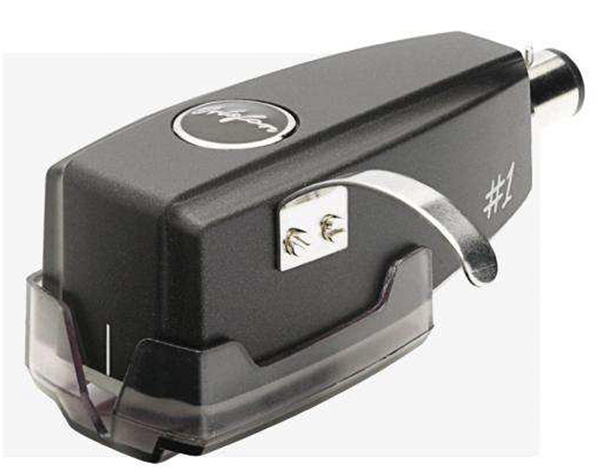
Leif Johannsen told me that Ortofon decided to produce two low-priced SPUs so that more people could afford them and enjoy their particular sound. Their new SPU #1 comes in two flavors: the SPU #1S with spherical stylus ($599), and the SPU #1E with elliptical stylus ($659)—hence the model names.

Analog Corner #254: Audio-Technica AT-ART1000 phono cartridge

Recently, after 36 years at Audio-Technica, Mitsuo Miyata retired—by which time he'd run out of business cards. Nonetheless, when I met him in early July at A-T's headquarters, in Machida, Japan, he handed me a card. A line had been drawn through the original cardholder's name; under it, handwritten, was Miyata's name.

Japanese culture is so formal that there is a precise etiquette of how to offer one's business card: Hold the card lengthwise in both hands, gripping it between thumbs and index fingers, and present it with a slight bow. For someone with so long and distinguished a career and multiple patents to his name, Miyata's offering was casual. Later, an A-T staffer told me, with a laugh, that he'd never before seen Miyata in a tie and jacket, both of which he wore for our meeting.

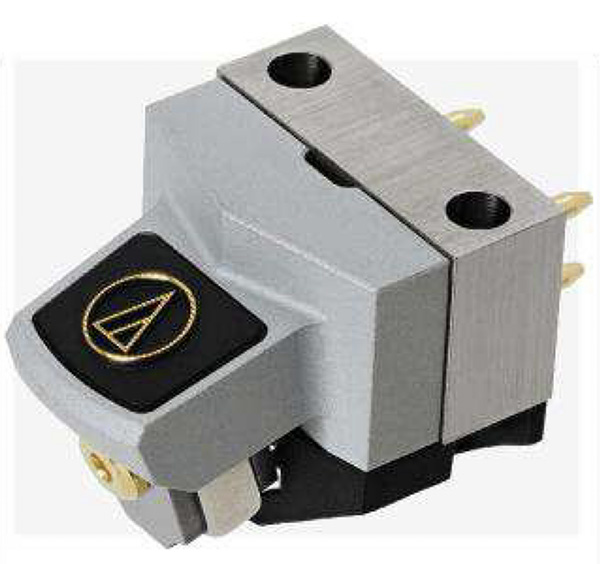
Today, the inventor of Audio-Technica's new AT-ART1000 cartridge is better known around company headquarters as a gentleman farmer—a grower of legendary blueberries, Japanese eggplants, and corn. His home-built stereo system is also said to be pretty special. I had been invited to meet him, and to get an exclusive look at the challenges of assembling and testing the AT-ART1000.

Advertisement
Advertisement
Advertisement