Phono Cartridge Reviews

Sort By:  Post Date TitlePublish Date

Gramophone Dreams #90: Collecting Phono Cartridges, Hana, MoFi
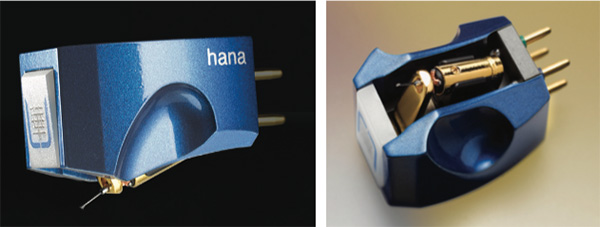
In a video on his YouTube channel Jazz Vinyl Audiophile, Stereophile contributing editor Ken Micallef asks Jeffrey Catalano of High Water Sound how he manages to be so consistent—how his rooms wrangle "top 2% sound" at every audio show. The first words out of Jeffrey's mouth are "I know how to listen."

"It's one of my greatest strengths. I know what music sounds like. I just go inside the music and let it tell me how it's supposed to be alive, how it's supposed to live in that space. I know that sounds simplistic and maybe somewhat esoteric, or pretentious even—but it's not.

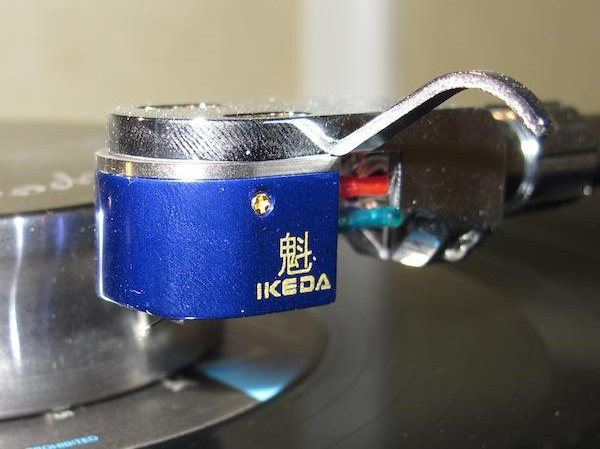
Analog Corner #238: A Tale of Two Cartridges from Ikeda and Ortofon

But first, the blowback I expected following my February 2014 column on Synergistic Research's Uniform Energy Field Technology room treatments never arrived—in fact, quite the opposite. My own positive experience of the UEF devices was confirmed by e-mails from readers who'd already used them, and from those who'd taken up Synergistic's offer of a money-back guarantee. Skeptics will charge that what I and these readers heard is evidence of confirmation bias, but people say this about any positive remarks made about audio components priced above $500.

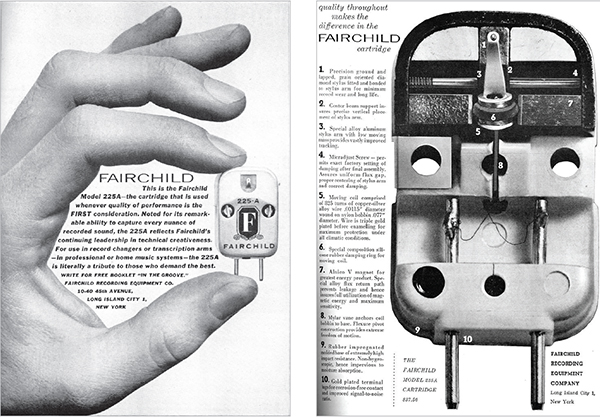
Brilliant Corners #19: Music Among the Fairchildren

Pull down the shades, find a comfortable seat, and come with me on an imaginary journey to the year 1956. The Eisenhower-Nixon ticket wins reelection, the United Methodist Church begins to ordain women, and a can of Campbell's tomato soup costs 10 cents. Elvis Presley's two-week residency at Las Vegas's New Frontier Hotel and Casino is received so poorly by the middle-aged guests that Newsweek likens it to "a jug of corn liquor at a champagne party." And a Seattle couple gives birth to Kenneth Bruce Gorelick, who will become known professionally as Kenny G.

The hobby that will become "high-end audio" is still called plain old "audio." The top marginal tax rate is 91%, the US boasts more income equality than present-day socialist Sweden, and most of the country's top earners are not panic-room wealthy but merely rich. The prices of hi-fi gear reflect this: Two of the finest power amplifiers you can buy—the McIntosh MC-60 and the Marantz Model 2 (both monophonic, of course)—retail for $198. That's about $2266 in today's dollars, and while certainly not cheap, these products are accessible to a far larger group of hi-fi enthusiasts than "the best" of today (including from McIntosh itself).

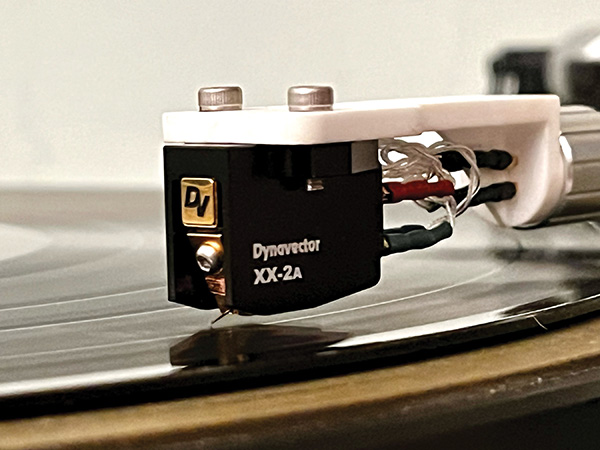
Spin Doctor #16: Sutherland Dos Locos Phono Preamp, Dynavector XX-2A Phono Cartridge

Ron Sutherland makes a strong case for being crowned the king of all phono preamps, though I expect he would blush at any such suggestion. In 1979, with degrees in physics and electronic engineering (where his final project involved designing and building a digital logic–controlled preamp), he teamed up with Gayle Sanders to found electrostatic speaker company MartinLogan. ("Martin" and "Logan" are Sanders' and Sutherland's middle names, respectively.) But after a few years, he found the increasingly corporate mindset at M-L a bit stifling, so he decided to go his own way. Ron wanted to build gear he thought was cool and fun while not being directed solely by its commercial potential. He joined up with his brother to start Sutherland Engineering, creating hi-fi equipment that piqued his own interest and hopefully that of a bunch of customers.

At first, Sutherland made a wide range of components, including preamps, power amps, and DACs, but gradually he focused more and more on phono preamps. Today that's the only thing he makes...

Brilliant Corners #18: Adventures in Schwabylon, Ortofon Cadenza Mono Phono Cartridge

Meeting up at High End Munich: Grover Neville (left), a contributor to Stereophile's late headphone blog InnerFidelity, with his dad, Craig, a civil engineer from Chicago.

"Schwabing isn't a neighborhood, but a state of being," declared the Countess Fanny zu Reventlow, an early feminist who scandalized German society by parenting out of wedlock, carrying a revolver, and practicing what today tends to be called ethical nonmonogamy. Thomas Mann described the fellow denizens of this northern corner of Munich as "the most singular, the most delicate, the boldest exotic plants." At the turn of the last century, Schwabing was on its way to becoming the artistic epicenter of Europe, a laboratory for the most progressive social ideas, and arguably the birthplace of modernity. Kandinsky made Western art's first abstract painting while living there; local cafes once patronized by Lenin would soon host a young Adolf Hitler. Some called it Schwabylon.

These days, Schwabing's spotless, freshly paved streets are lined with the glass-and-steel facades of Hiltons and Marriotts. Its proximity to MOC, Munich's titanic convention center, has turned the neighborhood into a destination for business travelers from near and far.

Analog Corner #242: Cornering the Vinyl Scoffers; Fuuga & Air Tight Phono Cartridges

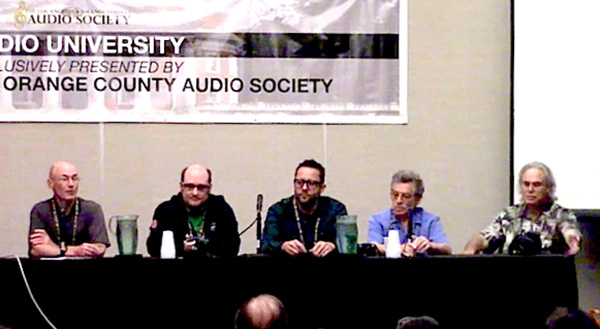
The "Meet the Editors" panel at T.H.E. Show Newport Beach 2015. (L–R): Robert Harley, Chris Connaker, John Darko, Michael Fremer, David W. Robinson.

Add to the deniers of the Holocaust and Climate Change those who say that the vinyl resurgence isn't happening.

Seriously, the pushback was bound to happen, and the bigger this so-called "hipster fad" gets, the more the scoffers sweat. In 2014, according to my sources—representatives of the world's largest pressing plants—more than 73,985,000 LPs were pressed. That's correct: almost 74 million LPs. Taking into consideration such things as multi-LP boxed sets like The Beatles in Mono (which might be counted as a single record in terms of sales), defective discs rejected by consumers or retailers, and unsold records, of which there surely are many in the pipeline, we could cut the number in half—and still have around 35 million. That's more than a 40% increase worldwide over 2013.

Brilliant Corners #17: Monomania! The Miyajima Zero Mono phono cartridge

Stereo is the most successful audio gimmick of all time. While dashboard record players, quadraphonic LPs, and MQA have gone the way of Ron Popeil's hair-in-a-spray-can infomercials, stereo remains king. And I am guilty of loving it.

That old expression "men love with their eyes" applies to listening, too. Enabled by the advent of a second channel, the fanning out of musicians across a soundstage fills the room and gives the eyes—and not only the ears—something to do. And I happen to enjoy the soundstage. It may be an utterly artificial delight, but who doesn't love hearing a tambourine coming from 10' to the left of the left speaker? So when I came across an article in which someone likened mono to listening to music through a hole in a wall, the metaphor made sense. Why would anyone want their music congealed in a blob directly in front of them when they could hear it separated out in space?

As always, though, it turns out that things aren't quite so simple...

Gramophone Dreams #87: Deejay Coolosities, AudioQuest Yosemite tonearm cable, Nagaoka MP-110 phono cartridge

SME’s Kathryn "Kat" Ourlian deejays a turntable shootout. Photo by Michael Trei.

One August night in 1965, I parked in the driveway of my best friend Derf Marko's house and let myself in the back door. As I entered, I could see to the bottom of the basement stairs, where I observed a loud pulsing darkness with plumes of agreeably acrid smoke floating up through the stairwell. Back in the darkness, I heard Derf/Fred and another person making declarative statements in loud unintelligible bursts. When I reached the bottom of the stairs, Marko's basement rec room looked like a trashed-out tiki bar illuminated by a single red Christmas light hanging just above a Dual turntable. The room was dark to a point where it was impossible to walk without stepping on records or to make out who was there and what was going on. I slouched on a couch, closed my eyes, and let my mind follow the sounds of rock drummers wailing like angry cats.

Soon it was obvious: Marko was frantically playing one drum solo after another while some crazy old dude kept hollering for the next solo before the last one finished. The revved-up stranger kept slapping his knees, muttering, and drumming along with each different drummer. Stacks of unsleeved LPs littered the linoleum floor and pink wool couch I was slumping on. But unbelievably, Marko adeptly—without cursing, fumbling, or hesitation—located every solo he wanted.

I found out later that the crazed "old guy" was Ginger Baker!

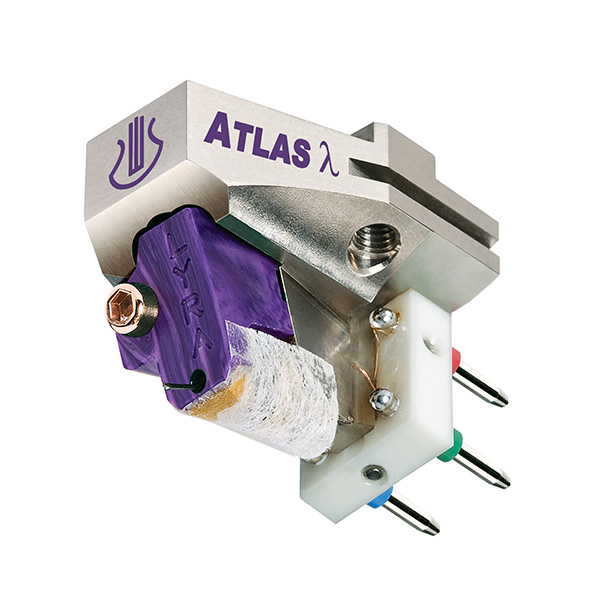
Spin Doctor #14: Lyra Atlas λ Lambda phono cartridge and fixing footfall problems

It has been more than a decade since 2012, when Lyra launched the original Atlas moving coil cartridge as the company's flagship, but in the intervening years, there have been a few updates. First, in 2016, Lyra introduced what they call the SL versions of the Atlas and also the Etna. These cartridges were designed to take advantage of a new crop of transimpedance phono preamps like the CH Precision P1 and the Sutherland Phono Loco, which boast exceptionally low noise levels but work best with cartridges that have very low impedance. Cutting the number of turns on each of the cartridge's two coils in half reduces the moving mass and inertia, allowing the stylus/cantilever assembly to respond more accurately to the tiny groove modulations. This results in improved tracking at the cost of a lower output level, which, thankfully, transimpedance phono preamps are well-equipped to handle.

Then in 2020, both Atlas and Etna versions were updated to new λ Lambda versions, with a redesigned suspension and damper system that Lyra says delivers enhancements in clarity and resolution.

Analog Corner #241: DS Audio DS-W1 optical phono cartridge

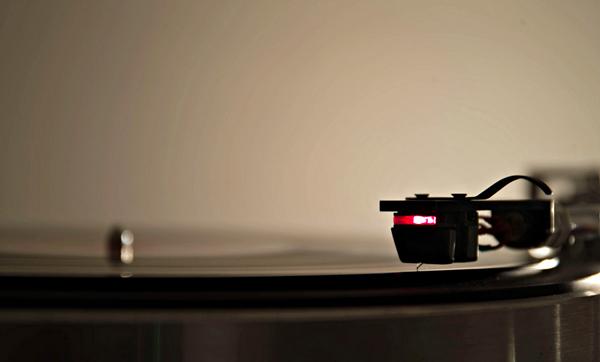
Using light to read data from a disc sounds a lot like the technology behind the Compact Disc—but you may be happy to hear there's nothing digital about DS Audio's optical phono cartridge. The DS-W1 uses the motions of a Shibata stylus and boron cantilever to modulate the output of its externally powered light-emitting diode (LED).

This Analog Corner is reprinted on Stereophile's sister site Analog Planet website.

Advertisement
Advertisement
Advertisement