

Onkyo Grand Integra M-508 power amplifier

"Grand Integra" is the name Onkyo has given to its line of perfectionist-oriented audio products, and the M-508 is the cheaper of Onkyo's two Grand Integra power amplifiers. (The flagship model is the $4200 M-510, reviewed by Larry Greenhill in Vol.8 No.8, featuring "high current capability," and rated at 300W continuous per channel.)


 Cycles can be seen in the fortunes of companies. Likewise cycles can be seen in the performance of companies' products. A particular range will appear to have got it just right, whatever "it" is. The designer may have hit a winning streak and thus steal a lead over the competition. C-J set a new state-of-the-art preamp standard in the late '80s with their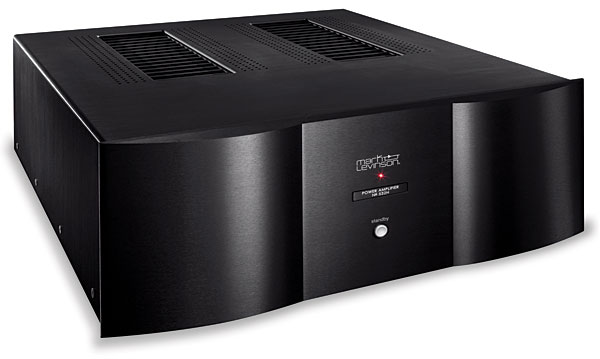

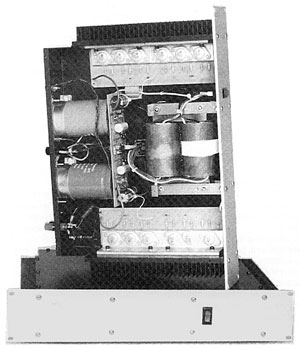 The name Muse Electronics is probably unfamiliar to most audiophiles, requiring some background on the company. Muse is the hi-fi offshoot of a company called Sound Code Systems, a manufacturer of professional sound-reinforcement speaker cabinets and power amplifiers. Founded in 1980, SCS enjoyed some success with its line of MOSFET professional power amplifiers. In 1988, SCS's Michael Goddard and Kevin Halverson, both audiophiles and tube aficionados, redesigned their amplifier for the high-end hi-fi market.
The results are the
The name Muse Electronics is probably unfamiliar to most audiophiles, requiring some background on the company. Muse is the hi-fi offshoot of a company called Sound Code Systems, a manufacturer of professional sound-reinforcement speaker cabinets and power amplifiers. Founded in 1980, SCS enjoyed some success with its line of MOSFET professional power amplifiers. In 1988, SCS's Michael Goddard and Kevin Halverson, both audiophiles and tube aficionados, redesigned their amplifier for the high-end hi-fi market.
The results are the