Solid State Power Amp Reviews

Sort By:  Post Date TitlePublish Date

Parasound Halo JC 1+ monoblock power amplifier

Soon after I took over preparing Stereophile's biannual Recommended Components listing from the magazine's founder, J. Gordon Holt, in 1986, I ran into a problem. With so many products listed, the magazine was running out of the necessary pages to include them all. To solve this problem, I looked at how long a typical product remained on the market before being updated or replaced. The answer was 3–4 years. I therefore implemented a policy that unless one of the magazine's editors or reviewers had continued experience with a product, it would be dropped from Recommended Components after three years.

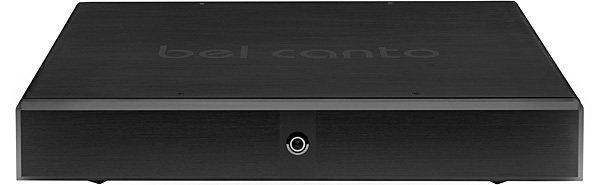
Bel Canto e1X power amplifier

I own and enjoy loudspeakers from seemingly opposite ends of the audiophile spectrum: I'm a huge fan of minimally efficient yet otherwise overachieving flat-panel designs, such as my Magnepan LRS speakers. Yet I'm just as smitten with another, equally outside-the-norm alternative: high-sensitivity full-range loudspeakers, such as my Zu Omens—especially when driven by tube electronics. It's an ongoing yin and yang that keeps my home system in a constant state of flux: Alternating between loudspeakers that use such different technologies, while maintaining relatively optimal positioning for each, is a bit daunting.

Classé Audio DR-3 power amplifier

Classé Audio's DR-3 once again brings to the fore the issues of class-A vs class-AB, weighty vs small and efficient, and brute-force expensive vs clever and inexpensive.

A well-worn, if unproven, audiophile rule of thumb says that a small, quick amplifier will sound better than a very powerful one. Among low-powered amps, those that operate in "pure" class-A are thought to be sonically superior. Pure class-A means the amplifier must run a constant high bias (more than one ampere), so the output devices never turn off.

Primare A35.2 power amplifier

My writing desk looks out over a large garden with chickens, bees, and feral cats. My chair sits only six feet from loudspeakers, playing softly on my left. Between the speakers sits whatever painting I am working on. That painting hangs no more than 10 feet from the oscilloscope and drill press in my kitchen. Best of all, my desk is only six feet from squadrons of ravenous sparrows attacking the suet cage on the fence outside my window.

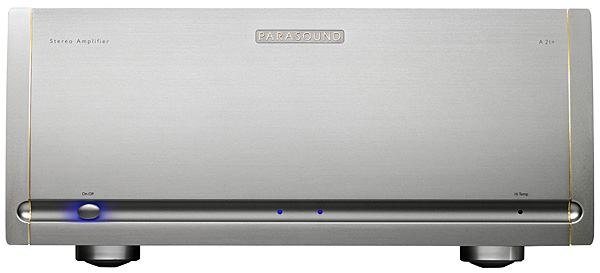
Parasound Halo A 21+ power amplifier

The components I needed to choose for my first system were never in doubt: a turntable or record changer, an integrated amplifier, and a speaker. One of each, please, in those mono days.

Today, even in stereo, that trinity would be regarded as rather traditional—or, if you prefer, purist. Digital has exploded the range of source options and loudspeaker options. Yet amplifiers have not changed much in how and what they do.

darTZeel NHB-468 monoblock power amplifier

What's the point of reviewing a pair of monoblock amplifiers that costs more than most people spend on two or even several cars— and far more than most audiophiles spend on an entire music system? That's a good question. Another is: Why should I write this review when, just seven years ago, I reviewed a pair of darTZeel monoblocks that look exactly like this new pair?

I realize that products such as the darTZeel NHB-468 ($170,000/pair) are for the very few, but the very few include far more people throughout the world than you may realize— people who can afford such costly audio products and who do buy them. I know, because in my travels I've met a lot of them, and they deserve to read reviews of products they're considering buying—things most of us can only dream of owning.

Accustic Arts Audio Mono II monoblock power amplifier

Accustic Arts of Lauffen, Germany, was founded in 1997 by Fritz Schunk, who sold the company to Hans-Joachim "Jochen" Voss in 2016. Voss's professional background had more to do with sweet spreads than sweet sounds—he spent 20 years doing sales and marketing, including with the Ferrero Group, which produces Nutella—but he happened to own some Accustic Arts components, and as a music-loving consumer with a special fondness for rock, had been in touch with Schunk for many years before the company went up for sale.

Schiit Audio Aegir power amplifier

Class-D audio amplifiers: What's the argument for them? Class-A audio amplifiers: What's the argument against them? Class-AB amplifiers: Why does everybody make them? Each of these amplifier output architectures has strengths and weaknesses. Each will interface more or less successfully with a given loudspeaker in a given room. Each has a distinctive sonic signature. Consequently, as knowledgeable audiophiles with a laundry list of system-building goals, we are required to choose the amplifier type that best suits our speakers, our room, and our individual musical-aesthetic predilections.

Dynaco Stereo 120 transistor power amplifier

One by one, the major amplifier manufacturers have acceded to the pressures of the marketplace and introduced "solid-state" models, whether or not these happened to sound as good as their previous tube-type units. Dynaco was one of the last of the hold outs, preferring, according to their advertisements, to wait until they could produce a solid-state unit that was at least as good as their best tube types. Now, they've taken the plunge at last, with their Stereo 120.
Advertisement
Advertisement
Advertisement