As We See It

Sort By:  Post Date TitlePublish Date

In Praise of Imported LPs
By the time you read this in late 1963 (probably a month after it is written, judging by the speed with which the US mails speed second-class matter on its appointed rounds), Capitol Records will have announced the first bit of really good news for the high-fidelity perfectionist in years: the release of imported disc pressings—taped, cut, and stamped in Europe. London has been importing for years—all the Londons you buy are pressed by Decca in England. But this will be the first opportunity we will have of sampling the products of some of London's overseas competitors.

Outrageous Price?

Editor's Note: Approaching its ninth year of publication in 1970, the advertisement-free Stereophile was failing as a business. There was just one issue published between December 1968 and June 1970, the date when J. Gordon Holt published this plea in response to the reaction to the increased subscription price: first to $4 for four issues, equivalent to $25 in 2016, then to $5 ($31). The response from subscribers to his plea was not positive enough to enable the magazine to continue publishing—Gordon could publish just two more issues in the next two years before Stereophile had to accept advertising, first from dealers in October 1972 and from manufacturers in December 1977.—Ed.

Our recent price increase at the end of 1969 elicited numerous letters telling us the magazine was exhorbitant at $4 a subscription and is outrageous at $5, and supporting their contention with comparisons between the price per page of the Stereophile and one or another of the commercial hi-fi magazines. We will answer this once, here and now, and then let the matter drop.

Are You in your Happy Zone?

Once in a blue moon, I'm asked this question: How much should I spend on an audiophile rig? It's usually asked by someone with no real interest in buying an audiophile rig, but who's fishing, for giggles, for the exorbitant figure that is the presumed going rate for joining our hobby. Sometimes, when the mood strikes, I'll bang out a randomly absurd number—"$80,000!"—then lean back to observe the fallout. Nine times out of ten, that fallout consists of a head shake and a snicker, as if to say, "You guys are nuts!" But on those occasions when honesty seems the best policy, my short answer to the how-much question, regardless of the buyer's financial means, is the same: As little as possible.

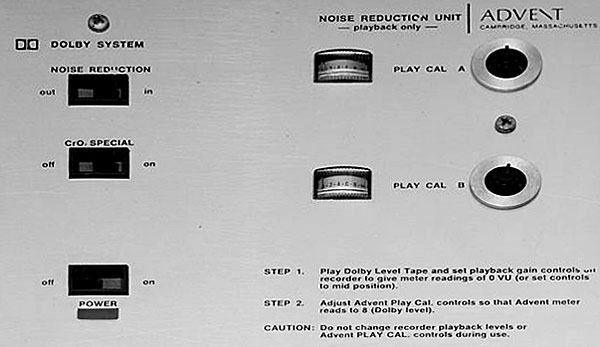
A Dolby In the House

By the time you read this, in the fall of 1967, the "Dolby system" will probably be old hat to you. Every other audio publication has been describing it, discussing it, and hailing it as the greatest invention since sex.

We've seen that kind of press ballyhoo before, about such significant advances as the Edsel, the 16-rpm LP and the "thin-profile" loudspeaker, so our first inclination was to be a wee bit skeptical of the Dolby. It seemed too good to be true.

What If They Gave a CES and Nobody Came?

Last January, in Las Vegas, a record 170,000 people attended the 2016 Consumer Electronics Show. Most of them neither saw nor heard a trace of high-end audio gear. Not only was all mention of what CES calls "high performance audio" absent from the show's official Attendee Guide, but the hallways of the Venetian Tower, which in past CESes were filled with high-end manufacturers, dealers, and distributors, were anything but crowded.

The Goodness of Your Heart: A Tragedy in One Act

Note: All dialogue quoted verbatim from e-mail exchanges to which I am privy; the stage directions are imaginary.

Dramatis Personae:

bill, director of marketing for PS Audio

randy, amateur reviewer for a commercial audiophile website

dick, professional reviewer for an established audio magazine (not Stereophile)

Observations and Prognostications for 1965

Well, the New York Hi-Fi wingding has come and gone once again, and now is the time when audio editors dutifully adopt the role of oracle, divining the future of high fidelity, and generally sketching out The Big Picture for those of us too blind to see the graffiti on the wall. So, who are we to shirk our duty? Herewith, The Stereophile's audio observations and predictions for 1965.

The Fallacy of Accuracy

I was in a strange mood last January when I posted this on Facebook: "Do speaker designers strive for accuracy, or for a 'sound' they think potential buyers want?" I doubted that any designer with two working ears would even attempt to design speakers that merely measured well—there must be at least some subjectivity in their process. I also assumed that few designers would go on record about where they stand on the accuracy question, so I was thrilled when Elac Americas' speaker designer, Andrew Jones, responded...

Upward and (Hopefully) Onward

Editor's Note from 1974: As you can read in the following "As We See It," the last issue of Vol.1 No.12 (cover dated "Spring 1966") was perhaps not as "strong" as it might have been. If we had been doing things according to Proper Business Practice, we should have held back our best articles and our gutsiest reports until that issue, as a high-powered incentive for our subscribers to renew their subs. We didn't. There were better articles and a greater variety of topics covered in earlier issues, but Issue 12 was significant in that it set the pattern of topic emphasis, and the balance of reports versus other editorial material, that was to continue more or less unchanged for the next 7 years.

Nowhere to Go?

Our mail, in recent months, has brought a number of comments (some of them printed in this issue) from professional audio men who decry the fact that developments in the audio field seem to have come to a screeching halt.

There would seem to be some justification for believing this, too. There hasn't been a new kind of loudspeaker, amplifier, pickup, or tuner for the past five years or so. The professional engineering journals, once loaded with juicy articles about research and developments in music reproduction, are now devoted largely to public-address techniques and new methods for the "creation" of electronic music.

Advertisement
Advertisement
Advertisement