"A thing divine—for nothing natural I ever saw so noble." "I do smell all horse-piss, at which my nose is in great indignation." Willie the Shake appears to have a quote for every occasion: the two above—appropriately from The Tempest—neatly illustrate the diversity of opinion regarding Compact Disc. Either audiophiles greet the new medium, with its supernatural lack of background noise, with outstretched arms of joy, or they wrinkle up their noses at what they hear as a lack of fidelity to the true beauty of music. There is a third path, however: like me, they are attracted by much of what CD has to offer but find that, all too often, they have to make more of an effort to get into the music than with the century-old technology of the LP. They also have the perennial problem of forever having to cast paranoid glances over their shoulders in case a "real" audiophile should see them toying with their little silver bijoux. But now, at least, it should be possible to enjoy CD without guilt: the 1986 Summer CES saw the launch of a compact disc player that such undecided audiophiles can own. Will the inherent tonal brightness—if it exists—of the CD medium be tamed by the inherent warmth—if it exists—of thermionic circuitry? Can the audiophile bask in the reassurance that the player has been conceived by a designer aware of the subjective subtleties accompanying high-end electronic technology, and not by a faceless committee of corporate test-bench engineers? The California Audio Labs Tempest CD player should supply the answers to both questions, but, most of all, its owner can enjoy the pleasure of owning a piece of hi-fi guaranteed to turn heads—"You mean it uses tubes?" Scene: A (previously) uninhabited island...
As with other "audiophile" players, California Audio Labs have based their machine on a Philips chassis, in this case the Magnavox 2041 also used by PS Audio for its player (reviewed in this issue by JGH). The Meridian MCD Pro player (my last reference) used the same digital electronics as the 2041 player, but was based on an earlier Philips transport and chassis. The 2041 transport uses a faster drive, to reduce track-access times, and is based on a precision plastic chassis. This chassis is said, surprisingly, to be closer-toleranced, as well as more stable, than the diecast metal chassis used by Philips' previous two generations of machines. I'm not convinced, though. I like the reassuring clink of metal—does anyone else feel that SLR cameras went rapidly downhill when Nikon substituted plastic bodies for brass?
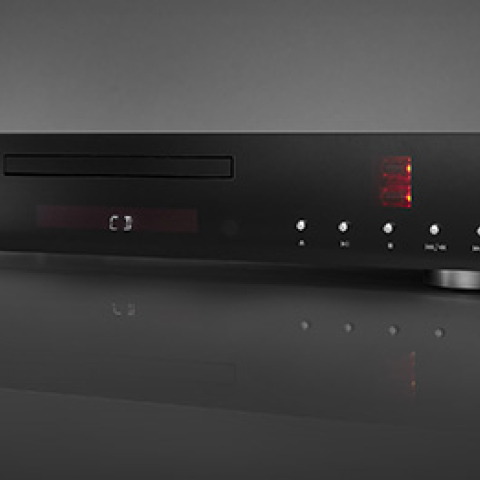
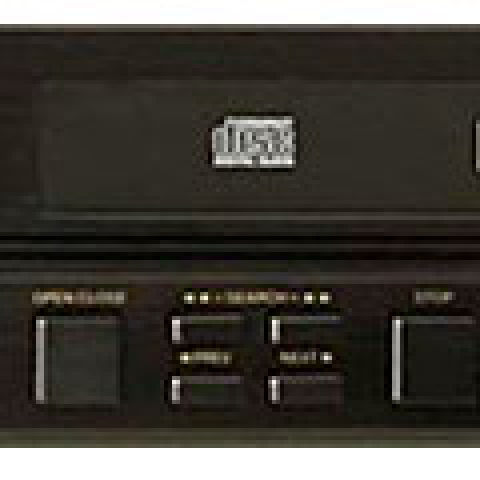
I had better make it clear right from the start that I have great respect for the Philips approach to D/A conversion, as you can see from my feature on the subject (p.47). There is an elegance to the strategy adopted by the Dutch company's engineers which you can't help admiring, even if you feel that practical implementation of the theory is not always what it should be. By contrast, until the current generation of players from Technics and Sony, typified by the CDP-55 reviewed by JGH in this issue, appeared, the Japanese—apart from Yamaha—seemed to have misunderstood the whole process. To be sure, the typical Japanese players produced respectable specifications, but the approach—one relatively inexpensive 16-bit DAC, which measurements revealed to achieve somewhere between 13- and 15-bit resolution, shared between both channels, coupled with a vicious brickwall analog reconstruction filter which in no way acted in an ideal manner—could best be described as a "kludge". (For those intimidated by electronics, a "kludge" is something which works, perhaps, after a fashion, in a quick and dirty manner, but which nobody admits to having any pride in conceiving.) The familiar Philips CD drawer and Time/Track display can be discerned hiding in the Tempest's fascia, with acrylic pushbuttons added, but the changes are more than cosmetic. A new, deeper case, with a standard 19" front panel finished in black or aluminum, houses the Philips transport and digital board, as well as a second, more gutsy, power transformer, to supply HT and heater current to the tubes. A new board, containing the tube analog stages, rides piggyback over the digital board. The parts are all highest audiophile grade: the tubes are RAM 6DJ8 twin-triodes; output sockets are Tiffanys; signal-coupling capacitors are the well-respected SiderealKaps; signal wiring is LC-OFC; and the whole construction has the quality feel mandatory for something costing as much as a high-end LP front-end.
Regarding the circuitry, it's all pretty much as Philips intended up to the DAC outputs: the signal from the laser pickup is error-corrected and split into the two channels; the resulting streams of data pass through the Philips SAA7030 digital filter chip, from which they emerge at 28-bits per sample at a 176kHz rate; these are reduced to 14-bit words by Philips' "noise-shaping" circuit, then fed to the twin TDA1540 DACs. (Although nominally 14-bit devices, the fact that noise-shaping is used and these DACs operate at four times the normal rate means that they give 16-bit resolution—more on this apparent conjuring trick in a future issue.)
As with other "audiophile" players, California Audio Labs have based their machine on a Philips chassis, in this case the Magnavox 2041 also used by PS Audio for its player (reviewed in this issue by JGH). The Meridian MCD Pro player (my last reference) used the same digital electronics as the 2041 player, but was based on an earlier Philips transport and chassis. The 2041 transport uses a faster drive, to reduce track-access times, and is based on a precision plastic chassis. This chassis is said, surprisingly, to be closer-toleranced, as well as more stable, than the diecast metal chassis used by Philips' previous two generations of machines. I'm not convinced, though. I like the reassuring clink of metal—does anyone else feel that SLR cameras went rapidly downhill when Nikon substituted plastic bodies for brass?