Sidebar 1: Whither Atmos?
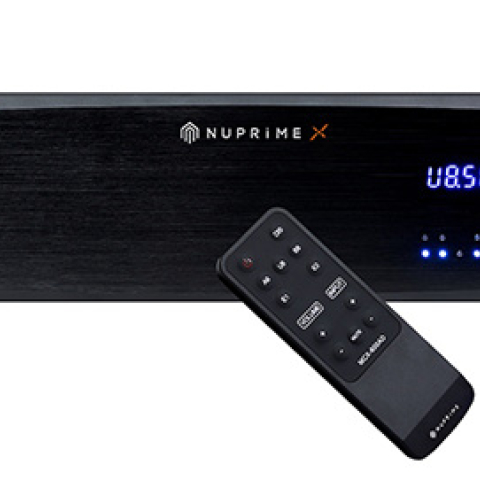
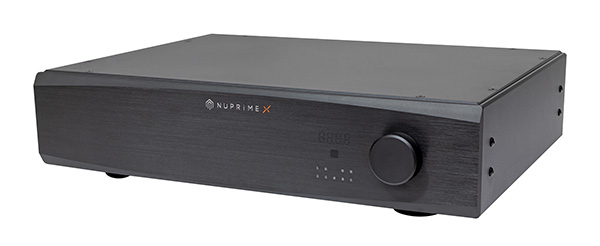 I sought out the MCX-800AD because of my fascination with the lossless 24/48 TrueHD content at up to 7.1, which is certainly Atmos. Here's why. Multichannel audio is how I listen to music, and for two decades I have been able to obtain and enjoy multichannel recordings on disc or by download. In the past two years, those sources have withered, as labels large and small have been drawn away by the siren song of Dolby Atmos streaming, mainly from Apple Music. Record companies that used to offer discs or downloads now offer only streaming links. It seems inevitable that the future for multichannel is Atmos and perhaps other "immersive" formats like DTS-X, Auro-3D, and Sony 360 Reality Audio.
However, for me, and I think most Stereophile readers, a big problem with Atmos for music is that it is only commonly available in a lossy Apple Music stream. Some Blu-ray discs offer access to the lossless 24/48 TrueHD content at up to 7.1, which is certainly better. With that in mind, I was attracted to two new NuPrime devices that will input Dolby from a disc player by HDMI and output lossless multichannel PCM: the H16-AIP and the H16-AES. They differ only in their output connections, the former using LAN (Audio over Internet Protocol) and the latter AES3 (balanced PCM). The MCX-800AD was offered as a useful assist in evaluating them. However, both H16s seemed to be prototypes—hence my decision to review the MCX-800AD instead.
Using several 2L Blu-ray discs or downloads on a USB drive in the Sony UBP-X800M2, I made comparisons of lossy Atmos 24/48, TrueHD 24/48 lossless, and 5.1 DTS HD-MA 24/192 with 7.1.4 Auro-3D 96kHz and DXD (24/352.8) original content on my PC server. The results were not surprising. The lossy Atmos 24/48 was listenable but not engaging. TrueHD 24/48 generally was engaging. Neither was as transparent and involving as higher-resolution alternatives, which unfortunately are not common. I believe that 24/96 should be the minimum and standard regardless of the codec.
For now, I will stick with the lossy Atmos I can get from Apple Music via my new Mac mini and directly from the Berlin Philharmonic (which, like Apple Music, streams in lossless two-channel or lossy Dolby Atmos) and see how things shake out. There is news of new streaming "immersive music" sites on the horizon, and maybe—just maybe—Apple will find a way to let us access the ADM 24/96 files that the producers use to create Atmos content. It is all too new to know.—Kalman Rubinson
I sought out the MCX-800AD because of my fascination with the lossless 24/48 TrueHD content at up to 7.1, which is certainly Atmos. Here's why. Multichannel audio is how I listen to music, and for two decades I have been able to obtain and enjoy multichannel recordings on disc or by download. In the past two years, those sources have withered, as labels large and small have been drawn away by the siren song of Dolby Atmos streaming, mainly from Apple Music. Record companies that used to offer discs or downloads now offer only streaming links. It seems inevitable that the future for multichannel is Atmos and perhaps other "immersive" formats like DTS-X, Auro-3D, and Sony 360 Reality Audio.
However, for me, and I think most Stereophile readers, a big problem with Atmos for music is that it is only commonly available in a lossy Apple Music stream. Some Blu-ray discs offer access to the lossless 24/48 TrueHD content at up to 7.1, which is certainly better. With that in mind, I was attracted to two new NuPrime devices that will input Dolby from a disc player by HDMI and output lossless multichannel PCM: the H16-AIP and the H16-AES. They differ only in their output connections, the former using LAN (Audio over Internet Protocol) and the latter AES3 (balanced PCM). The MCX-800AD was offered as a useful assist in evaluating them. However, both H16s seemed to be prototypes—hence my decision to review the MCX-800AD instead.
Using several 2L Blu-ray discs or downloads on a USB drive in the Sony UBP-X800M2, I made comparisons of lossy Atmos 24/48, TrueHD 24/48 lossless, and 5.1 DTS HD-MA 24/192 with 7.1.4 Auro-3D 96kHz and DXD (24/352.8) original content on my PC server. The results were not surprising. The lossy Atmos 24/48 was listenable but not engaging. TrueHD 24/48 generally was engaging. Neither was as transparent and involving as higher-resolution alternatives, which unfortunately are not common. I believe that 24/96 should be the minimum and standard regardless of the codec.
For now, I will stick with the lossy Atmos I can get from Apple Music via my new Mac mini and directly from the Berlin Philharmonic (which, like Apple Music, streams in lossless two-channel or lossy Dolby Atmos) and see how things shake out. There is news of new streaming "immersive music" sites on the horizon, and maybe—just maybe—Apple will find a way to let us access the ADM 24/96 files that the producers use to create Atmos content. It is all too new to know.—Kalman Rubinson
I sought out the MCX-800AD because of my fascination with the lossless 24/48 TrueHD content at up to 7.1, which is certainly Atmos. Here's why. Multichannel audio is how I listen to music, and for two decades I have been able to obtain and enjoy multichannel recordings on disc or by download. In the past two years, those sources have withered, as labels large and small have been drawn away by the siren song of Dolby Atmos streaming, mainly from Apple Music. Record companies that used to offer discs or downloads now offer only streaming links. It seems inevitable that the future for multichannel is Atmos and perhaps other "immersive" formats like DTS-X, Auro-3D, and Sony 360 Reality Audio.
However, for me, and I think most Stereophile readers, a big problem with Atmos for music is that it is only commonly available in a lossy Apple Music stream. Some Blu-ray discs offer access to the lossless 24/48 TrueHD content at up to 7.1, which is certainly better. With that in mind, I was attracted to two new NuPrime devices that will input Dolby from a disc player by HDMI and output lossless multichannel PCM: the H16-AIP and the H16-AES. They differ only in their output connections, the former using LAN (Audio over Internet Protocol) and the latter AES3 (balanced PCM). The MCX-800AD was offered as a useful assist in evaluating them. However, both H16s seemed to be prototypes—hence my decision to review the MCX-800AD instead.
Using several 2L Blu-ray discs or downloads on a USB drive in the Sony UBP-X800M2, I made comparisons of lossy Atmos 24/48, TrueHD 24/48 lossless, and 5.1 DTS HD-MA 24/192 with 7.1.4 Auro-3D 96kHz and DXD (24/352.8) original content on my PC server. The results were not surprising. The lossy Atmos 24/48 was listenable but not engaging. TrueHD 24/48 generally was engaging. Neither was as transparent and involving as higher-resolution alternatives, which unfortunately are not common. I believe that 24/96 should be the minimum and standard regardless of the codec.