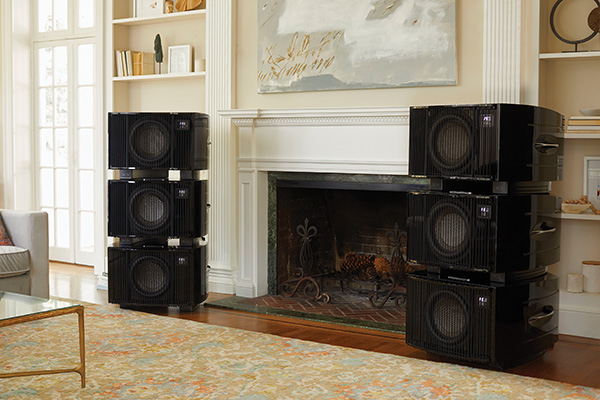
Continuing its fondness for unconventional solutions, REL has also been pioneering "sixpacks" in recent years—six subwoofers, usually stacked in two towers of three. The cynic in me wants to view this as a cheeky ploy to move more product, but plenty of affluent REL customers insist that four subs are better than two and that six are the ultimate sonic upgrade (footnote 6). When Hunter and I first talked on the phone, he told me that sixpacks are king. "Bass doesn't just propagate along the floor. When a bass drum is concussive, you can't fake that from down here." (I imagined him pointing at the floor.) "We wanted to bring more vertical elevation to music reproduction."
Hearing is believing, so I'm neither knocking nor praising sixpack configurations for now. Sonics aside, I'll concede that a six-sub setup is visually impressive. It's a statement that says you're willing to go crazy in an alpha-male, rare-steak-and-two-fingers-of-bourbon sort of way. For the moment, though, I stuck with just two.
Bling for bassheads?
Continuing its fondness for unconventional solutions, REL has also been pioneering "sixpacks" in recent years—six subwoofers, usually stacked in two towers of three. The cynic in me wants to view this as a cheeky ploy to move more product, but plenty of affluent REL customers insist that four subs are better than two and that six are the ultimate sonic upgrade (footnote 6). When Hunter and I first talked on the phone, he told me that sixpacks are king. "Bass doesn't just propagate along the floor. When a bass drum is concussive, you can't fake that from down here." (I imagined him pointing at the floor.) "We wanted to bring more vertical elevation to music reproduction."
Hearing is believing, so I'm neither knocking nor praising sixpack configurations for now. Sonics aside, I'll concede that a six-sub setup is visually impressive. It's a statement that says you're willing to go crazy in an alpha-male, rare-steak-and-two-fingers-of-bourbon sort of way. For the moment, though, I stuck with just two.
Bling for bassheads?A few hours after the friendly REL men said their goodbyes, I watched Hagazussa, a German folk-horror movie whose slow opening theme is played on a cello backed by a rutting synthesizer tone (or maybe it's the same cello processed through an electronic doubler and pitched an octave down; it's hard to tell). The deepest note in the composition's eerie melody is G0, or 24.5Hz. I tried it first without the subs; disconnecting them takes only a quarter-degree turn of the twist-lock Speakon plugs. By themselves, my Focal Scala Utopia EVOs, which go down to 27Hz (–6dB at 24Hz), did an impressive job of boxing my ears with that earthy drone, but I sensed that they left a few dBs on the table. Once I turned the No.31s back on, the bottom note of the motif was not only louder; I felt it more, both physically and emotionally. Its thrum was more fleshed out and menacing.
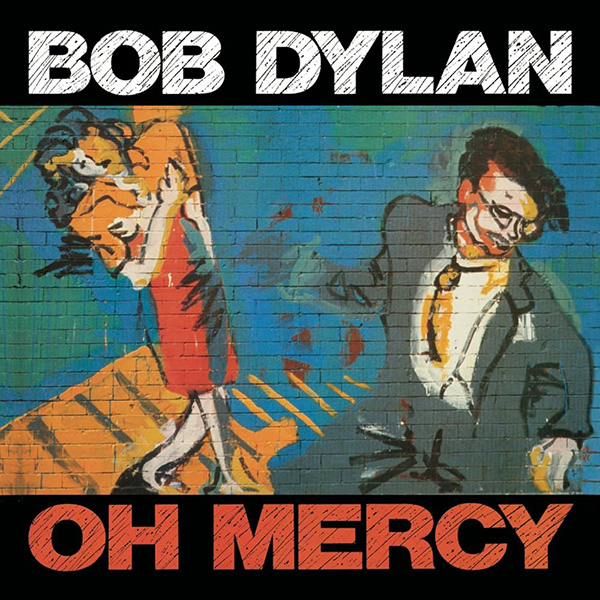 The first bass note on Bob Dylan's "The Man in the Long Black Coat," from Oh Mercy (24/96, Columbia/Qobuz), hit hard, with more foundational energy than the Scalas are capable of on their own. It didn't sound deeper so much as bigger and more solid.
It seemed likely that I would love the RELs with bass-heavy music, and I did. Two of my favorite LFE tracks, Hedegaard's "Ratchets" (24/44.1 FLAC, one-hundred/Qobuz) and "Planners and Thinkers" by Metropolis, off the soundtrack by the same name (16/44.1 FLAC, Soundtrack Classics/Tidal), were slamfests that reminded me of the observation "bass is to music what blood pressure is to the body." Or as Casey Miller put it in a lovely Stereophile column from a couple of years ago, "We experience sound through our bodies and not our ears alone." True dat.
The first bass note on Bob Dylan's "The Man in the Long Black Coat," from Oh Mercy (24/96, Columbia/Qobuz), hit hard, with more foundational energy than the Scalas are capable of on their own. It didn't sound deeper so much as bigger and more solid.
It seemed likely that I would love the RELs with bass-heavy music, and I did. Two of my favorite LFE tracks, Hedegaard's "Ratchets" (24/44.1 FLAC, one-hundred/Qobuz) and "Planners and Thinkers" by Metropolis, off the soundtrack by the same name (16/44.1 FLAC, Soundtrack Classics/Tidal), were slamfests that reminded me of the observation "bass is to music what blood pressure is to the body." Or as Casey Miller put it in a lovely Stereophile column from a couple of years ago, "We experience sound through our bodies and not our ears alone." True dat.
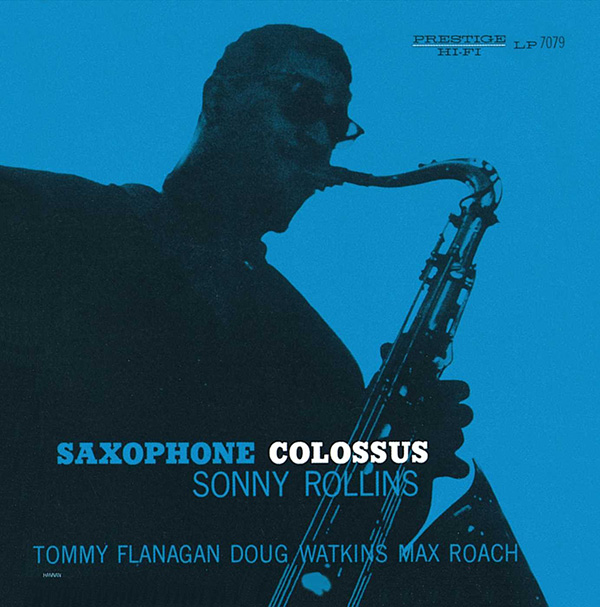 On "St. Thomas," off Saxophone Colossus (16/44.1 FLAC, Milestone/Qobuz), Sonny Rollins's saxophone took on extra palpability with the RELs in the system. I could better hear his breath pushing through the reed, preceding the brassy shimmer of each note as it left the bell.
Next, I cued up Lead Belly's "The Gallis Pole," from The Smithsonian Folkways Collection (16/44.1 FLAC, Folkways/Qobuz). His guitar has a big body, and you can sense its size even on this recording from 86 years ago. Although the blues icon usually tuned his guitar about five semitones lower than the standard E–E, "Gallis Pole" has no deep-bass frequencies to speak of—and still the No.31s added flair and authenticity to the sound.
In my review of Focal's outstanding Maestro EVO speakers, I mentioned Concerto for Two Pianos, a Bryce Dessner composition performed by Katia and Marielle Laècque (24/96 FLAC, Decca/ Qobuz). If I may quote myself, "The percussive and tonal qualities of the grand piano strings were corporeal, full of energy, verve, and solidity." That's how it was all over again. The RELs made it seem as if the Maestros were back in my listening room, magnifying the Scalas' best traits.
On "St. Thomas," off Saxophone Colossus (16/44.1 FLAC, Milestone/Qobuz), Sonny Rollins's saxophone took on extra palpability with the RELs in the system. I could better hear his breath pushing through the reed, preceding the brassy shimmer of each note as it left the bell.
Next, I cued up Lead Belly's "The Gallis Pole," from The Smithsonian Folkways Collection (16/44.1 FLAC, Folkways/Qobuz). His guitar has a big body, and you can sense its size even on this recording from 86 years ago. Although the blues icon usually tuned his guitar about five semitones lower than the standard E–E, "Gallis Pole" has no deep-bass frequencies to speak of—and still the No.31s added flair and authenticity to the sound.
In my review of Focal's outstanding Maestro EVO speakers, I mentioned Concerto for Two Pianos, a Bryce Dessner composition performed by Katia and Marielle Laècque (24/96 FLAC, Decca/ Qobuz). If I may quote myself, "The percussive and tonal qualities of the grand piano strings were corporeal, full of energy, verve, and solidity." That's how it was all over again. The RELs made it seem as if the Maestros were back in my listening room, magnifying the Scalas' best traits.
 The bottom (and I do mean bottom) line
"REL" stands for company founder Richard Edmund Lord, but it could also mean Really Exceptional Lows, or Roomshaking Effortless Luxe. I'd expected the two No.31 subs to bring increased force to the lowest reaches of my system's performance, and they did that, unflappably. But the RELs also imbued the midrange with an extra dollop of clarity that you might not expect from what most of us regard as an LFE augmenter. In some music, they increased air. The two SVS top-of-the-line subwoofers I had in my system in 2021 left a similar impression, but the positive effect was more pronounced with the RELs—as well it should be, since they're more than three times the price. The graceful, curved No.31s are also more attractive by a mile. Cube-shaped competitors look brutalist and uninspired by comparison.
Footnote 6: Then again, why stop at six?—Jim Austin