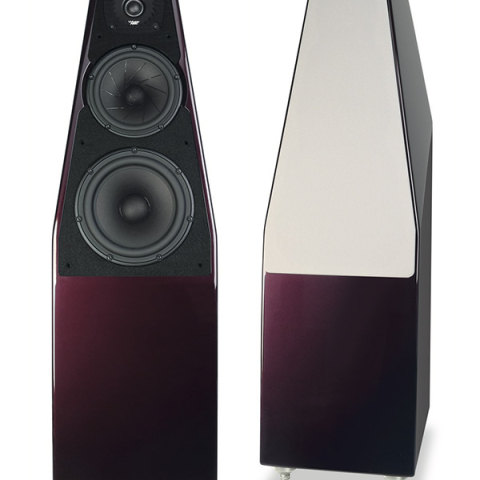
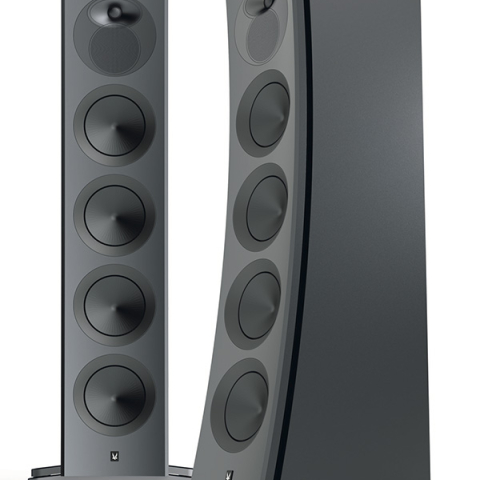
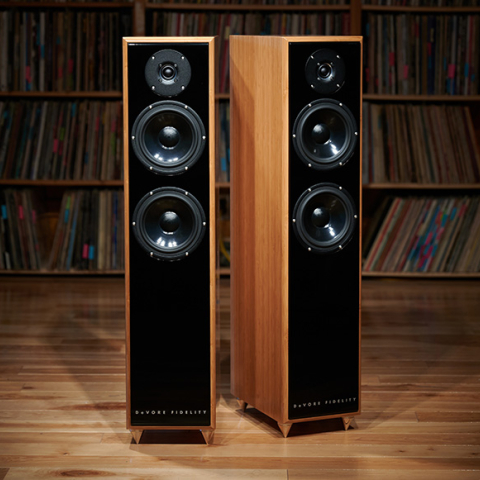
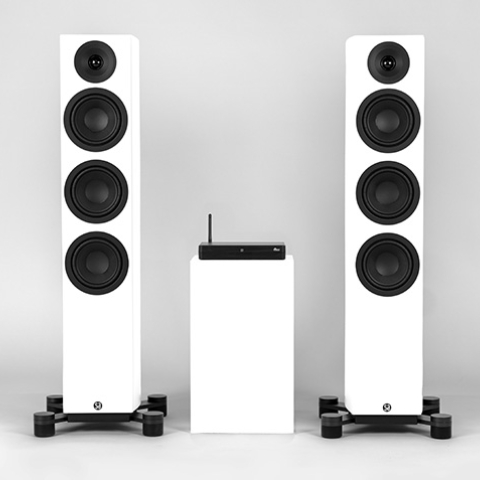
After a year spent exploring the best that can be obtained from minimonitor loudspeakers, I embarked on what will be an equally long examination of what floorstanding towers have to offer. I began with the Sonus Faber Cremona Elipsa ($20,800/pair) in December 2007, followed in 2008 by: in February, the KEF Reference 207/2 ($20,000/pair); in April, the PSB Synchrony One ($4500/pair); and in May, the Magico V3 ($25,000/pair). For this review, I've been listening to a speaker aimed at those with shallower pockets than are required even for the PSB: the Avalon NP Evolution 2.0, which costs just $1995/pair.
 Evolution of a review
I first heard a pair of NP 2.0s at the 2007 Consumer Electronics Show in Las Vegas, demonstrated to great effect with an Ayre Acoustics AX-7e integrated amp and a Cary CD306 player. I had previously been familiar only with Avalon Acoustics' expensive speakers, such as the Eidolon Diamond ($33,795/pair). However, the system based on the NP 2.0, the least expensive floorstander designed by the Colorado firm's Neil Patel, "showed that you don't have to drop megabux on a system to get musically satisfying sound," as I wrote in our live online coverage of that CES. I put the Avalons on my "to-review" list. But before I could bring my plan to fruition, I had further experience of the speaker at the 2007 Rocky Mountain Audio Fest, in Denver. I was sharing a demonstration room with Roy Gregory, editor of the UK's HiFi+ magazine. Roy and I were alternating presentations of analog and high-resolution digital playback, respectively, and to make the logistics manageable, we were using the same system, which had been chosen and set up by Roy: Conrad-Johnson CT5 preamp and ET250S hybrid power amplifier (see "Sam's Space" in this issue), Nordost Thor AC conditioner and Valhalla interconnects and speaker cables, a Stillpoints equipment rack—and a pair of Avalon NP Evolution 2.0s. After spending that entire weekend with the Avalons and hearing how they coped with the demands made by my hi-rez music files decoded by a Bel Canto DAC 3, I was even more determined to get a pair at home.
Evolution of a speaker
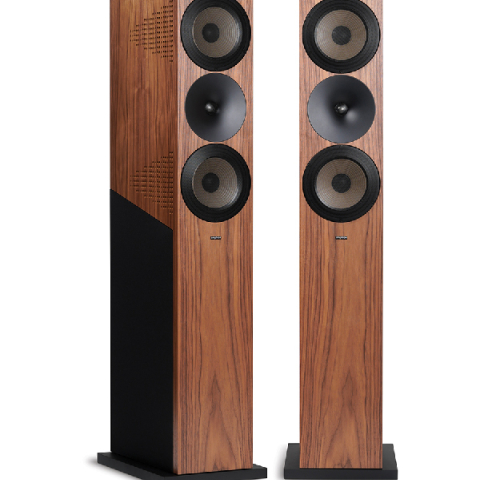
Originally intended for home-theater use, the NP Evolution 2.0 is a slim, cherry-veneered tower standing 3' tall on its carpet-piercing cones. All three drive-units are rabbeted into the baffle and secured with Allen-headed bolts screwing into T-nuts. The tweeter, made by Eton in Germany, has a hard, white-finished dome formed from a "ceramic composite" material proprietary to Avalon and used in a number of models in their line. A small, efficient neodymium magnet provides the motive force, and the mounting plate is faced with black felt. The dome is protected by two vertical wires shaped as a vestigial "A." The two American-manufactured woofers are built on 6.5"-diameter diecast chassis and use black 5" Kevlar-woven cones and substantial half-roll nitrile rubber surrounds. Both units cover the same range and are reflex-loaded with a 2"-diameter, 4"-deep port on the rear panel. Electrical connection is via a pair of spade-lug–compatible terminals mounted under the rear-facing port. Made by Cardas Audio, these use a single screw to secure the connection—very convenient for those of us with only two hands. I couldn't remove the terminal panel to examine the crossover, unfortunately. While the enclosures for Avalon's more expensive speakers are made in the impressive woodworking shop at Avalon's facility in Boulder, the NP 2.0's cabinet is bought-in. Nevertheless, it is of high quality. The panels are ¾" MDF, veneered only on the outside; the enclosure is reinforced with a vertical H-brace fitted side-to-side and is loosely filled with acrylic fiber material. The shape of the grille, made of black cloth stretched over a wooden former, echoes the faceted styling of Avalon's more expensive speakers; with the grille in place, the NP 2.0 looks elegant indeed. Unfortunately, the grille is held in place by four plastic pins that are easily broken, as I was to find in my comparisons of the speakers' sound with the grilles on and off.
Sound
Setting up the NP Evolution 2.0s took more time than usual. Starting with the positions that had worked well for the PSB Synchrony Ones, which I reviewed in April, I moved each Avalon 1" at a time, inward and outward, forward and backward, until I'd obtained what I felt was the best integration of the bass and lower midrange. The balance was well extended at both high- and low-frequency extremes, the soundstage was enormous, and the imaging was accurate and well defined. However, a definite nasal coloration was audible. For example, in Vaughan Williams' mystic piece for wordless choir and orchestra, Flos campi, as performed by conductor Matthew Best, the Corydon Singers, and the English Chamber Orchestra (CD, Hyperion CDA66420), the solo viola of Nobuko Imai had too woody a character, which led it to take on some of the character of the cello. This wasn't significantly affected by adding the grilles. I did much of my auditioning without the grilles. However, Avalon states in the speaker's manual that "Tonal balance and imaging cues will be more correctly rendered when played with the grilles on; however, they may be removed if a slightly 'hotter' or more diffuse presentation is desirable." Listening to the Avalons with their grilles, I still felt the upper mids were balanced too forward. But the major effect, I thought, was that the grilles diminished the speaker's impressive articulation. The sound became less immediate, a touch darker, with less top-octave air. Diana Krall's mezzo-soprano on the title track of The Girl in the Other Room (SACD, Verve B0002293-36) sounded more contralto with the grilles, and a slight hootiness in her lowest registers became more noticeable. Without the grilles, Krall sounded lighter, airier. However, the image of her voice sounded even more palpable with the NP 2.0s' grilles in place—as did Robert Silverman's light-toned Bösendorfer piano on his complete set of Beethoven's piano sonatas, which I recorded in 2000 (CD, OrpheumMasters KSP-830, no longer available).
Overall, I would say that if classical vocal music is your thing, you should use the Avalons with the grilles in place. The 24-bit/88.2kHz-sampled FLAC download of the Dunedin Consort's recording of Bach's St. Matthew Passion sounded a touch too edgy without the grilles, but perfectly balanced in the treble with them in place. And with this recording, the Avalons threw a huge sense of space.
Evolution of a review
I first heard a pair of NP 2.0s at the 2007 Consumer Electronics Show in Las Vegas, demonstrated to great effect with an Ayre Acoustics AX-7e integrated amp and a Cary CD306 player. I had previously been familiar only with Avalon Acoustics' expensive speakers, such as the Eidolon Diamond ($33,795/pair). However, the system based on the NP 2.0, the least expensive floorstander designed by the Colorado firm's Neil Patel, "showed that you don't have to drop megabux on a system to get musically satisfying sound," as I wrote in our live online coverage of that CES. I put the Avalons on my "to-review" list. But before I could bring my plan to fruition, I had further experience of the speaker at the 2007 Rocky Mountain Audio Fest, in Denver. I was sharing a demonstration room with Roy Gregory, editor of the UK's HiFi+ magazine. Roy and I were alternating presentations of analog and high-resolution digital playback, respectively, and to make the logistics manageable, we were using the same system, which had been chosen and set up by Roy: Conrad-Johnson CT5 preamp and ET250S hybrid power amplifier (see "Sam's Space" in this issue), Nordost Thor AC conditioner and Valhalla interconnects and speaker cables, a Stillpoints equipment rack—and a pair of Avalon NP Evolution 2.0s. After spending that entire weekend with the Avalons and hearing how they coped with the demands made by my hi-rez music files decoded by a Bel Canto DAC 3, I was even more determined to get a pair at home.
Originally intended for home-theater use, the NP Evolution 2.0 is a slim, cherry-veneered tower standing 3' tall on its carpet-piercing cones. All three drive-units are rabbeted into the baffle and secured with Allen-headed bolts screwing into T-nuts. The tweeter, made by Eton in Germany, has a hard, white-finished dome formed from a "ceramic composite" material proprietary to Avalon and used in a number of models in their line. A small, efficient neodymium magnet provides the motive force, and the mounting plate is faced with black felt. The dome is protected by two vertical wires shaped as a vestigial "A." The two American-manufactured woofers are built on 6.5"-diameter diecast chassis and use black 5" Kevlar-woven cones and substantial half-roll nitrile rubber surrounds. Both units cover the same range and are reflex-loaded with a 2"-diameter, 4"-deep port on the rear panel. Electrical connection is via a pair of spade-lug–compatible terminals mounted under the rear-facing port. Made by Cardas Audio, these use a single screw to secure the connection—very convenient for those of us with only two hands. I couldn't remove the terminal panel to examine the crossover, unfortunately. While the enclosures for Avalon's more expensive speakers are made in the impressive woodworking shop at Avalon's facility in Boulder, the NP 2.0's cabinet is bought-in. Nevertheless, it is of high quality. The panels are ¾" MDF, veneered only on the outside; the enclosure is reinforced with a vertical H-brace fitted side-to-side and is loosely filled with acrylic fiber material. The shape of the grille, made of black cloth stretched over a wooden former, echoes the faceted styling of Avalon's more expensive speakers; with the grille in place, the NP 2.0 looks elegant indeed. Unfortunately, the grille is held in place by four plastic pins that are easily broken, as I was to find in my comparisons of the speakers' sound with the grilles on and off.
Setting up the NP Evolution 2.0s took more time than usual. Starting with the positions that had worked well for the PSB Synchrony Ones, which I reviewed in April, I moved each Avalon 1" at a time, inward and outward, forward and backward, until I'd obtained what I felt was the best integration of the bass and lower midrange. The balance was well extended at both high- and low-frequency extremes, the soundstage was enormous, and the imaging was accurate and well defined. However, a definite nasal coloration was audible. For example, in Vaughan Williams' mystic piece for wordless choir and orchestra, Flos campi, as performed by conductor Matthew Best, the Corydon Singers, and the English Chamber Orchestra (CD, Hyperion CDA66420), the solo viola of Nobuko Imai had too woody a character, which led it to take on some of the character of the cello. This wasn't significantly affected by adding the grilles. I did much of my auditioning without the grilles. However, Avalon states in the speaker's manual that "Tonal balance and imaging cues will be more correctly rendered when played with the grilles on; however, they may be removed if a slightly 'hotter' or more diffuse presentation is desirable." Listening to the Avalons with their grilles, I still felt the upper mids were balanced too forward. But the major effect, I thought, was that the grilles diminished the speaker's impressive articulation. The sound became less immediate, a touch darker, with less top-octave air. Diana Krall's mezzo-soprano on the title track of The Girl in the Other Room (SACD, Verve B0002293-36) sounded more contralto with the grilles, and a slight hootiness in her lowest registers became more noticeable. Without the grilles, Krall sounded lighter, airier. However, the image of her voice sounded even more palpable with the NP 2.0s' grilles in place—as did Robert Silverman's light-toned Bösendorfer piano on his complete set of Beethoven's piano sonatas, which I recorded in 2000 (CD, OrpheumMasters KSP-830, no longer available).