

The Listeners' Manifesto
Editor's Note: This article is now only available as an Audio Engineering Society preprint, under the title "The Role of Critical Listening in Evaluating Audio Equipment Quality," preprint number 3176. The price is $4.00 for AES members, and $5.00 for non-members; it can be ordered (currently on paper only, not as a downloadable pdf) by entering the number in the appropriate field on the preprint">http://www.aes.org/publications/preprints/search.html">preprint search page at the AES">http://www.aes.org">AES website.
The Non-tweaker's Guide To Tweaks
Tweaks have acquired a bad reputation in certain sectors of the audio world, probably with some justification. Warming the cartridge to exactly the right temperature, suspending cables from the ceiling (but not with cotton string; it sounds grainy and dry), stroking CD cases with a "magic" brush, drinking "polarized" (or is it de-polarized?) water before a listening session---gimme a break!
The Pros & Cons of Electrostatic Loudspeakers

The main inherent advantage of the full-range electrostatic loud speaker system is that it allows a single diaphragm to embody the conflicting attributes needed for optimal performance at both extremes of the audio range. Its thin-membrane diaphragm can be made exceedingly light, for superb transient response and extended HF response, yet it can be about as large in area as desired, for extended LF response.
The Question of Bass / Bass Instruments & Frequencies
The Question of Bass: J. Gordon Holt
A few issues back, in Vol.9 No.3, I used "As We See It" to clarify what Stereophile writers have in mind when they use the term "transparency" in equipment reports. This time, I'll do the same thing for the performance parameters of bass reproduction.
A few issues back, in Vol.9 No.3, I used "As We See It" to clarify what Stereophile writers have in mind when they use the term "transparency" in equipment reports. This time, I'll do the same thing for the performance parameters of bass reproduction.
The Science of Subwoofing
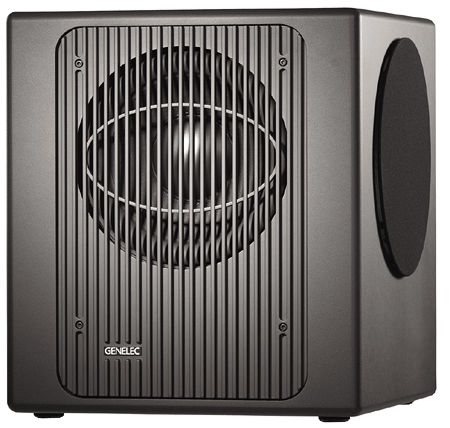
There was a time, as recently as 40 years ago, when frequencies below 100Hz were considered extreme lows, and reproduction below 50Hz was about as common as the unicorn. From our present technological perch, it's too easy to smirk condescendingly at such primitive conditions. But just so you're able to sympathize with the plight of these disadvantaged audiophiles, I should tell you that there were two perfectly good reasons for this parlous state of affairs. First of all, program material at that time was devoid of deep bass; not because it was removed during disc mastering but simply because there wasn't any to begin with. The professional tape recorders of the day featured a frequency response of 50–15kHz, ±2dB—just about on a par with the frequency performance capability of a cheap 1988 cassette tape deck.
The Sound of Surprise (the loudspeaker/stand interface)
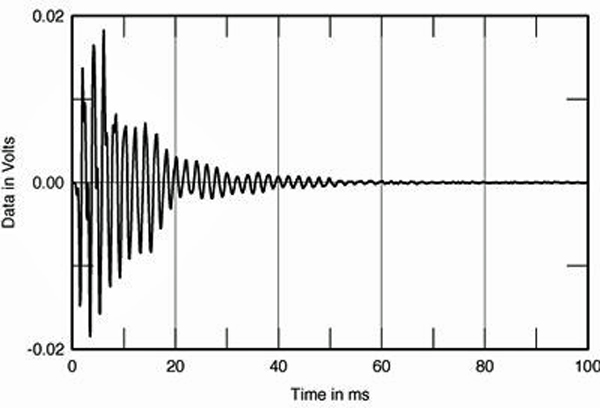
One of the great imponderables in hi-fi is how much the vibrations of a dynamic loudspeaker's cabinet walls contribute to its overall sound quality. Studies by William Stevens in the mid-1970s showed that, with some speakers, the acoustic output of the enclosure could be almost as much as that from the drive-units. Since then, responsible speaker designers have worked hard either to damp cabinet vibrations or to shift them to higher frequencies where their effect on the music will be less deleterious.
The Stereo Soundstage
What is the angular separation of your loudspeakers as viewed from your favorite chair? Whatever your answer, it's wrong. Of course I don't mean that it's a factually incorrect answer, just that any single value of subtended angle cannot be ideal for all recordings.
The Stereophile Test CD
The end of two audiophiles' friendship:
The Uncertainty Principle

Have you ever suspected that the component you bought after diligent research is somehow not "typical"? That its sound seems to bear little resemblance to the descriptions in the reviews you read? Sure, you listened to the unit before purchase, but the one you took out of the box at homewas that the same unit? And if you suspect your new unit's sonic quality is below par, just how do you or your dealer go about proving it?
The Unseen Variable
Although I still haven't been able to listen to the Cary Audio Design 805 single-ended tube monoblocks that Stereophile praised so highly a year ago (Vol.17 No.1, p.104), I've recently auditioned many other tubed single-ended designs. Undeniably, a good SE design has a distinctive quality of harmony and atmosphere in the midrange that reaches well beyond the average attainment of its solid-state brethren.