

Subjective Loudspeaker Testing
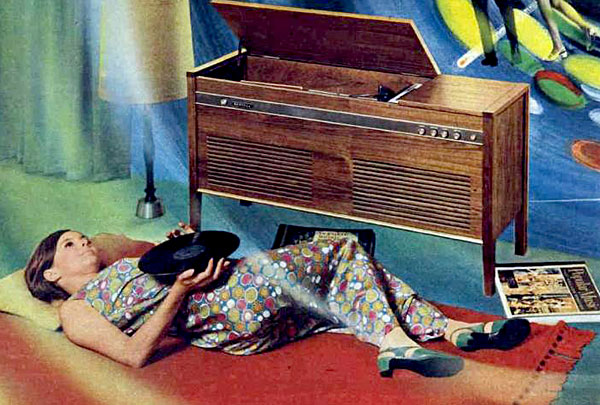
One of the most firmly-established audio platitudes is the one which says "The specs don't tell the whole story." One reason for this, of course, is the fact that most manufacturers, preferring to sell their products on the basis of emotional appeals in ads rather than on hard, cold performance claims, do not attempt to make their specs tell the whole story.
Super Audio CD: The Rich Report
Although Philips invented the Compact Disc, it was only when Sony got involved in the early 1980s that it was decided—at the prompting of conductor Herbert von Karajan, a close friend of Sony's then-president Akio Morita—that the CD should have a long enough playing time to fit Beethoven's Ninth Symphony on a single disc (footnote 1). Even if the conductor was using very slow tempos, and even given the minimum pit size and track pitch printable at the time, the 16-bit data and 44.1kHz sampling rate they settled on gave them a little margin.
Super Audio CD—One Year Later
In his very English way, Sony's then managing director for the UK, Tim Steele, was getting a touch, er, desperate. His oh-so-cultured voice rose a smidgen as he resorted to a direct selling of the benefits of what he was talking about. "Look, you're all sitting on riches," was his fundamental pitch. "You can sell music-lovers your entire back catalog all over again—at a higher price!"
Take Me to Your LEDR!
"My system has great imaging!" "I can hear sound coming from beyond my speakers." "The depth image in my system goes back at least 20 feet." Yes, we audiophiles are proud of our imaging (footnote 1), and we've worked hard to get it. My back is still aching from the last time I tweaked my speakers until the image was just right.
The 2011 Richard C. Heyser Memorial Lecture: "Where Did the Negative Frequencies Go?"
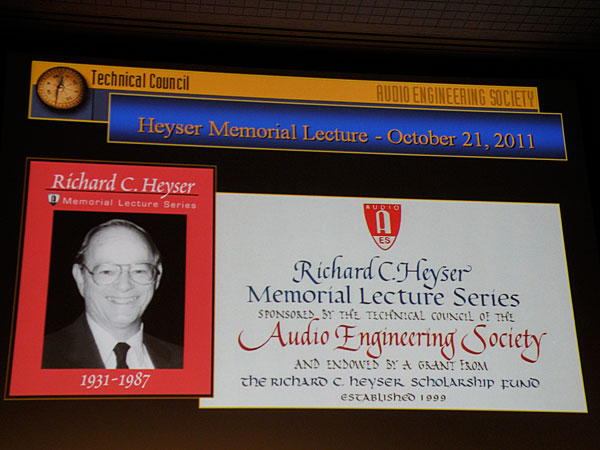
In the summer of 2011, Stereophile's long-time editor in chief, John Atkinson, was invited by the Technical Council of the Audio Engineering Society to give the Richard C. Heyser Memorial Lecture at the 131st Audio Engineering Society Convention in New York, October 21, 2011.
The Analog Compact Disc
Nothing quite new is perfect. —Marcus Tullius Cicero, Brutus
The Essex Echo 1995: Electrical Signal Propagation & Cable Theory

Editor's Note: The matter of whether—and if so, how—speaker cables and interconnects can affect the sound of an audio system has vexed the audiophile community since Jean Hiraga, Robert Fulton, and others first made us aware of the subject in the mid-1970s. Most of the arguments since then have involved a great deal of heat but not much light. Back in August 1985, Professor Malcolm Omar Hawksford Ph.D (of the UK's University of Essex and a Fellow of the Audio Engineering Society) wrote an article for the British magazine Hi-Fi News & Record Review, of which I was then Editor, in which he examined AC signal transmission from first principles. Among his conclusions was the indication that there is an optimal conductor diameter for audio-signal transmission, something that I imagined might lead to something of a conciliation between the two sides in the debate. Or at least when a skeptic proclaimed that "The Laws of Physics" don't allow for cables to affect audio performance, it could be gently pointed out to him or her that "The Laws of Physics" predict exactly the opposite.
The Fifth Element #10
The fundamental object of the invention is to provide...the listener a realistic impression that the intelligence is being communicated to him over two acoustic paths in the same manner as he experiences in listening to everyday acoustic intercourse....—Blumlein, et al, British Patent #394,325, issued June 14, 1933
The Jitter Game
"How sour sweet music is
When time is broke and no proportion kept!"
When time is broke and no proportion kept!"
The Law of Averages

The Compact Disc clearly hasn't read the script. At a time when, in the autumn of its commercial life, the format is supposed to be stepping aside to allow younger blood to succeed it, CD has instead in recent years enjoyed something of a revival in audiophile opinion. While SACD and DVD-Audio, rather strutting and fretting their hour upon the stage, are doing more plain fretting than anything, the best in CD sound quality has improved sufficiently for some to question whether we need the new media at all.