

John Coltrane's 1963: New Directions
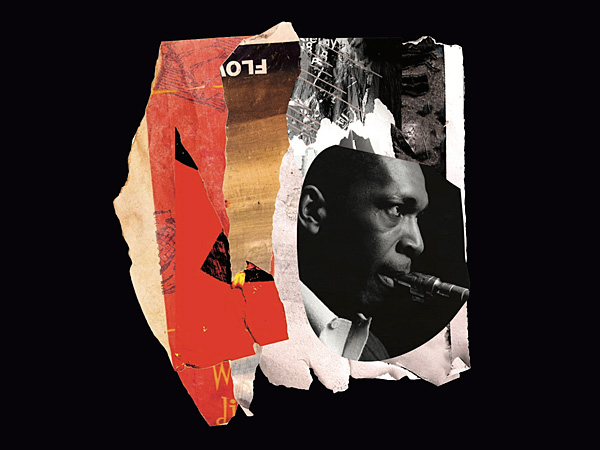
Only a few months after the extraordinary news and release of John Coltrane's Both Directions at Once: The Lost Album on Impulse! Records, which revealed the tenor and soprano saxophonist deep in transitional mode, comes Universal Music/Verve's attempt to cash in on the Trane fever. Joining music from The Lost Album with selections from other albums recorded by Coltrane in that year, 1963: New Directions brings Coltrane's legacy to our commercially crass, modern marketplace.
John Coltrane's Both Directions at Once: The Lost Album Debuts at Englewood Cliffs
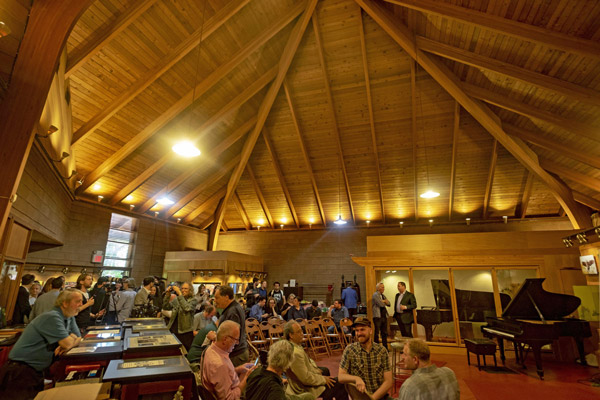
A stunning jazz discovery presented at a historic citadel of recording technology. That event took place June 11, when the new John Coltrane recording, Both Directions at Once: The Lost Album, which will be released June 29, was unveiled at Van Gelder Studio, the fabled location where the celebrated engineer recorded many jazz masterpieces.
John Doe: Fables of the Post-Reconstruction

Few people make albums about isolation and loneliness sound as appealing as John Doe does. That's what Doe has achieved with his latest solo release, Fables in a Foreign Land (LP, Fat Possum FP 18001). Set as a song cycle in the 1890s, the album's 13 songs reflect Doe's penchant for dust-and-diesel storytelling, within an acoustic-trio format. It's "telling stories and playing music around the modern campfire," Doe said in an interview.
John Scofield: What the Electric Guitar Can Do

Photo: Nicholas Suttle
Electric guitarist John Scofield, winner of multiple Grammy Awards, has a knack for staying a step ahead of musical trends. In hundreds of jazz settings, "Sco" and his signature Ibanez AS200 guitar and Fender Reverb amplifier have created a unique style and sound that have earned him a popularity beyond jazz's usual audience.
Keb' Mo': "Music Was Mine To Experience"
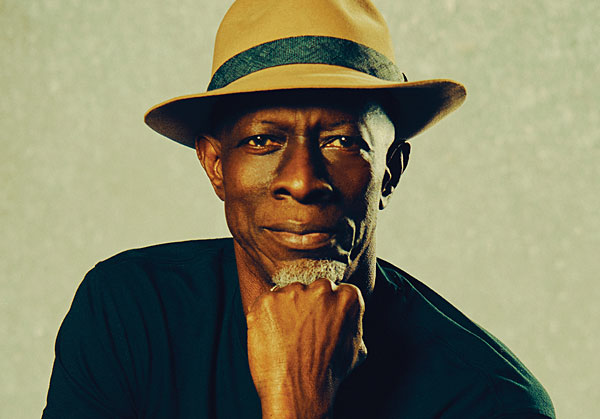
For all its ghastliness and heartbreak, the COVID-19 pandemic has been good to Keb' Mo'. When the virus hit the US, it forced the cancelation of a string of his concerts. "I was getting a little burned out on touring," he confesses.
Keith Jarrett’s Live Well-Tempered Clavier Resurrected

Thirty-two years after it was recorded, pianist Keith Jarrett’s live reading of J.S. Bach’s Well-Tempered Clavier, Book 1, has seen the light of day.
Learning Lennon: Guitar Master Bill Frisell

For the musically prolific, releasing too many records too close together can be problematic or worse. Just because you can make a record every week in your home studio doesn't mean you should. The impulse to commit every golden thought and performance to tape without self-editing or even pausing to reflect screams narcissism run amok. Asking listenerseven dedicated fansto then buy and spend time listening to half-baked nonsense that might have become something, given more time and care, is a sure career destroyer. There's truth in the old saw about building demand, avoiding saturation, and creating a hunger among the listening public. Most critical of all, despite downloads, piracy, and Lady Gaga's pointy hats and eggshell entrances, the old Hollywoodism still applies: while spontaneity may sound like a radical idea, you're only as good as your last album.
Leoš Janáček’s Intimate Diary

Czech composer Leoš Janáček was already in his 60s and married when, in 1917, he fell hopelessly in love with Kamila Stösslová, a married woman 38 years his junior. Although it wasn’t the first time that Janáček had fallen in love with an “unobtainable,” his passion for Kamila was all-consuming. During the final 11 years of his life, while he lived under the same roof with a wife whom he had informally divorced, he sent Stösslová almost 730 letters and was inspired by his love for her to compose many of his greatest works.
Leslie Ann Jones: Recording's Future Now

As she moves quietly across the huge scoring stage at Skywalker Studios toward the large, comfortable control room that sits behind glass, it's obvious that Leslie Ann Jones is in charge. She wears no badge that proclaims her authority, although her professional title is impressive: "Director of Music and Scoring, Music and Scoring Recording Engineer and Mixer".
Listen to Them, Children of the Night
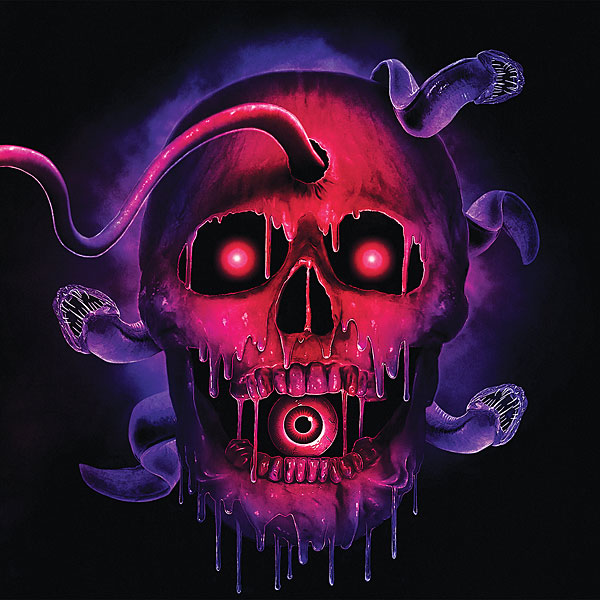
Long ago, I stopped associating Act II of Tchaikovsky's Swan Lake with dancing. Now, every time I hear it, I immediately flash on broken battlements, a black cape, and Béla Lugosi's unmistakable Hungarian accent: "Listen to themcheelllldreennn of dee night. What muuuusic they make!"
Then there were James Bernard's tense scores for the Hammer filmslike Dracula: Prince of Darkness (1966), starring Christopher Leethat my parents somehow let me see in a theater when I was seven, as part of an afternoon of bargain monster movies that included all the sourballs and unbuttered popcorn you could wolf down. Scared to death, my life was forever changed.