

A Year to Remember
As I sit down to write a year's-end musical retrospective, I feel that the old column-writing joke between Stereophile editor John Atkinson and myself about first needing a subject and, second, needing it to make sense, will not be a problem this time out. For me, the music and almost everything else about 2001 have been dwarfed in importance by the mayhem wreaked on New York on September 11.
Adrian Sherwood's Dub Trip

Following in the lineage of such iconic dub music masters as Osbourne "King Tubby" Ruddock and Lee "Scratch" Perry, producer Adrian Sherwood is the UK's contemporary pioneer of dub: the reverb-filled, beats-rattling, bass-thick music that erupted from "sound system" parties in Kingston, Jamaica in the 1960s.
Amazing Stuff: Klaus Heymann of Naxos
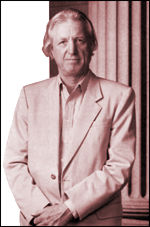
It's been three years since the February 1997 issue, when I last talked with Klaus Heymann, founder and chairman of HHN, the parent company of the Naxos and Marco Polo labels. When I heard that he'd be in New York for a visit, I jumped at the chance for another interview.
Are Audiophiles Music-Lovers?
"Like many audiophiles I have often sped home from a concert to fire up the audio system, and then, to the sore vexation of my wife and guests, spent the rest of the evening plunged in the morbid contemplation of what, exactly, was missing."
Art, Music, Kennedy & Commerce
Art and commerce are butting heads once again, now that England's popular Brit Awards include a category for classical music. Last month's inaugural nominees included some highbrow names (Rachmaninoff, Bryn Terfel), but leaned heavily on such "crossover" artists as Paul McCartney for his orchestral forays, and classical violinist Kennedy (formerly known as Nigel Kennedy) for The Kennedy Experience, his CD inspired by Jimi Hendrix. Classical sales are still down, and record companies, one suspects, are latching onto quasi-classical popular works to boost the sector's profile. For traditionalists, of course, this shows that classical music is falling further into the cultural black hole of all things Madonna, Spice Girls, and McDonald's. They're pissed—in the American sense, that is.
As One — Original Cast Recording

What’s the most frequently performed new opera in America at present? It’s Laura Kaminsky’s 2014 chamber opera, As One, whose libretto by Mark Campbell and Kimberly Reed explores the coming out process of its protagonist, Hannah, as a transgender woman.
Astrud Gilberto, RIP
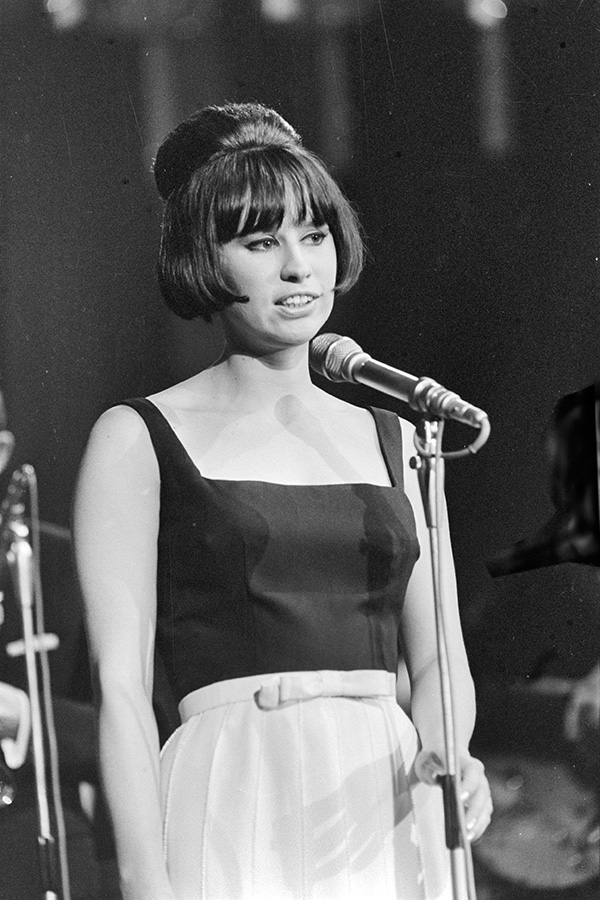
Her first professional recording became a career-defining global hit, changed the culture, and helped make bossa nova a worldwide phenomenon. but there's a dark side to the success of "The Girl From Ipanema," which followed the Brazilian chanteuse until her recent death.
Attention Screen Takes Flight at Yamaha

How am I to convince music lovers that this CD is markedly different from Attention Screen's first two live CDs?
 The question kept running through my head as I marveled at the breadth and maturity of Attention Screen's remarkable improvisations during a pre-concert sound check in the Piano Salon of Yamaha Artist Services, Inc. (YASI), at 689 Fifth Avenue, in the heart of Manhattan.
Attention Screen impressed even more at the public concert the following night, April 24, 2010. As the band members engaged in one improvisational miracle after another, fearlessly exploring new territory, the beauty and inventiveness of their playing astounded me.
The question kept running through my head as I marveled at the breadth and maturity of Attention Screen's remarkable improvisations during a pre-concert sound check in the Piano Salon of Yamaha Artist Services, Inc. (YASI), at 689 Fifth Avenue, in the heart of Manhattan.
Attention Screen impressed even more at the public concert the following night, April 24, 2010. As the band members engaged in one improvisational miracle after another, fearlessly exploring new territory, the beauty and inventiveness of their playing astounded me.
The question kept running through my head as I marveled at the breadth and maturity of Attention Screen's remarkable improvisations during a pre-concert sound check in the Piano Salon of Yamaha Artist Services, Inc. (YASI), at 689 Fifth Avenue, in the heart of Manhattan.
Attention Screen impressed even more at the public concert the following night, April 24, 2010. As the band members engaged in one improvisational miracle after another, fearlessly exploring new territory, the beauty and inventiveness of their playing astounded me.
Attention Screen: The Making of Live at Merkin Hall

John Atkinson: Making It Live
The e-mail from Stereophile reviewer Bob Reina was straightforward: "I want to make a demo of my new jazz group. I plan to record the session in my living room by getting my old four-channel Teac 3440 out of mothballs and sticking one or two mikes on each instrument. I'd like your view on which mikes would be most appropriate for the four instruments . . . "
The e-mail from Stereophile reviewer Bob Reina was straightforward: "I want to make a demo of my new jazz group. I plan to record the session in my living room by getting my old four-channel Teac 3440 out of mothballs and sticking one or two mikes on each instrument. I'd like your view on which mikes would be most appropriate for the four instruments . . . "
Audio: The View From Outside
I have a confession to make: I play contrabassoon . . . for a living. Now to many this may not seem like such a sin, but within the musical community my instrument is viewed with about as much regard as the common garden slug. This perception is not completely unjustified; often being relegated to roles depicting monsters and evil, along with the occasional digestive grunt, helps perpetuate the general disdain for the contra. However, playing the lowest (non-keyboard) instrument in the symphony orchestra gives me a somewhat different perspective on things, not unlike that of a dwarf in a crowded elevator: a view from the bottom up. It's amazing just how much pitch and harmonic coloration there is down in the subbasement. And shoring up the foundation of the wind section, as well as being the true bottom of the orchestral sonority, can be very satisfying. Although playing an instrument with a limited repertoire can sometimes be disconcerting, it also has its advantages. During rehearsals, if I'm not required for a certain work, I can go out into the house for my own private concert, or stay put in the orchestra and get a sonic thrill that makes the IRS and WAMM systems sound like tin cans.