

Climbing Everest Barefoot: the Emerson String Quartet
The Emerson String Quartet defies conventional wisdom. They like to take risks, and they use the adrenaline that creates to hone their music-making to a fine edge.
Colin Stetson: Sorrow & Górecki

Eine kleine Nachtmusik it ain't. And yet, in 1992, lightning struck, tectonic plates shifted, and the third symphony of Polish composer Henryk Mikolaj Górecki (19332010) became a bona-fide hit. Defying both skeptics and logic, a recording of this decidedly sepia-toned work, subtitled The Symphony of Sorrowful Songs, by the London Sinfonietta conducted by American maestro David Zinman, and featuring soprano soloist Dawn Upshaw, eventually sold over a million copies, making it the largest-selling recording of modern classical music ever.
Concert Halls: A View From The Stage
When I decided to write a piece on the subject of concert-hall acoustics, I realized that almost all discussion concerning this topic is based on the viewpoint of the listener in the audience. While this is important (since the primary purpose of any hall is to bring audience and performance together), the criteria that musicians employ in concert-hall evaluation address sonic parameters that are probably not obvious to the casual listener, and may often be at odds with conclusions reached from the other side of the footlights. Some readers might feel that any discussion of concert halls has no place in a publication such as Stereophile; they may have a point, especially if their sole aim through audio is to produce sonic spectacle, rather than to recreate an artistic event. I believe, however, that there are some readers who would like to gain some insights into the specific problems and acoustical considerations presented to performing musicians, and possibly come away with some fresh ideas to incorporate in their listening criteria.
Cutting Up: Stereophile's Liszt Piano Sonata LP
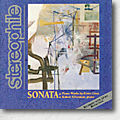
There has been much argument in audiophile circles about whether an LP or a CD is a more faithful representation of a master tape. Although we recorded Robert Silverman's thrilling performance of the Liszt B-Minor Piano Sonata for CD">http://www.stereophile.com//features/131/">CD release, we also had in mind to issue an LP. As the source for both would be the same, the question we can answer is: Will an LP cut straight from a 20-bit master tape via a Class A 20-bit DAC sound closer than a CD noise-shaped to 16 bits from the same 20-bit original?
Dance, Don't Swing: the New Jazz Scene in London and the UK

Over a long weekend in late August 2021, DJ, broadcaster, and contemporary music scholar Gilles Peterson and his Brownswood recordings label hosted the We Out Here (WOH) festival in Abbots Ripton, Cambridgeshire, 80 miles north of London. 20 stages. 15,000 attendees. Peterson called it "the British Jazz Woodstock."
Dancing on the Edge: Keith Jarrett on Music & Art

Years before I moved to Santa Fe, where I eventually became Stereophile's copyeditor, assistant editor, and first music editor, I lived in Boston, Massachusetts. There, I'd spent a year as the in-house typesetter, copyeditor, and book-review editor of East West Journal, an eclectic monthly magazine devoted to nutrition, spirituality, cooking, gardening, conservation, and other subjects. Two years after I'd left EWJ, managing editor Meg Seaker called to ask if I wanted to interview Keith Jarrett for the magazine.
Darcy James Argue and His Steampunk Big Band
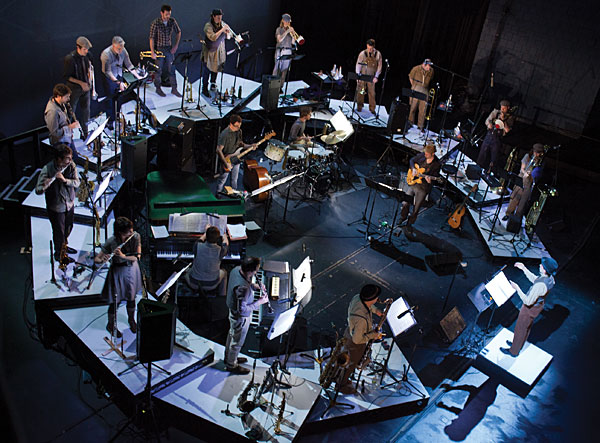
The world is catching up with Darcy James Argue. Two years ago, he was known mainly for having the strangest name in jazz since Ornette Coleman. Now he's a double winner in Downbeat's 2013 Critics' Pollthe top pick for Best Arranger, and tied with Maria Schneider for Best Big Band Leader.
Dave Alvin

Dave Alvin is a fighter. In the 1980s, when Dave and his older brother, Phil Alvin, shared studio and stage as co-founders of Los Angeles punkabilly band The Blasters, they frequently fought each other. They also fought musically, tussling over every note as the four-man band wrangled many great tunes. In that respect, their working relationship may have been similar to the sibling push-pull output of Ray and Dave Davies in the Kinks and Liam and Noel Gallagher in Oasis. Consider "American Music," "Marie Marie," and "Border Radio," all from the band's 1981 sophomore album The Blasters, as examples of how internal conflict can lead to successful collaboration.
David Bowie: Curated
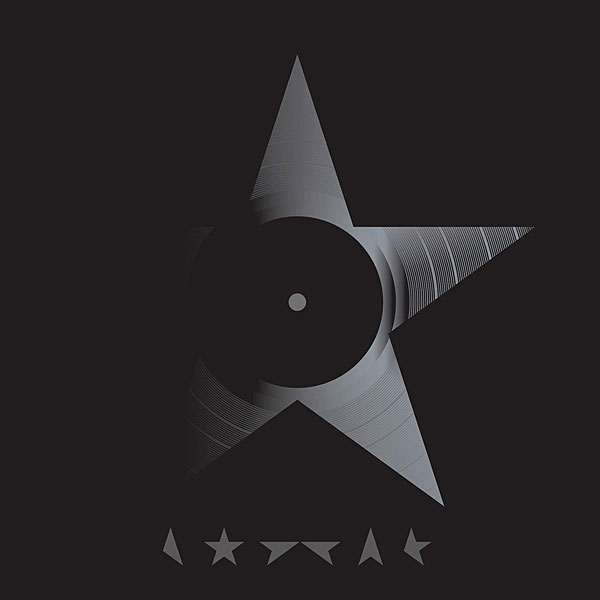
I remember when I first heard that David Bowie had died. I was half-listening to the radio as I prepared for work. I was stunned. I just looked at my partner. To my surprise, a tear ran down my cheek. I had always been rather sniffy about people who got emotional when famous people died, people they had never met, who had never heard of them, who had lived lives of wealth.
Dead Man Walking: Jake Heggie and Terrence McNally
People are wrong when they say the opera isn't what it used to be. It is what it used to be. That's what's wrong with it.—Noël Coward