

One Small Step...
Screeeeeeech, thump, thump, vroooooom...
Outrageous Price?
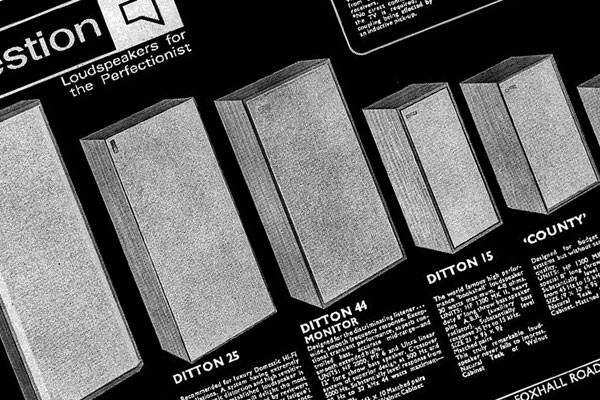
Editor's Note: Approaching its ninth year of publication in 1970, the advertisement-free Stereophile was failing as a business. There was just one issue published between December 1968 and June 1970, the date when J. Gordon Holt published this plea in response to the reaction to the increased subscription price: first to $4 for four issues, equivalent to $25 in 2016, then to $5 ($31). The response from subscribers to his plea was not positive enough to enable the magazine to continue publishingGordon could publish just two more issues in the next two years before Stereophile had to accept advertising, first from dealers in October 1972 and from manufacturers in December 1977.Ed.
Our recent price increase at the end of 1969 elicited numerous letters telling us the magazine was exhorbitant at $4 a subscription and is outrageous at $5, and supporting their contention with comparisons between the price per page of the Stereophile and one or another of the commercial hi-fi magazines. We will answer this once, here and now, and then let the matter drop.
Overcooked Floyd
The song ended. My friend gestured to me to remove the wads of Kleenex I had stuffed in my ears.
Panacea or Snake Oil?

You know about them: audio products or tweaks that fall outside the standard definition of audio component. They're not source components like CD players, not amplifiers or preamplifiers, not loudspeakers, not power-line conditioners or cablesand, if aimed at modifying room acoustics, they're not the standard devices that absorb or disperse sound. Let's call them Unorthodox Audio Products (UAPs). They promise a kind of audio panacea: something that fixes whatever's wrong with the sound of your system.
Party Like It's 1979
Having just spent the last four days at the 2004 Audio Engineering Society conference in San Francisco, I was struck by the sunny enthusiasm shared by many industry professionals for 5.1-channel surround-sound music.
Party like it's 1999
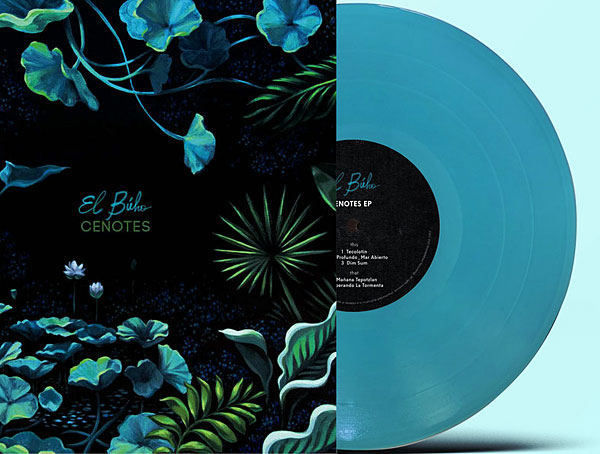
I wrote about the music industry's impressive recovery in the February 2022 AWSI. Robust LP sales were a headline item of that report, but they're a sideshow: Paid-subscription streaming is what is bringing the industry back.
When I wrote that, 2021 wasn't quite over, so year-end financials weren't available. They're available now.
PBS, Politics, Information, & Tweaks
In this month's "Letters," Donald Bisbee raises the subject of the government's proposed reduction in funding for the Corporation for Public Broadcasting (CPB), I agree with Mr. Bisbee that commercial radio broadcasting in the US is an intellectual desert. Music is narrowcast, with listeners' tastes bound into predigested categories. There is no depth or analysis to radio news programs, other than discussions by populist commentators who, no matter what you may think of their politics, usurp the ability of their audiences to think for themselves. As a regular listener to NPR and watcher of PBS, I feel that public broadcasting is an essential factor in American public discourse (footnote 1), but not for the reasons some might think.
Perfect Sound Forever?
When some unknown copywriter coined that immortal phrase to promote the worldwide launch of Compact Disc in late 1982, little did he or she foresee how quickly it would become a term of ridicule. Yes, early CDs and players offered low background noise, a flat spectral balance, and freedom from wow and flutter. But all too often, the music encoded in the "perfect-sounding" pits seemed to have taken a vacation, leading the renowned recording engineer John Eargle to offer, in the medium's defense, that if you were to hear just one CD that sounded good, digital technology would be proved to be okay.
Plain Talk About the Unmentionable
Editor's Note: On the 52nd anniversary of Stereophile's founding in 1962 by J. Gordon Holt, we are publishing this mea culpa "As We See it" essay from 1981, in which he explains why Vol.4 No.10 was almost six months late in mailing to subscribers. Gordon had relocated from the Philadephia suburbs to Santa Fe, New Mexico in 1978, and as he had explained in the April 1978 issue, the move had not gone well. "Much of the equipment necessary for testing got damaged or destroyed in transit," he wrote, adding that "What had promised to be a superb listening room turned out to have some sticky acoustical idiosyncrasies."
Presence: Self-Aware Listening
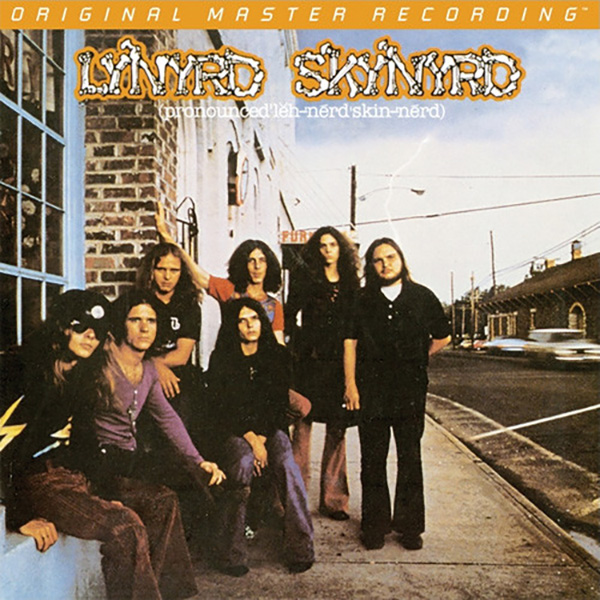
Recently, my good friend Bryan invited himself over for a "critical listening session" at my place. This was out of character. Typically our listening sessions are not of the "critical" variety. They take place late at night after several cocktails, neat bourbon in hand. Volume knobs are torqued. The choice of recorded material tends toward early Lynyrd Skynyrd (Pronounced 'Lĕh-'nérd 'Skin-'nérd), that one Hank Williams Jr. album that doesn't suck (The Almeria Club Recordings), and one of two Def Leppard albums (Pyromania or (Hysteria).