

Professional Headroom
When I first started buying records at the end of the 1950s, I had this vision of the typical recording engineer: A sound wizard wearing a white lab coat rather than a cloak festooned with Zodiacal symbols. He (it was always a "he," of course) would spare no effort, no expense to create a disc (LPs and 45s were all we had) that offered the highest possible sound quality. At that time I also believed that Elvis going into the Army meant the end of rock'n'roll, that my teachers knew everything, that politicians were honest, that socialism was the best form of government, and that talent and hard work were all you needed to be a success. Those ideas crashed and burned as I grew up, of course, but other than the long-discarded white coats, each new record I bought strengthened rather than weakened my image of the recording engineer.
Prognostications for 1969
Editor's Note: 40 years before it became a reality, J. Gordon Holt predicts music streaming and predicts the Compact Cassette will become the dominant prerecorded music medium.
Traditionally, the New Year is the time when editors light their pipes, tilt their chairs back, fold their hands and shut their eyes, and make bold predictions about The Future. It is said that prognostications are always risky, because events have a nasty habit of making fools of those who prognosticate. It has been our observation, though, that the only prognosticators who are remembered are those who were proven right, so we are going to do some fearless limb-climbing about something that is coming to worry increasing numbers of stereophiles: Namely, which of all the current recording media is going to become The Standard for home use, and which are going to be left stranded on the shoals of obsolescence?
Punk Rock's Wild Gift
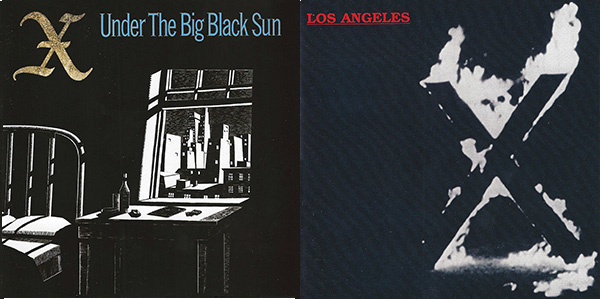
This month's music feature, by Mike Mettler, is an interview with John Doe, best known as cofounder, in 1977, of the legendary punk band X. During X's long recording career, Doe's urgent voice has offset the starkly contrasting voice of colead vocalist (and songwriting partner) Exene Cervenka, who was Doe's girlfriend before she joined the band; it's one of the most recognizable sounds in punk. Over 45 years, X has continued to record (sparingly) and to evolve, from the literate punk of Los Angelesto me one of the great albums ever, in any genrethrough Wild Gift, which leans toward country, to Under the Big Black Sun, which went in several directions at once: rockabilly, funk, folk, pop, and beyond.
Puppies, Tequila, and the Blind Leading the Blind

Four years ago last August, I went to Port Washington, New York, on Long Island, to visit the North Shore Animal League America's (NSALA's) adoption shelter. It was a memorable day: We brought home our beautiful and beloved Ella, aka Ella Wren. But this column is not about puppies. It's about tequila and blind testing.
R.I.P., Audiophilia. It Was Nice Knowing You.
Audiophilia is dead.
Actually, it retired to an exclusive country club in the skybut as far as the enduring, salt-of-the-earth audio hobbyist is concerned, it may as well be dead. The reason is simple: The old audiophile paradigm used to be mostly about when we were going to get that top-shelf component we had our eye on; it was rarely an if proposition. That's because, if you were an average, determined audiophile, it wasn't prohibitively expensive to buy top-shelf equipment. That's what made our hobby so exciting back then: the idea that you could actually own the best sound around. Damn!
Rachmaninoff, Ripping, & the RIAA
"My god. This was better than any hi-fi I had ever experienced—I actually had Sergei Rachmaninoff in the room, playing Mendelssohn just for me. I am not ashamed to say that I wept." I wrote those words in the January 2001 Stereophile, about hearing a piano-roll transcription of Rachmaninoff performing Mendelssohn's Spinning Song (Op.67 No.34) on a Bösendorfer Imperial 290SE reproducing piano. I was in the middle of recording Robert">http://www.stereophile.com//musicrecordings/298/">Robert Silverman's cycle of Beethoven piano sonatas at the Maestro Foundation in Santa Monica, where there just happened to be a floppy disk with Wayne Stahnke's transcription of the Rachmaninoff for the Bösendorfer mechanism, which Stahnke invented.
Random Thoughts & Recommended Components
"All great editors are men able to see how stories, episodes, and personalities flow and merge one into the other to reproduce the pattern of a world that only their own inner eye perceives.—Henry Robinson Luce, Founder, Time and Life magazines
Recommended Components: If It Works, Don't Change It
"There, that's where you should put the microphone, 5' from the end of my bow."
Recommended Components: Really Recommended
The very first "Recommended Components" listing appeared in Vol.1 No.5; this is the 16th time I've put the listing together since I took over the task from J. Gordon Holt in the November 1986 'phile. No other Stereophile feature seems to be as popular, or as misunderstood. While it might inform, it never fails to offend, particularly when it involves the dropping, or—horrors!—the not listing at all, of components that the magazine's readers own.
Recommended Components: the Stereophile Way
It's a beautiful drive, considering you're on a freeway. You take I-25 north out of Albuquerque, Sandia Peak to your right and the Jemez Caldera and Mount Taylor dimly visible in the distance to your left. As you broach La Bajada hill south of Santa Fe, the Sangre de Cristo range—the "Blood of Christ Mountains" described by Paul Simon in "Hearts & Bones"—appears before your windshield. You take the Old Pecos Trail exit to the City Different, but before you reach town you bear to the left, then take another left opposite St. Vincent Hospital. There, in a cul-de-sac, you peer up at the street sign: "Stereophile Way," it says (footnote 1). "Not just a street, but a philosophy," I kidded Larry Archibald when the city told him that he could name the road where the magazine's headquarters would one day be situated.