

A Chatbot's Take on Hi-Fi Issues
There has been much discussion lately about ChatGPT, the machine-learning based chatbot from OpenAI. Some experts say it will soon make human writers obsolete. Will that include human hi-fi reviewers?
I decided to engage ChatGPT in an exploratory conversation; think of it as a sort of job interview.
A Clash of Values?
In the April 1992 Stereophile, reader Hilary Paprocki expressed his belief that recording engineers are unconcerned about sound quality. Indeed, he went so far as to allege that engineers intentionally use inferior miking techniques so that they can bill clients for additional time spent trying to fix the sound. The example he used was the engineer who places a microphone directly in front of a guitar amplifier, a technique Mr. Paprocki felt captured only "4%" of the sound. Mr. Paprocki also likened recording engineers to "featherbedders."
A Dolby In the House
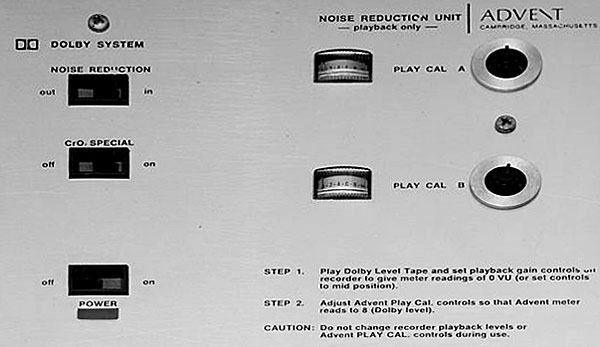
By the time you read this, in the fall of 1967, the "Dolby system" will probably be old hat to you. Every other audio publication has been describing it, discussing it, and hailing it as the greatest invention since sex.
We've seen that kind of press ballyhoo before, about such significant advances as the Edsel, the 16-rpm LP and the "thin-profile" loudspeaker, so our first inclination was to be a wee bit skeptical of the Dolby. It seemed too good to be true.
A High-End Audio Horror Story
Tom Swift is a talented young loudspeaker designer. Tom believes that he has never been able to prove exactly how talented he is, because the company he works for refuses to build the cost-no-object loudspeaker he's been doodling designs for (on company time).
A lifelong passion

This gig has many perksbut the best one without a doubt is the cool, interesting people I get to "meet."
I should explain the quotation marks. Since starting this job, in April 2019, I haven't gotten out much. Even before the pandemic, I was too busy to do much of anything except edit the magazine. So, many of the interesting people I've "met," I've still never seen in person.
A Matter of Dimensions
I have been reading a lot of late. Whether it is due to the reduced appeal of recorded music owing to the ever-decreasing shelves of LPs in our local specialty record store (the owner explains that he still wants to sell LPs; it's the record companies that make it increasingly harder for him to do so with punitive returns policies and deaf ears to back orders), or the fact that it's Spring, I don't know. But the fact remains that I have recently found myself devouring a shelf-full of titles sometimes only vaguely related—horrors!—to high fidelity. Stuart Chase's The Tyranny of Words, for example, first published in 1938 and a finer examination of what came to be called semantics you wouldn't want to find, should be essential reading for anyone involved in writing articles that are still intended to communicate some meaning.
A Matter of Measurements
Beginning with this issue, Stereophile readers will notice that more of the subjective equipment reviews are augmented with technical reports describing certain aspects of the component's measured performance. Although test data have lately been increasingly included in reviews, Stereophile has recently made a major commitment to providing readers with relevant measurements of products under review. We have just finished building an audio test laboratory featuring the Audio Precision System One, a sophisticated, computer-based audio test measurement system.
A Measurement that Says Something
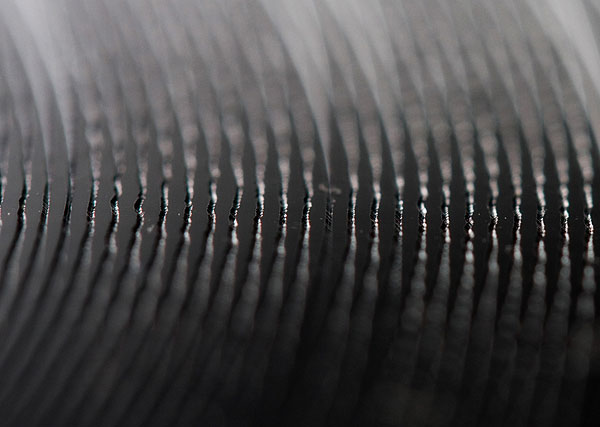
When we first heard rumors that Shure Brothers was about to unleash something called "trackability" on the audio world, our reaction was mainly one of indifference. We already had loudspeakers with listenability, tape recorders with portability, and amplifiers with stability and dependability. Trackability, we figured, was just another clever sales gimmick; a catchy word that the advertising department had thought up to describe what everyone wanted in a pickup.
A new listening companion

I have a confession, one I'm hesitant to make for reasons that will soon become clear, but my conscience compels me to make it.
I have a new dog. A puppy. Her name is Ella Wren.
A Passion For Music
I was watching Mr. Holland's Opus on the tube the other day and was surprised to find myself teary-eyed, even though the film lost me by subjecting me to Michael Kamen's atrocious "symphony" in the finale. Why had I become all choked up? Because I had a Mr. Holland of my own.