

AXPONA 2023 was Cool Like Jules

The Stereophile crew at AXPONA 2023, minus Herb Reichert (LR): Jason Victor Serinus, Rogier van Bakel, Michael Trei, Jim Austin, Ken Micallef. Photo by David James Bellecci-Serinus.
At AXPONA 2023, I saw teenage besties cruising rooms together. I saw fashion-conscious 20-somethings listening in sweet spots, and young parents with younger children. Yeah, there were a few gray boomers like me, but only a couple were wearing Hawaiian shirts. AXPONA 2023 vibed like a tribal conference at a sacred pilgrimage site, and I've never enjoyed an audio show this much before.AXPONA 2024 in the Rear View
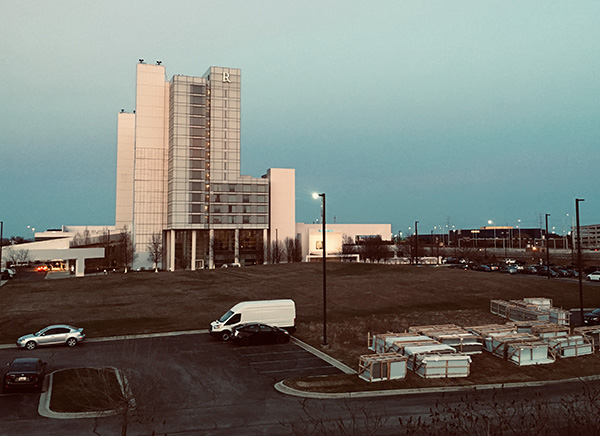
Photo: John Atkinson
If buying a hi-fi product from an internet retailer is like an arranged marriage, a hi-fi show is like speed dating. Not everyone, I realize, approaches hi-fi shows (or speed dating, for that matter) the same way, and anyway, the analogy between hi-fi and dating is far from perfect. Speed dating is how this year's AXPONA, America's biggest hi-fi show, held at the Renaissance Schaumburg Hotel & Convention Center (above) near Chicago in April, often felt to me as I moved from room to room. Every new system I heard had the potential to become a long-term relationship. Could I live with this one forever?AXPONA!

I'm writing this one week after returning from Schaumburg, Illinois, where I attended my first real audio show since the Florida Audio Expo in early 2020, just as the pandemic was starting to gain momentum. Everyone I talked to was hopeful, but no one could predict what attendance would be like or what people's attitudes would be.
Balance
Balance is certainly a lovely concept, as well as a lofty ideal. But achieving an optimal sonic balance in a high-end audio systemwhose final sound is determined, in part, by interactions among any number of components and that great bugaboo, the listening roomwhile maintaining some semblance of psychic equilibrium can be the hardest goal of all.
Bang For the Buck: Quality vs Cost
It was a powder blue Pinto. Brand new, it drove like a bowl of Jello with wheels. No matter how firmly I gripped the steering wheel, I had no confidence that it had any kind of relationship with the wheels on the road. And pickup? There was none. But because its designers had sacrificed all quality to build it cheaply, the Ford Pinto was equally cheap to rent when I did so back in 1980.
Being Digital: Adding Value
Nicholas Negroponte, Professor of Media Technology at MIT's Media Lab, is somewhat of a hero of mine, not the least because in his 1995 book Being Digital (Alfred A. Knopf), he mentioned specialty magazines as being a paradigm (of a sort) for the information-rich future. The role of a magazine such as Stereophile is to act as an intelligent (we hope) filter applied to the breadth and depth of human activity. Those who define themselves by their interest in the publication's specialty can therefore go to just one source to find everything of relevance.
Being There
"Is it live or is it recorded?"
Best Wishes for the New Year
I'm sitting here in front of the trusty Toshiba 286 laptop on December 31, 1992, stuck with apparently incurable writer's block; in a couple of hours, we will be taking off en famille for the latest of Larry Archibald's legendary New Year's Eve parties. I wish I had something to write about for this month's "As We See It" essay; I wish...I wish...you know, there are a number of things I really wish for right now, yet I don't believe there is a component out there that can give me what I want.
Beyoncé, Tracy Chapman, and Country Music
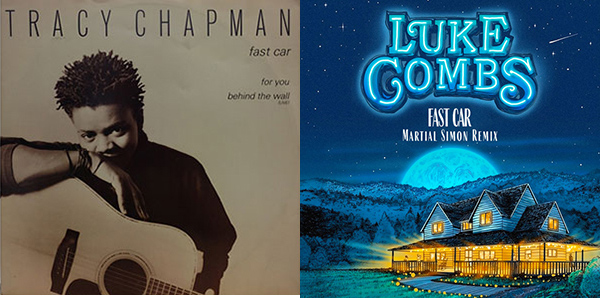
One of my coolest radio-related experiences happened just a few months ago, when, churning through FM stations in my car, I encountered a country-inflected male voice singing "Fast Car," the Tracy Chapman song. Rolling Stone dubbed "Fast Car" the 168th best song of all time. It has audiophile cred because its simple sonics (predominantly voice and acoustic guitar) and good engineering made it an important test track, used, eg, by Harman for listening tests and by others for assessing compression artifacts in MP3s.
Big Changes at Stereophile
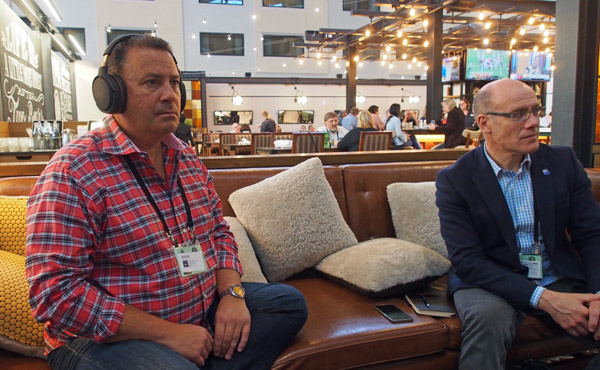
Stereophile's new President and CEO Keith Pray (left) and new Technical Editor Paul Miller (right) listening to Audeze headphones at the 2018 Rocky Mountain Audio Fest.
Stereophile has a new owner. Who is it? It's Stereophile. For 27 years, Stereophile has been led on the business side by Keith Pray. This spring, Keith formed a new company, Pray Media Holdings, for the express purpose of buying Stereophile and related titles.