

Vendetta Research SCP-2 phono preamplifier
Few people in the audio business would deny that John Curl is an audio design genius—arguably the greatest one of our generation. He designed and built the electronics for Mobile Fidelity's SuperMaster and David">http://www.stereophile.com//interviews/478/">David Wilson's (of Wilson Audio) UltraMaster tape recorders, two of the three best analog recorders in the world. (The other is Keith Johnson's home-brew unit.) He designed the JC-1 head amp and JC-2 preamplifier sold under the Mark Levinson name some years ago. He designed head amps for SOTA, Michaelson & Austin (TVA), and has done consulting work for more high-end companies than you can shake a stick at.
Versa Dynamics 2.0 LP player
There is something vaguely disturbing about the idea of an $8000 turntable and arm combination. That's more money than a lot of audiophiles have invested in records through the years. Total overkill! Or so it might seem. But the entire history of analog disc reproduction, from the first LP to the present, has been one of seemingly open-ended discoveries—of subtleties nobody ever imagined were frozen in those tiny grooves, of levels of quality no one ever guessed the medium was capable of. Yes, newer LPs are a lot better than the first ones, but that is only to be expected in any technologically advancing field. What is amazing about the LP is that, 40 years after its introduction, we are still finding out that all of them, from the first to the latest, are better than anyone could have imagined. An improved phono unit doesn't just make the latest release from Wilson Audio or Reference Recordings sound better, it does the same for every LP you own!
VMPS SuperTower IIa/R loudspeaker

One of the nicest features of the High End is its diversity. Regardless of whatever trend is fashionable, there will always be manufacturers to buck it, and sell alternative concepts and sounds. VMPS is just such a case. With few exceptions, the recent trend in speaker systems has been toward small-to-medium-sized "monitors" with good imaging and high resolution, but limited bass and dynamics (footnote 1). The VMPS SuperTowers provide the former, but buck the trend by adding reproduction of the deepest bass and outstanding full-range dynamics.
VPI HW-19 turntable

There is something refreshingly no-nonsense about the design and construction of this turntable. It looks as if someone just said, Okay, this, that, and the other thing need to be done. Let's do it. And then they did it. In appearance at least, it is about as simple a design as you're likely to find. What sets it apart from other simple designs is that this one is built like a battleship! Everything is heavy-duty (notto mention heavy), from the 10-lb, lead-laminated aluminum platter to the ¼"steel-reinforced subchassis.
VTL MB300 & MB450 Signature monoblock amplifiers
Not only does the venerable vacuum tube refuse to lie down and die, as everyone predicted when audio went solid-state; it continues to deliver better performance than anyone had imagined it could. Only a few years ago, we could characterize "the tube sound" as being sweet but soft at the high end, rich but loose in the midbass, deficient in deep bass, and bright and forward, usually with excellent reproduction of depth. Since then, we've seen the introduction of what might almost be called a new generation of tube amplifiers, which rival solid-state units in those areas where tubes used to have weaknesses, but have given up little of the tube's sonic strengths.
VTL/Manley Reference 350 power amplifier
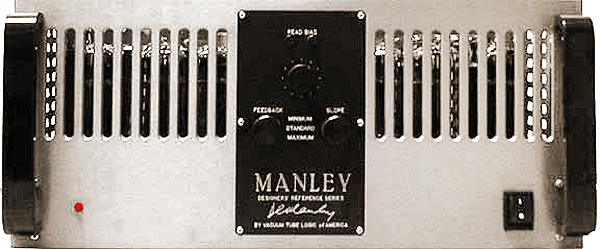
Manley is not a new company; it's the last name of the president and chief designer of VTL, David Manley, whose Model 300 has been my reference standard power amp for the past two years. In fact, Manley is not even a new brand name; it's the name of VTL's "deluxe" line of electronics, built (ostensibly) to industrial standards of ruggedness and reliability.
It's customary to think of "the tube sound" as being warm, rich, weak through the deep bass, fat through the midbass, forward through the midrange, bright through the middle highs, and soft at the extreme top, with superb rendition of depth and spaciousness. The "solid-state sound," by contrast, is generally thought to be cool, detailed, and pristine, with powerful deep bass, controlled midbass, rather reticent (laid-back) midrange and mid-highs, and a somewhat crisp high end, with variable (roulette-style) reproduction of depth and spatiality.
Watkins WE-1 loudspeaker
First I should clear up what may be an ambiguity in the driver-lineup spec for these speakers. In each system, three 8" cone units serve as woofers. Two of these crossover from the midrange drivers at 100Hz. Crossover to the third 8-incher, the subwoofer, is at 40Hz. Thus, two woofers are active from 100Hz down to 40Hz, and all three are active below 40. In other words, the third woofer does not come into play until the frequency drops to the point where the radiating area of two 8-inchers starts to become inadequate for moving air, at which point the additional area of the third speaker is thrown in. Below 40Hz, all three are working together.
We Did It!
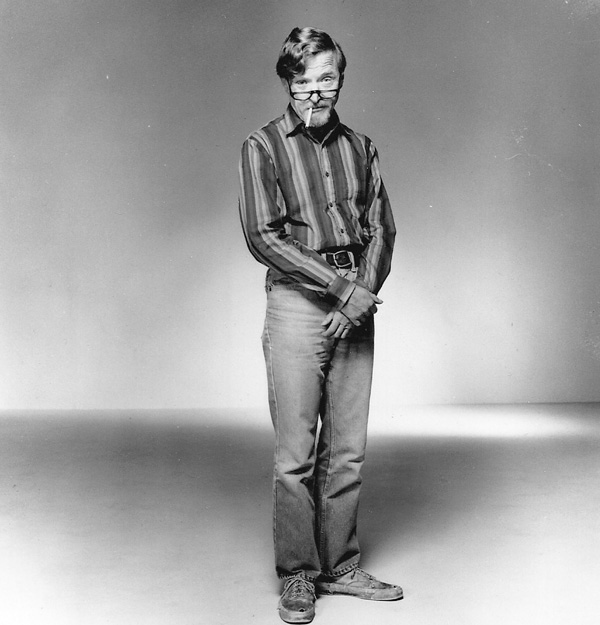
In 1960 the high-fidelity field was in a period of stasis. The hi-fi boom was starting to crest out, and there were three magazines for audiophiles: High Fidelity, Stereo Review, and Audio. The first two were (and still are) little more than vehicles for their advertising, more dedicated to promoting their advertisers' wares than in advancing the state of the art. Audio was more into equipment testing than either of the mass-hi-fi magazines, but it too was contributing to the stagnation by listening to its test results rather than to the components.
Weathers PS-11 Professional Stereo Pickup System

Editor's Note: This is the very first equipment report that was written by J. Gordon Holt for Stereophile, then called The Stereophile. The venerable JGH appended the following warning: The writer of this report was employed by Weathers Industries during the time when the product in question was undergoing development, so in view of this past association, and the doubt it may cast upon the writer's impartiality, this report probably should not be published, even though the writer left Weathers Industries over a year ago and is not bound by any obligations thereto.
What Makes a Good Recording?
The sound, of course, but here's a checklist of 16 specifics to consider when evaluating your own or somebody else's live-recording efforts.