

Musical Fidelity AMS Primo line preamplifier

Musical Fidelity's Tri-Vista kWP, introduced in 2003, was an impressive, high-tech, "statement" audiophile preamplifier. Its outboard power supply weighed almost 56 lbs—more than most power amplifiers—and its hybrid circuitry included miniature military-grade vacuum tubes. As I said in my">http://www.stereophile.com/solidpreamps/104mf">my review of it in the January 2004 Stereophile, the kWP's chassis and innards were overbuilt, the measured performance impressive, and any sonic signature imposed on the signal was subtle and, essentially, inconsequential.
Musical Fidelity AMS100 power amplifier

"That's just silly on so many counts, Antony."
I was talking last winter to Musical Fidelity's Antony Michaelson, who had been enthusing about his forthcoming stereo amplifier, the AMS100. It would be physically enormousalmost a yard deepand commensurately heavy at 220 lbs. Despite its bulk, its maximum rated output would be just 100Wpc into 8 ohms. It would also be expensive, at $19,999. And to cock a snoot at environmentalists and their concerns, the AMS100's output stage would be biased into class-A up to its rated 8 ohm power, meaning that, even when not playing music, it will draw around 10 amps from a typical US wall supply of 120V. This also means that it will run very hot, making the amplifier impracticable for summer use in homes without central air-conditioning. Like mine.
Musical Fidelity Titan power amplifier
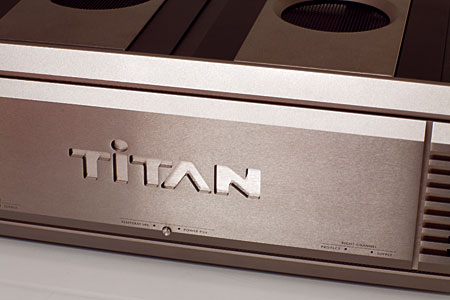
Musical Fidelity's founder, Antony">http://www.stereophile.com/features/575/index3.html">Antony Michaelson, arrived at my house to help me set up the two chassis of his sleek, limited-edition, $30,000 Titan power amplifier. (The task requires at least two people.) A week later, a representative of Musical Fidelity's US importer, KEF America, dropped by to listen and to deliver three of Musical Fidelity's new V-series products: a phono preamp, a DAC, and a headphone amp. All three fit comfortably into a small paper bag; the price of the three was $700.
Nagra Jazz line preamplifier
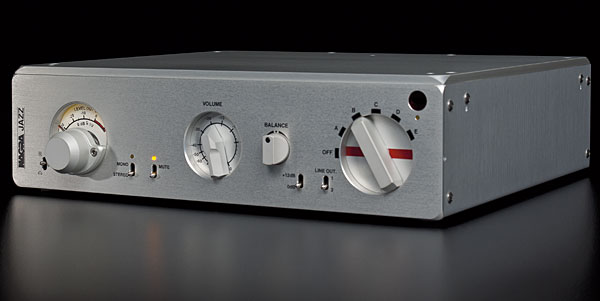
Branding can be powerfula well-developed brand connotes strong images in the consumer's mind. Apple means ergonomics, elegance, ego. Fremer means analog, exuberance, fastidiousness. Rolex means Swiss-made, precision, expensive. Nagra means Swiss-made, precision, expensive.
Nestorovic Alpha-1 power amplifier
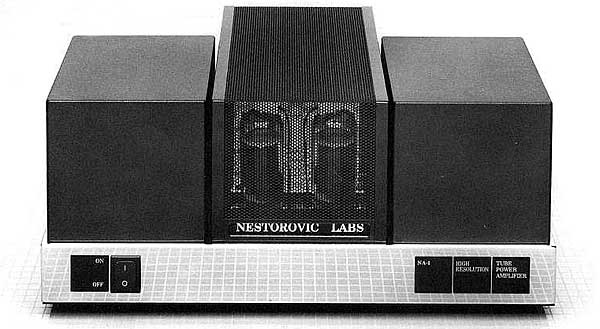
The great debate that has long separated audiophiles is tubes vs solid-state. Other topics, CD for example, may temporarily steal the spotlight, but year-in and year-out no other subject is the cause of as much controversy as whether tubed or solid-state circuitry produces the more accurate sound. As is typical with long-standing feuds, the split runs deep, and tempers often flare.
Nola Metro Grand Reference Gold loudspeaker
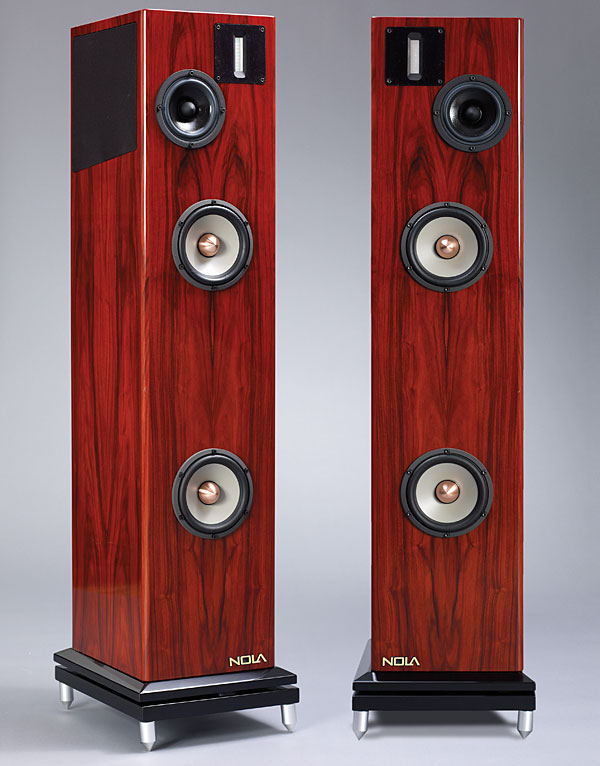
For a reviewer, deciding which products to write about is a tricky business. You want to do a professional job of evaluation, but you also want to be able to wrest maximum enjoyment from your music while you do so. Attending audio shows is where reviewers perform sonic triage, weeding out the products that aren't ready for prime time, and making a note of those they wish to invite home after the show.
Nordost Valhalla 2 Reference cables
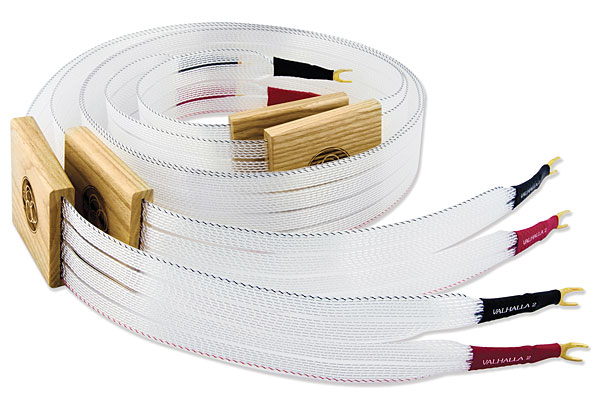
It would be an understatement to say that in 2001, when Nordost introduced their original Valhalla cables, they were a revelation for me. Their focus and resolution of detail were like nothing I'd ever heard, and revealed in recorded performances a startling energy and realism. Throw in their seemingly absolute transparency, and similarly unique levels of spatial and temporal precision, and the Valhallas established a new standard of sound quality in audio cables. Although their tonal balance was cool, as I reported in my first review of them in the November 2001 issue, they were the only game in town in terms of reproducing the feel of a live performance. I immediately adopted them as a reference cable, and they remain a reference for me today.
Octave Audio Jubilee preamplifier

Way back in the age when Stereophile's print magazine was the size of a theater playbill, common wisdom declared that the tube preamp was the ideal complement to solid state amplification.
Octave Audio MRE 220 SE monoblock power amplifier
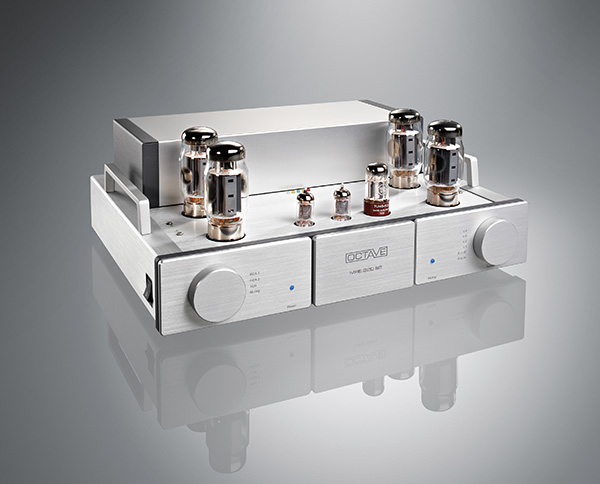
Tubes, tubes, tubeshow we love to bask in their glow, roll them, and take their second-harmonic distortion into our hearts as if it were a child or a pet. Some may put out so much heat that we have no choice but to open a window, turn on the air conditioning, or listen in the garb of Adam and Eve before that fatal first bite. As they and you age, you can never be sure who's at their best. Tubes, at least, can be replaced, albeit at significant expense...
I haven't reviewed much tube gear, but when I haveBruce Moore and VTL (in my pre-Stereophile days), Audio Research, and in our September 2022 issue, the towering Octave Jubilee Mono SE tubed pentode push-pull monoblocksI've been enamored of their sound. I waxed ecstatic about the "captivating beauty" and "heavenly" highs of the Jubilee Mono SEs. I can still recall how gorgeous they sounded; every listen was special.
Hence, my enthusiastic "yes" to a solicitation from John Quick, VP of Sales & Marketing for Dynaudio North America, Octave's North American distributor, to review the smaller MRE 220 SE mono push-pull tube amplifier.
Octave Jubilee Class A monoblock power amplifier
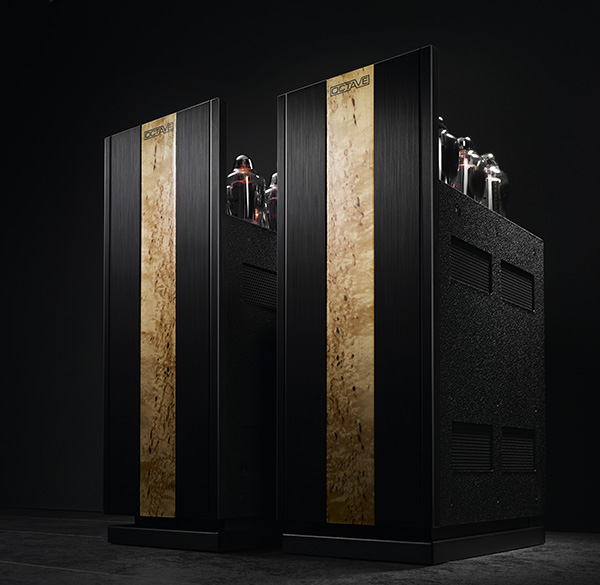
A first for German manufacturer Octave is the Jubilee Class A mono ($85,000/pair), a push-pull class-A monoblock with a self-regulating autobias pentode circuit that can also run in "high power" class-AB mode. The Jubilee Class A monoblock uses KT120, KT150, or KT170 output tubes.