

Spin Doctor #8: The Wand 14-4 turntable, and a Visit to SME
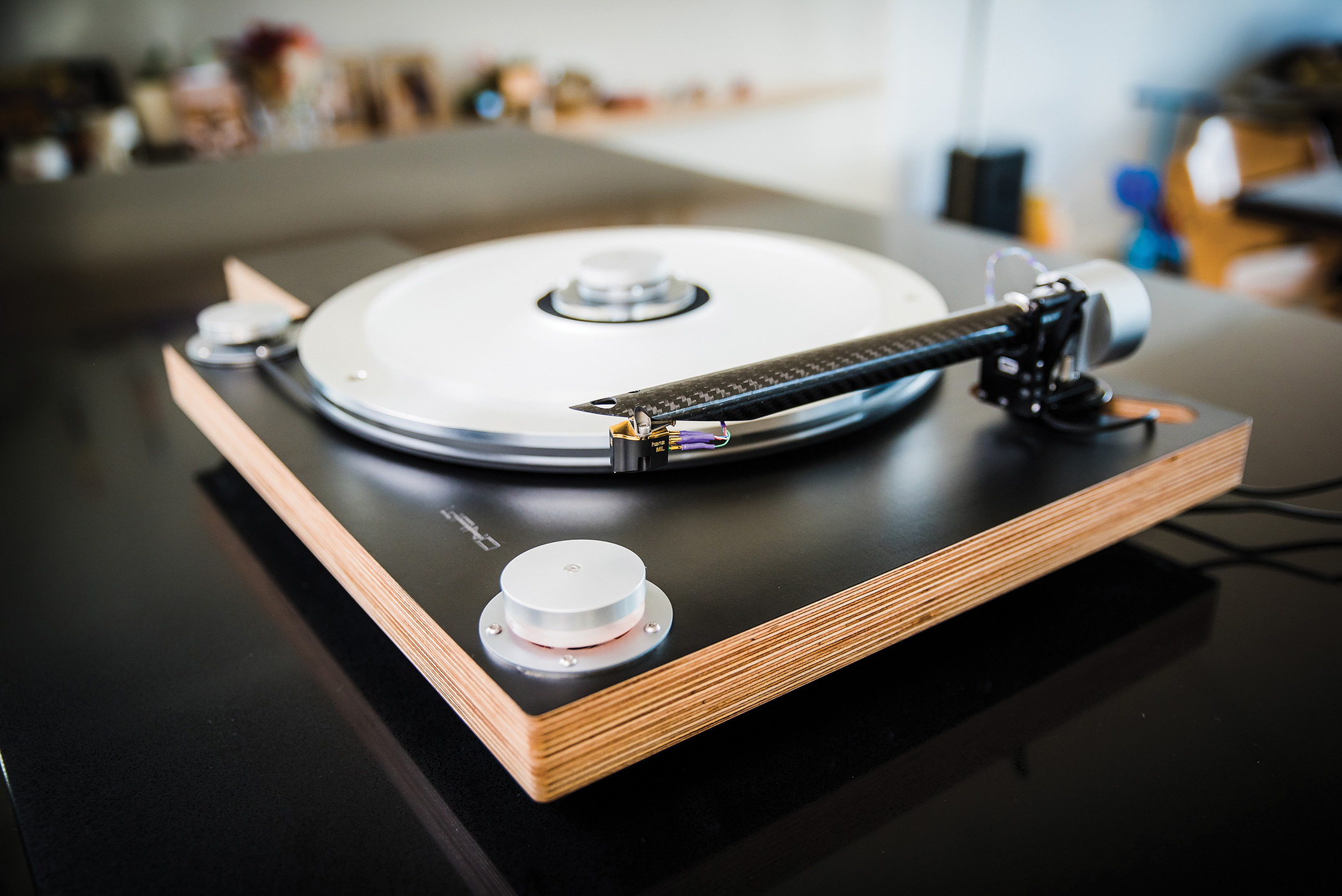
Photo by Himanshu Ratnaka
In prior screeds, I have discussed the category of turntable designers I like to call deep thinkers, who twist their brains to come up with fresh thinking about how to approach the task of playing a vinyl record. If there is a poster boy for deep thinkers, it's got to be Simon Brown.
Brown is based on the South Island of New Zealand. I'm thinking that being in such a far-flung part of the world must have given his head plenty of space to get creative. First, in 2011 he created The Wand tonearm, a striking unipivot design that features a fat carbon-fiber armtube nearly 1" in diameter (below). Art Dudley wrote about The Wand in 2019, and I highly recommend that you read his thoughts, especially about his struggles to set up The Wand.Spiral Groove SG2 turntable

Photograph: TONEAudio Magazine
High-end audio exists at the intersection of art and science. Either discipline can produce a good product, but it takes both to create the very best. The Sonic Frontiers gear I auditioned many years ago, for example, was technically sound, nicely built, and sounded goodjust never as sublime as products from, say, Audio Research or VTL. On the other hand, an experienced, insightful designer such as Quicksilver's Michael Sanders can create wonderful products from humble circuits and parts, but be ultimately limited by the underlying technology. But when brilliant design, uncompromised execution, long experience, and artistry all come together, the results can be staggering.
Spotheim La Luce turntable and SpJ tonearm

The La Luce turntable's elegant form usually stops audiophiles dead in their tracks. Then comes a long, low "Wow." I'm hardly immune myself. And that's not even considering the sound, which has always been wonderful, as it was in the Joseph Audio/Cardas room at CES '98.
TechDAS Air Force V turntable

Unless a truly budget-priced Air Force model is in the works, the TechDAS turntable lineup now seems complete: The recently introduced Air Force Zero ($450,000) is at the top, and the "affordable" Air Force V ($19,500) is at the bottom. The Air Force One, Two, and III turntables, all available in both standard and Premium versions, sit in the costly middle.
There's no Air Force IV because in East Asia that number is considered bad luckwhich also explains why Japanese golfers shout "Six!" when someone hooks a shot into an adjacent fairway (joke alert).
TechDAS Air Force Zero turntable

The Air Force Zero turntable is very large for a turntable, but it is not as large as a house. At $450,000 for the base model, it does, however, cost as much as many houses and more than many others (footnote 1).
This observation will set off howling among some audio enthusiasts of a sort that never happens in the wine world, for instance, where well-heeled oenophiles routinely spend large sums for a short-lived thrill.
Technics Grand Class SL-1200/1210GR2 record player

In the early 1980s, I worked in a pop band playing AM radio hits, grooving behind my Yamaha drums and Zildjian cymbals as sweat drenched my body and my ears rang. We danced. We pranced. My shiny silk jumpsuit led upwards to a 2"-high afro, which women ran fingers through in hopes of finding contraband smokes ... Then overnight, everything changed.
At the beginning of the previous decade, Technics had released the SP-10, the first direct drive turntable. That was followed in short order by the SL-1100. Clive Campbell, aka Jamaican-American DJ Kool Herc, pioneered the simultaneous use of two Technics SL-1100s, initially at his sister's birthday party in the Bronx, inspiring "block parties" (rigging streetlamps for power) and hip-hop culture. Kool Herc isolated drumbeats from records by James Brown (with drummers Clyde Stubblefield and John "Jabo" Starks) and the Incredible Bongo Band (powered by master studio drummer Jim Gordon), among others, creating "breaks" for heated dance-floor partying. Soon, Lace Taylor (aka Afrika Bambaataa) and Grandmaster Flash (The Message) took Kool Herc's inventions into the mainstream, and hip-hop went global.
Technics SL-1200G turntable

People tend to believe that things are what they appear to be. This turned out to be the case in 2016, when Panasonic introduced the limited-edition Technics SL-1200GAE turntable. It appeared almost identical to an SL-1200arguably the best-selling and most loved record player series of all time, discontinued in 2010 after more than 30 yearsbut it cost a whopping $4000. The similar model designation didn't help stem the griping that Panasonic had made a "fancy" version of their legendary DJ turntable at six times the price of the original.
Technics SL-1200GME/SL-1210GME turntable
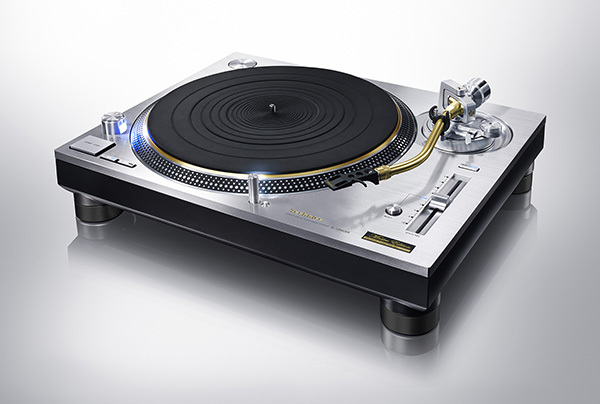
Like life, audiophilia often takes unexpected turns. A while back, I happily put my turntable and records on ice, for much of the 1990s and the first part of the current century. Yet lately I find myself further down the phonography rabbit hole than I have been in decades.
Technics SL-50C record player

Every first love leaves a strong impression. Hopefully it's a good one. Those of us who are phonography-positive fondly remember our first good record playing system, the first turntable-cartridge combo that let the music turn us on. Maybe it was simple, maybe it was fussy, maybe it was unreliable—no matter, it had that special ability to bring the excitement, beauty, and humanity out of the vinyl grooves, through our audio systems, and into our souls.
The Entry Level #41

What I failed to make absolutely clear in my April column is that I really, truly, thoroughly enjoyed all three USB DACheadphone amps that I auditioned: the Audioengine D3 ($189), the AudioQuest DragonFly v1.2 ($149), and the Cambridge Audio DacMagic XS ($199). Each offered a slightly different perspective on the music, but none could be accused of closing lanes on the George Washington Bridge, dumping several feet of snow on top of our car, or doing anything especially wrong.